
A window that looks good at noon can become a source of glare, heat, and lost privacy by late afternoon. That is why made-to-measure window blinds in UAE, Dubai, Abu Dhabi, and Sharjah are not simply a decorative finishing touch. They are a practical part of how a home, apartment, office, hotel room, or school space performs every day.
Ready-made blinds can look tempting on a shelf, but windows rarely match standard sizes exactly. A few centimeters of extra width, an uneven recess, a handle in the wrong position, or a deep window sill can affect how the blind closes and how the finished room looks. Custom blinds are measured for the actual opening, selected for the room’s purpose, and professionally installed for a clean, reliable fit.
Why Custom Blinds Make a Noticeable Difference
In the UAE, window coverings need to do more than complement furniture. Strong sunlight, high outdoor temperatures, close neighboring buildings, and large glass openings all create different requirements. The right blind can soften direct sun without darkening a room completely, create daytime privacy, reduce screen glare, and help manage heat entering through the glass.
The benefit of made-to-measure work is precision. The installer considers whether the blind should sit inside the recess or outside it, how much overlap is needed to limit light gaps, and whether the window opens inward or outward. They also check for obstacles such as handles, air-conditioning grilles, tracks, and fixed furniture. These details are often where off-the-shelf products fall short.
Custom production also gives you more control over the final appearance. You can choose the fabric opacity, slat size, color, control type, cassette finish, and mounting position to suit the room rather than adapting the room to a standard blind.
Made-to-Measure Window Blinds in UAE: Choosing by Room
A blind that works perfectly in a bright living room may be the wrong choice for a bedroom or office. The best solution depends on how the room is used, how much sun it receives, and whether privacy or visibility matters most.
Living Rooms and Open-Plan Areas
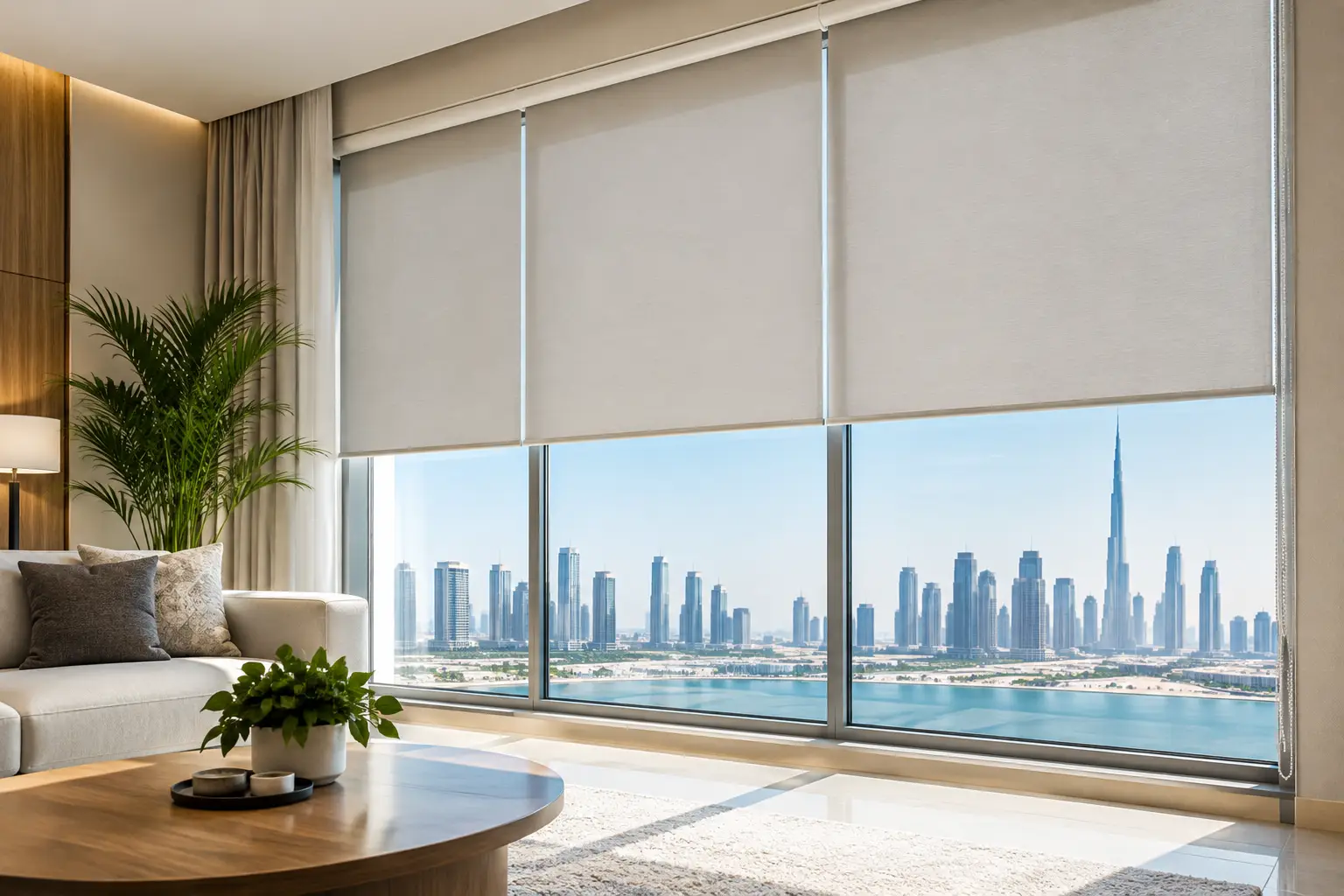
For living spaces with broad windows or balcony doors, roller blinds and vertical blinds are often practical choices. Sunscreen roller fabrics filter harsh daylight while keeping a view outside during the day. They are useful in apartments with floor-to-ceiling glazing, where heavy fabrics may make the room feel closed in.
If the room receives direct western sun, consider a denser sunscreen fabric or combine blinds with made-to-measure curtains. The blind manages daytime glare and privacy, while curtains add softness and can provide stronger evening coverage. This layered approach works especially well in villas, formal lounges, and hospitality interiors.
Bedrooms
Bedrooms need a different balance. Blackout roller blinds, blackout vertical blinds, and blackout Roman blinds can help reduce early morning light and improve privacy. However, blackout does not always mean total darkness. Small light gaps around the edges are possible depending on the window shape and installation method.
For clients who need the darkest possible room, professional measurement is particularly valuable. An outside-recess installation with adequate overlap usually provides better light blocking than a blind fitted tightly inside a recess. Adding blackout curtains can further improve results while creating a more finished interior look.
Kitchens and Bathrooms
Kitchens and bathrooms need materials that are easy to maintain and suited to humidity. Aluminum Venetian blinds, PVC Venetian blinds, and moisture-resistant roller blinds are commonly selected because they are practical around steam, splashes, and everyday cleaning.
Fabric can still work in some kitchens, but placement matters. A blind directly beside a cooking surface may need more frequent cleaning than one placed over a dining-area window. During a site visit, it is easier to match the product to the real conditions instead of selecting only by color.
Offices, Schools, and Commercial Spaces
Commercial window coverings need to support concentration, comfort, and durability. Sunscreen blinds reduce glare on computer screens while keeping meeting rooms and work areas naturally bright. Blackout blinds are a stronger choice for presentation rooms, training spaces, classrooms, and media areas where light control is essential.
For larger projects, the control method matters as much as the fabric. Linked systems can operate multiple blinds together, while motorized blinds offer convenient operation for tall windows, boardrooms, hotels, and hard-to-reach glazing. The right specification should account for daily usage, maintenance access, safety requirements, and the overall design scheme.
Which Blind Style Is Right for Your Windows?
There is no single best blind for every property. A good consultation narrows the choice based on light, privacy, window size, interior style, and budget.
- Roller blinds offer a neat, modern profile and are available in sunscreen, dimout, and blackout fabrics. They suit homes, offices, clinics, and hospitality settings.
- Venetian blinds provide adjustable light control through tilting slats. Aluminum is a practical choice for kitchens and workspaces, while wood-look finishes can add warmth to living areas.
- Vertical blinds are useful for wide windows and sliding doors. They offer directional light control and are available in plain, textured, blackout, and sunscreen materials.
- Roman blinds create a softer, more decorative look. They work well in bedrooms, lounges, boutique hospitality interiors, and spaces where fabric design is a key feature.
- Motorized blinds are ideal for high windows, smart-home projects, and rooms where convenience is a priority. They can be controlled by remote, wall switch, or compatible automation systems.
The trade-off is usually between softness, control, and maintenance. Fabric Roman blinds can look more luxurious than aluminum Venetians, for example, but Venetians may be easier to wipe down in a busy kitchen. Sunscreen blinds preserve more daylight than blackout blinds, but they will not provide the same nighttime coverage.
The Details That Determine a Good Fit
A made-to-measure blind should look intentional from every angle. Accurate width and drop are only the starting point. The fitter should also decide whether the control chain is best positioned on the left or right, whether a face-fix or recess-fix installation is more suitable, and whether the blind clears the window handle and sill.
Fabric direction also matters. On large windows, consistent roll direction helps ensure a uniform visual finish. For Venetian blinds, slat orientation affects how daylight enters and how much privacy the room has. For motorized systems, power access, cable routing, and the preferred control method should be discussed before production begins.
These decisions are why an on-site appointment is more useful than measuring with a tape at home and ordering by guesswork. A professional can identify issues before the product is made, not on installation day.
From Site Visit to Professional Installation
The most straightforward way to buy custom blinds is through a complete service that keeps one team accountable. Dubai Drapes Studio begins with a free appointment at your home, office, or project site. The consultant discusses your requirements, takes precise measurements, and presents suitable samples so you can see colors, textures, and opacity levels in the actual room lighting.
After the selection is confirmed, the team prepares a quotation based on your chosen blind system, fabric or slat material, dimensions, and any motorization requirements. Custom production follows, then trained installers fit the blinds and check their operation before completion.
This process is useful for a single bedroom window, but it becomes even more valuable when coordinating blinds across an entire apartment, villa, clinic, school, or office. Matching finishes across different rooms, selecting blackout treatments where needed, and keeping the installation schedule organized can save time and avoid costly changes later.
Plan for Light, Privacy, and the Long Term
Before selecting a color, stand in the room at the time of day when sunlight is strongest. Notice where glare falls, whether nearby buildings overlook the space, and which windows are opened regularly. These observations often point to the right blind style faster than browsing photos alone.
A well-fitted blind should make the room easier to live or work in while looking like it was always meant to be there. Book a Free Appointment to discuss your windows, compare materials in person, and get a quick quotation for custom blinds designed around your space.