
A shower curtain is often treated as a small finishing detail, until moisture, odor, staining, or safety requirements turn it into a maintenance problem. Antibacterial and fire-retardant shower curtains are designed for bathrooms where hygiene, occupant safety, and a polished appearance all matter – from a family bathroom or rental apartment to a hotel, school, clinic, or staff changing area.
The right curtain should not only look good on installation day. It should resist daily moisture, hang properly, clean easily, and suit the fire-performance requirements of the property. That is why material selection, curtain construction, sizing, and fitting deserve more attention than simply choosing a color from a shelf.
Why Specialized Shower Curtains Matter
Bathrooms create a demanding environment. Warm air, steam, soap residue, and limited ventilation can leave an ordinary curtain damp for long periods. That moisture encourages mildew and can produce the familiar musty smell that makes a clean bathroom feel neglected. In shared facilities, the issue is not merely visual. Curtains are touched frequently and may be exposed to a higher level of bacteria, body-care products, and cleaning chemicals.
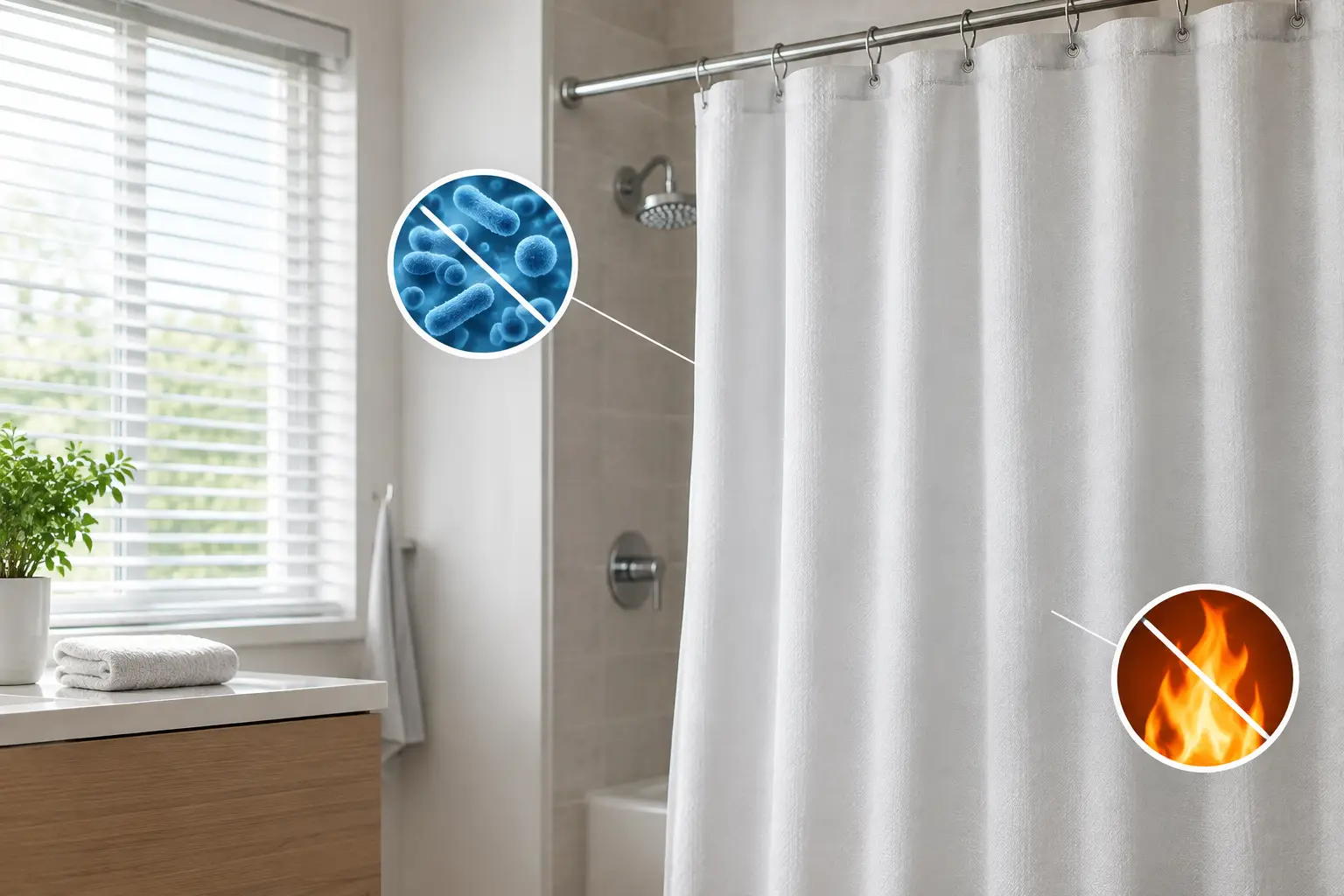
An antibacterial shower curtain uses a treated material or inherently resistant fabric to help limit bacterial growth on the curtain surface. It is a practical addition to regular cleaning, not a replacement for it. No curtain should be marketed as permanently germ-free, especially in a wet room. The value lies in reducing conditions that allow odor and microbial buildup to develop quickly.
Fire-retardant performance addresses a different risk. A fire-retardant curtain is made or treated to slow ignition and reduce flame spread under specified test conditions. This can be especially relevant in hospitality, healthcare, education, labor accommodation, and commercial washroom projects where material specifications may be required by the building operator, consultant, or local authority.
Antibacterial and Fire-Retardant Shower Curtains: What to Check
Product descriptions can sound similar while offering very different levels of performance. Before selecting a curtain, ask what the antibacterial claim is based on, whether the fire-retardant property is inherent or applied as a finish, and which test standard supports the fire rating.
An inherent fire-retardant fabric has its resistance built into the fiber or material composition. This is generally preferable where the curtain will be washed regularly or kept in service for years, because performance is less dependent on a surface coating. A topical fire-retardant treatment can be suitable for certain applications, but it may require specific laundering methods or periodic re-treatment to retain its stated performance.
The same principle applies to antibacterial properties. Some materials are naturally less hospitable to moisture retention, while others rely on antimicrobial finishes. A professional supplier should explain the intended use, expected cleaning routine, and documentation available for the chosen product rather than making broad claims without evidence.
For projects with formal compliance requirements, do not assume that “fire-resistant” means the curtain meets every requirement. Fire standards vary by property type, location, and specification. Confirm the exact rating requested by your consultant, facilities team, or approving authority before fabrication and installation. This avoids the costly mistake of fitting a visually suitable curtain that cannot be accepted for the project.
Choosing the Right Material for Your Bathroom
The best material depends on where the curtain will be used and how it will be maintained. Vinyl and PVC-style curtains are commonly selected for their water resistance, affordability, and easy wipe-clean surface. They work well in high-use shower areas, although quality matters. Lower-grade options can feel stiff, crease heavily, or develop an unpleasant odor.
PEVA is often chosen by customers looking for a lighter alternative to traditional vinyl. It can be suitable for residential bathrooms and lower-intensity use, but it is not automatically the best choice for every commercial project. Confirm its fire and antibacterial credentials rather than assuming they are included.
Treated polyester is popular where a softer, more decorative finish is wanted. It can provide a fabric-like look that coordinates well with hotel interiors, premium apartments, and designed bathroom spaces. Polyester curtains may require more careful laundering and drying than wipe-clean plastics, yet they can offer a more refined drape and a wider choice of colors or patterns.
For hospitals, care facilities, gyms, and shared accommodations, privacy-curtain-grade materials may be more appropriate than a standard domestic shower curtain. These products are designed around higher-use environments and can be specified with properties such as antibacterial treatment, flame resistance, stain resistance, and durable heading systems.
Fit Is a Hygiene and Safety Detail
A curtain that is too short can allow water to escape onto the floor. One that is too long drags in standing water, collects soap residue, and becomes harder to clean. The ideal drop usually allows the curtain to sit inside the shower tray or tub without bunching at the base.
Width matters just as much. A flat curtain leaves gaps and provides poor water coverage, while excessive fullness can feel bulky and hold moisture in its folds. For most shower setups, the finished curtain should be wider than the opening so it can overlap and move comfortably along the track or rod.
The top fixing should match the room and the level of use. Metal eyelets, reinforced headers, hooks, gliders, and ceiling-mounted tracks each serve different purposes. In commercial settings, a ceiling track can create a cleaner, more controlled installation than a tension rod. It may also be the better choice when a shower curtain needs to coordinate with cubicle privacy curtains or other fitted soft furnishings.
Dubai Drapes Studio can assess the shower area during a site visit, take accurate measurements, and recommend a track, heading, and curtain material that suits both the bathroom layout and the project specification. This is particularly useful in renovated spaces, where walls may not be level and off-the-shelf sizes often create awkward gaps.
Cleaning Without Reducing Performance
Even antibacterial curtains need routine care. The simplest habit is to pull the curtain fully closed after showering so air can circulate across the surface. Leaving it gathered in damp folds creates the exact conditions that encourage mildew and odor.
Wipe-clean materials should be cleaned with a mild, compatible cleaner and soft cloth. Avoid harsh solvents, abrasive pads, and strong bleach unless the manufacturer specifically approves them. These products can damage the surface, fade the color, or compromise applied treatments.
Machine-washable fabric curtains should be laundered according to their care label. Water temperature, detergent choice, and drying method can affect both the fabric appearance and any applied fire-retardant or antibacterial finish. For a hotel, clinic, or other managed facility, it is wise to establish a documented cleaning schedule and keep spare curtains available so damaged or heavily soiled panels can be replaced without disrupting operations.
Where These Curtains Add the Most Value
A specialized shower curtain is most valuable where usage is frequent, maintenance standards are high, or a fire specification applies. Hotels and serviced apartments benefit from curtains that maintain a fresh, guest-ready appearance. Landlords and property managers can reduce premature replacements in rental bathrooms. Gyms, spas, schools, clinics, and staff facilities gain a more practical barrier against the wear associated with shared wet areas.
For private homes, the decision may be more design-led. A homeowner may want a curtain that complements tile, wallpaper, towels, or window treatments while offering better resistance to damp conditions. In that case, a custom-sized polyester option may be worth the investment. For a heavily used shower room, a durable wipe-clean material may be the smarter choice even if the color range is more limited.
A Better Way to Specify Shower Curtains
Start with the room, not the pattern. Consider who will use the bathroom, how often it will be cleaned, whether the curtain will face constant direct water, and whether the project has a documented fire requirement. Then choose the material and fitting system around those answers.
A well-specified curtain is quiet in the best way: it contains water, dries properly, stays presentable, and does its job without demanding constant replacement. Book a Free Appointment to review samples, measurements, and suitable fire-retardant and antibacterial options before making a final selection.