
A west-facing Dubai living room can look beautiful at 4 p.m. and become uncomfortable by 4:15. Glare reaches the television, sunlight heats the glass, and manually closing several curtain panels quickly becomes a daily chore. If you have searched for “auomated window blinds and curtains in dubai,” what you are really looking for is a made-to-measure shading system that responds to how you live, not a one-size-fits-all product.
Automated blinds and curtains let you control light, privacy, and atmosphere with a remote, wall switch, mobile app, timer, or compatible smart-home system. The right solution is not simply about adding a motor. It begins with accurate measuring, the right fabric or blind material, a suitable track or tube system, and professional installation that leaves the room looking finished.
Why automated window blinds and curtains in Dubai make sense
Dubai homes face a particular combination of intense sunlight, wide glazing, and a lifestyle that values convenience. Motorized shading gives you practical control without compromising the clean lines of your interior. With one command, curtains can close across a large balcony door, blackout blinds can prepare a bedroom for sleep, or sunscreen roller blinds can reduce glare while preserving a daytime view.
Automation is especially useful for tall windows, double-height spaces, and hard-to-reach areas behind furniture. Rather than pulling cords or reaching for wand controls, you can operate every window treatment safely and consistently. For families, cordless motorized systems also reduce the need for loose operating chains around children and pets.
There is an energy-comfort benefit as well. Closing suitable blinds or curtains before the strongest afternoon sun can help limit direct solar heat and make a room feel more comfortable. Window treatments are not a replacement for air conditioning or insulated glass, but they are a practical layer of light and heat management. The result depends on the fabric, lining, window orientation, and how well the treatment covers the opening.
Start with the room, not the motor
A motor can be fitted to many types of window coverings, but each room has different requirements. The most attractive option is not always the most effective one for privacy, glare, or sleep. A consultation at your home or project site helps match the system to the space before production begins.
Living rooms and open-plan areas
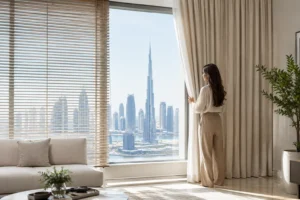
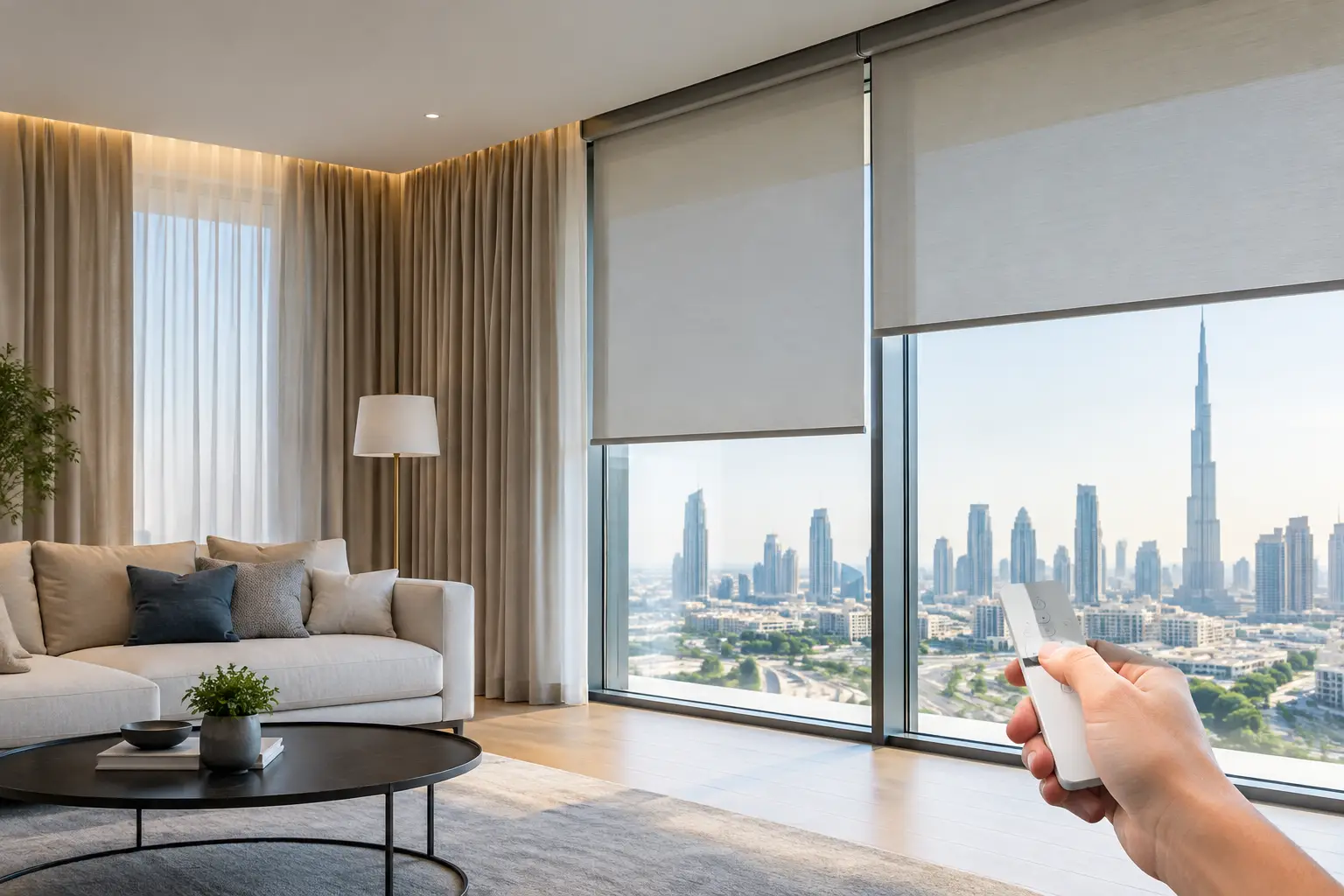
For living rooms, sheer curtains paired with decorative drapes are a popular automated combination. Sheers soften strong daylight and maintain a light, elegant look during the day. Heavier curtains can then close in the evening for privacy and a more intimate setting.
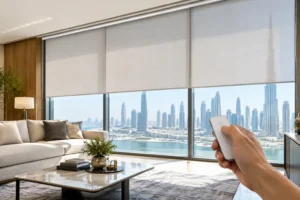
Where views are a priority, sunscreen roller blinds may be the better fit. They reduce glare without making the room feel shut away. The openness of the fabric matters: a more open weave generally preserves a clearer view, while a tighter weave gives stronger privacy and light filtering. If total darkness is required, sunscreen fabric alone is not the answer.
Bedrooms and nurseries
Bedrooms usually need dependable light control. Motorized blackout curtains, blackout roller blinds, or layered systems can create a darkened environment with the press of a button. For the best result, consider side light gaps, top coverage, and the curtain track position. Even premium blackout fabric cannot fully block light if the installation leaves large gaps around the window.
A dual-layer arrangement is often worth considering: a sheer for daytime privacy and a blackout curtain for sleep. It costs more than a single treatment, but it gives the room much better flexibility from morning through night.
Kitchens, bathrooms, and practical spaces
In moisture-prone or easy-clean areas, roller blinds, aluminum Venetian blinds, or selected faux-wood options can be more practical than full fabric curtains. Material selection should account for steam, splashes, and cleaning routines. A site visit is useful here because nearby appliances, ventilation, and window access can change the best recommendation.
Villas, sliding doors, and large glass walls
Wide doors and floor-to-ceiling windows are where motorized tracks show their value. Manually moving heavy, wide curtain panels can strain the fabric and track over time. A correctly specified motor, track, and carrier system gives smoother movement and keeps the fabric hanging properly.
For very wide spans, the installer may recommend a center-opening design, a one-way draw, or multiple independently controlled tracks. The best choice depends on where the doors open, how furniture is arranged, and whether you want to operate one wall of curtains together or in separate zones.
Choosing between motorized curtains and blinds
Motorized curtains bring softness, texture, and a more decorative finish. They are ideal when the window treatment is part of the interior design scheme, especially in bedrooms, formal living spaces, hotels, and villas. Fabric choice can add warmth, acoustic softness, and visual depth that blinds cannot always provide.
Motorized blinds are often more compact and architectural. Roller blinds work well for clean contemporary interiors, offices, kitchens, and windows where curtain stacking space is limited. Roman blinds offer a softer fabric look, while Venetian-style systems provide more adjustable light direction. Shutters can also be automated in certain applications, although suitability depends on the shutter design and opening configuration.
Many Dubai properties benefit from using both. A sunscreen blind can handle daytime glare close to the glass, while a decorative curtain frame adds privacy and a finished designer look. This layered approach is more of an investment, but it gives the widest range of control.
Power, controls, and smart-home compatibility
One of the first practical decisions is how the motor will be powered. Hardwired motors are a strong option for new builds, major renovations, and spaces where electrical planning is possible before final finishing. They avoid periodic battery charging and can be integrated neatly into a control system.
Battery-powered motors can be useful where running new wiring would disrupt completed walls or ceilings. They offer a cleaner retrofit route, though battery life varies according to motor size, curtain weight, usage frequency, and charging habits. Solar charging may suit some blind installations with adequate light exposure, but it should be assessed case by case.
Control can be as simple as a handheld remote or wall-mounted switch. For homeowners building a smart home, automation can also be coordinated with compatible systems and scenes. You might schedule bedroom curtains to open in the morning, close living-room blinds during peak sun, or activate privacy settings at sunset.
Smart control is convenient, but reliability should come before complicated features. A well-installed motor with straightforward controls is often better than a system full of functions that no one uses. During planning, discuss whether you need individual room control, grouped zones, timer schedules, voice control, or only a remote for daily use.
What determines the price of automated shading?
There is no meaningful single price for motorized curtains or blinds because every installation is shaped by the opening and the specification. Fabric type, blind material, window size, number of tracks, motor brand, power method, control option, lining, and installation access all affect the quotation.
Large curtains need stronger motors and properly supported tracks. Blackout lining, wave heading, double tracks, and custom pelmets can improve performance and appearance, but they also add to the project cost. Likewise, a battery retrofit may reduce electrical work while a hardwired installation may be more economical during construction.
The most useful quotation is one based on a measured site visit, not a rough photo alone. Accurate measurement identifies obstacles such as AC grilles, ceiling bulkheads, handles, recessed tracks, uneven walls, and door swing clearances before fabric is cut or equipment is ordered.
Why professional measuring and installation matter
Automation is only as good as the finished fit. A curtain track that is too short, a blind mounted at the wrong depth, or a motor selected without considering fabric weight can create avoidable problems. Professional installers check the opening, mounting surface, clearances, power route, and control position before recommending the final system.
At Dubai Drapes Studio, the process is consultation-led: samples can be reviewed in the actual room, measurements are taken on site, and the chosen curtains or blinds are produced to suit the opening. This avoids the uncertainty of buying a standard-size product and hoping it works when it arrives.
Good installation also includes programming, testing travel limits, checking smooth operation, and explaining how to use the controls. Ask about access for future servicing, especially for high windows and recessed curtain pockets. A system should look discreet, but it should not be impossible to maintain.
A practical way to plan your project
Before booking a visit, think about when each room needs shade, privacy, or darkness. Take note of which windows receive direct sun, whether you want to preserve a view, and whether construction work is still underway. If you are renovating, arrange automated curtain and blind planning early enough to coordinate wiring, ceiling pockets, and paintwork.
Bring together any inspiration images, preferred colors, and smart-home requirements, but stay open to fabric and system recommendations after measuring. A sample that looks perfect in a showroom can appear very different in a bright, glass-filled room. Seeing it against your wall color, flooring, and daylight is part of making a confident choice.
Book a free appointment for a measured recommendation, clear quotation, and professional installation plan. The best automated window treatment is the one that quietly makes your home more comfortable every day while looking as though it was always meant to be there.