
A west-facing living room can become uncomfortable long before the outdoor temperature reaches its peak. Direct sun heats the glass, then the room, furniture, and flooring absorb that warmth for hours. The right way to reduce heat using blinds is not simply to choose the darkest option. It is to match the blind type, fabric, fit, and operating method to the window’s orientation and how the room is used.
For homes, apartments, villas, and offices in Dubai, window treatments are a practical part of temperature control. They can reduce glare, improve privacy, protect interiors from harsh sunlight, and lessen the demand placed on air conditioning. The best result comes from made-to-measure blinds that cover the glass correctly and are selected for the specific exposure of each room.
Why blinds can make a room feel cooler
Sunlight entering through glass brings visible light and solar heat. Once that heat reaches interior surfaces, it is harder to remove. Blinds create a barrier between the window and the room, limiting solar gain before it spreads across the space.
Their effectiveness depends on several details. A blind that sits close to the glass generally performs better than one with large side gaps. A reflective or light-colored backing can help bounce solar energy away from the room. Fabrics designed for solar control can filter heat and glare while preserving a degree of daylight and outdoor visibility.
Blinds will not replace good insulation, efficient glazing, or properly sized air conditioning. However, they are one of the most accessible ways to improve comfort in rooms with strong sun exposure, especially where replacing windows is not practical.
The best blinds to reduce heat using blinds effectively
There is no single best blind for every window. A bedroom, home office, kitchen, and glass-fronted living area each need a different balance of heat reduction, daylight, privacy, and appearance.
Solar screen roller blinds
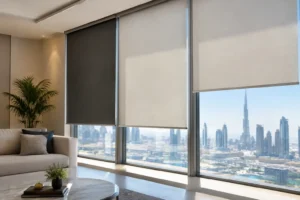
Solar screen roller blinds are often the strongest all-around choice for bright living spaces, offices, and rooms with wide windows. They are made from technical screen fabrics that filter sunlight and reduce glare without making the room feel closed in.
The openness factor of the fabric matters. A lower openness factor provides more privacy and sun control, while a higher openness factor offers a clearer view outside. For a heavily exposed window, a tighter weave usually gives better heat and glare performance. It may slightly reduce the view, but it can make the room noticeably more comfortable during afternoon sun.
Choose a lighter exterior-facing color when heat control is the priority. Dark screen fabrics can provide excellent glare reduction and outward visibility, but they absorb more solar energy than light-colored alternatives. The right choice depends on whether your biggest concern is brightness, view, privacy, or heat.
Blackout roller blinds
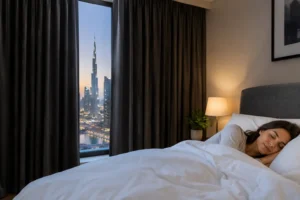
Blackout blinds are ideal for bedrooms, nurseries, media rooms, hotel rooms, and spaces that need strong light control. They block direct light very effectively and add a useful layer between the glass and the room.
For the best performance, the blind should be carefully measured and fitted with minimal gaps at the sides. A standard blackout fabric can still allow light and heat around the edges if the system is undersized or installed too far from the window. In rooms with intense sun, cassette systems and side channels can improve coverage and create a cleaner finish.
Blackout blinds are excellent for comfort and sleep, but they remove the daytime view. Many homeowners pair them with sheer curtains or solar screens so the room has more flexible light control throughout the day.
Venetian and aluminum blinds
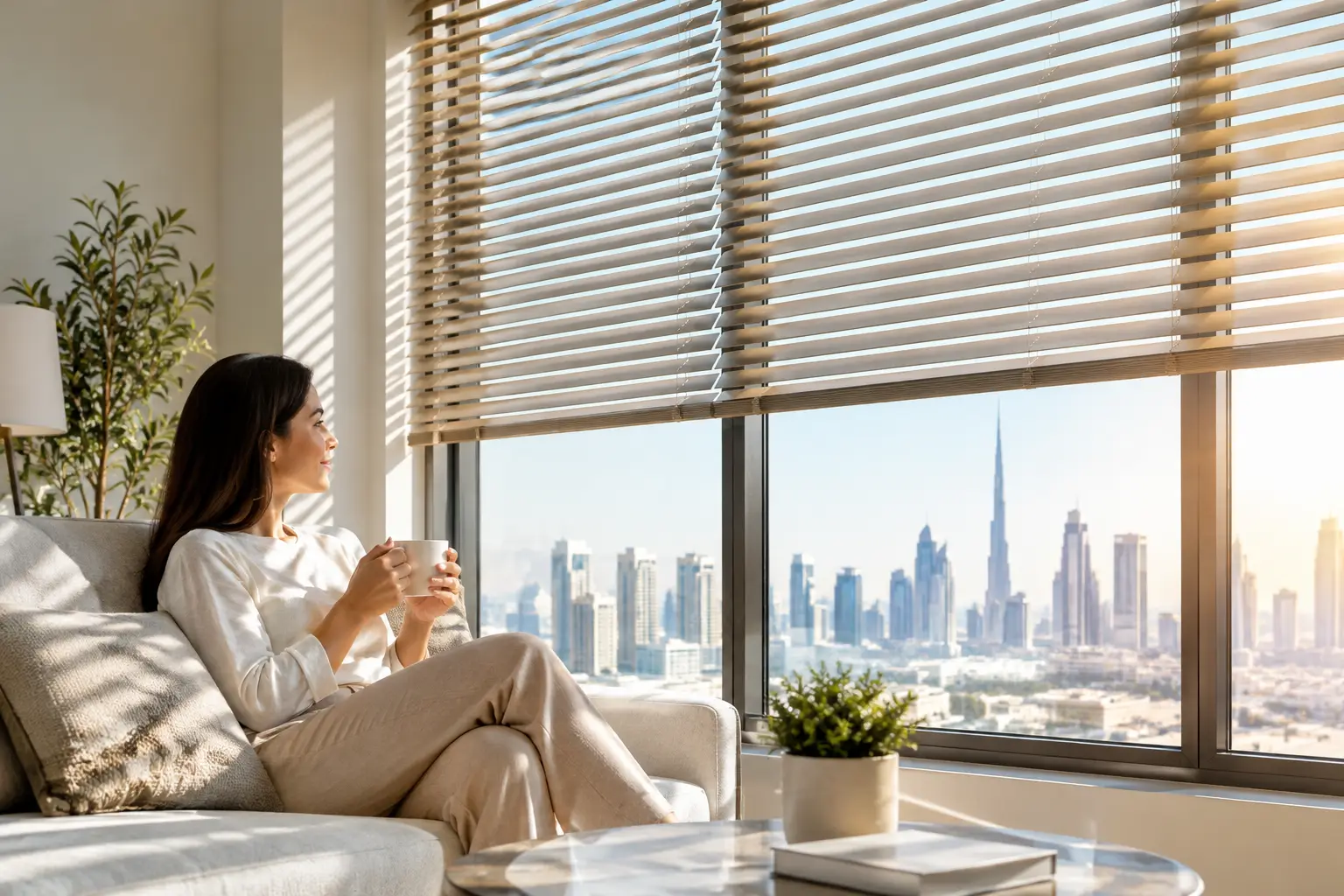
Venetian blinds give you precise control over sunlight. By tilting the slats upward or downward, you can redirect glare away from seating areas and work surfaces without fully closing the window treatment.
Aluminum blinds are a practical option for kitchens, offices, utility areas, and rental properties because they are durable, easy to clean, and available in reflective finishes. They are not always as insulating as a close-fitting roller blind, particularly if the slats remain open, but they are very useful where adjustable light direction matters.
Cellular and honeycomb blinds
Cellular blinds have pockets of air within their structure. Those air cells can provide an additional insulating layer, making them a smart choice for rooms that feel too hot in the afternoon and cooler near the glass at night.
They work especially well where a softer fabric appearance is preferred over a technical screen look. The trade-off is that fabric selection, cleaning needs, and available colors should be considered carefully, particularly in high-dust areas or spaces near kitchens.
Fit matters as much as the fabric
A high-quality blind can underperform if it is not measured and installed properly. Heat and light find their way through side gaps, above the headrail, and below a blind that is too short. This is why off-the-shelf sizes often disappoint on large, unusual, or recessed windows.
For inside-mounted blinds, the recess must be measured accurately so the blind operates smoothly without leaving excessive gaps. For outside-mounted blinds, extending the blind beyond the glass can improve coverage and reduce light leakage. The most suitable option depends on the window frame, handles, depth of recess, and the visual finish you want.
At Dubai Drapes Studio, a site visit helps identify these details before production. Measurements, fabric samples, window direction, and daily room use should all be considered together. A blind selected from a small sample can look very different once sunlight hits it across a full window.
Use color and layering strategically
White and light neutral blinds reflect more sunlight and usually keep the window area feeling brighter. They are particularly effective in rooms with strong sun where preserving a fresh, open look is important. Darker shades can suit contemporary interiors and provide better visual comfort against bright outdoor conditions, but they may retain more heat at the window.
Layering is often the answer for rooms that need both design flexibility and real sun control. A solar roller blind can be used during the day to manage heat and glare, while decorative curtains add softness and privacy in the evening. In bedrooms, a blackout blind behind curtains creates better darkness and a more polished interior finish.
This approach also lets you use different treatments for different times. You do not need to keep a room completely dark just to manage the hottest hours of the day.
Automate blinds for the hottest hours
Blinds are most effective when they are closed before direct sun has heated the room. That sounds simple, but it is easy to forget when leaving for work, managing a busy household, or operating blinds across multiple large windows.
Motorized blinds solve this problem by allowing scheduled operation. A system can close east-facing blinds in the morning, lower west-facing blinds before afternoon sun, and open selected blinds later when daylight is useful again. Smart-home compatibility can also allow scenes based on time of day, room use, or sunlight conditions.
Motorization is especially valuable for tall windows, difficult-to-reach glazing, villas with large curtain walls, and commercial spaces. It adds convenience, but it also encourages consistent use, which is where the energy and comfort benefit comes from.
Common mistakes that reduce performance
The first mistake is choosing blinds only by appearance. A beautiful fabric may be right for a shaded room but inadequate for glass exposed to intense afternoon sun. Always check whether the material is intended for solar screening, blackout, or decorative use.
The second is selecting a blind that is too narrow or too short. Even small gaps can create harsh strips of sun and reduce privacy. The third is waiting until the room is already hot before closing the blinds. By then, the glass, furniture, and floor may have stored significant heat.
Finally, do not assume every window needs the same solution. A north-facing bathroom may only need privacy, while a west-facing lounge may need solar fabric, precise fitting, and automation. A room-by-room recommendation usually creates a better result than a one-style-fits-all order.
Choose a practical solution for your windows
The most effective shading plan starts with your actual space: which rooms overheat, when the sun enters, whether you want to keep a view, and how much privacy you need. During a free appointment, an experienced consultant can measure the windows, show suitable fabric samples, and recommend custom blinds that fit your interiors and your daily routine.
A cooler room does not have to mean a dark room. With the right blind system in place, you can keep the strongest sun under control while still enjoying the light, view, and finish that make your home feel like yours.