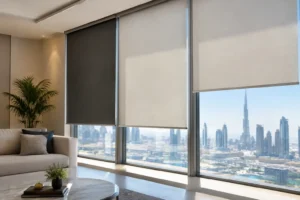


A west-facing window can turn a comfortable room into the hottest spot in the house by midafternoon. That is why homeowners often ask, do curtains improve insulation? Yes, well-chosen and properly fitted curtains can improve the thermal performance of a window. They will not replace efficient glazing or solve an unsealed window frame, but they can reduce radiant heat, slow heat transfer, and make a room feel noticeably more comfortable.
For homes in Dubai and across the UAE, the main goal is usually limiting solar heat gain and reducing the strain on air conditioning. The answer is not simply to buy the thickest fabric available. Curtain insulation depends on the fabric, lining, fit, track position, and how the window is used throughout the day.
How Curtains Improve Insulation
Glass is a weak point in almost every exterior wall. Even when windows are closed, heat moves through the glass and around its edges. When sunlight hits the window directly, the room can also absorb a significant amount of radiant heat.
A curtain creates an additional layer between the glass and the room. The still air held between the fabric and window acts as a buffer, slowing the movement of heat. A tightly fitted curtain also helps reduce drafts around the sides and bottom of the window, particularly where frames do not seal perfectly.
In hot climates, curtains work best when they are closed before strong sunlight reaches the glass. Once the room, furniture, and flooring have already absorbed heat, closing the curtains will still improve comfort, but it cannot instantly remove stored heat. This is why timing matters as much as material choice.
Which Curtains Insulate Best?
Heavier fabrics generally provide better insulation than lightweight decorative sheers. Blackout curtains, lined drapery, and thermal-lined curtains are especially useful in bedrooms, media rooms, villas with large glazed openings, and apartments exposed to direct sun.
A blackout fabric does more than darken a room. Many blackout curtain constructions use a dense backing or multiple layers that help block light and reduce heat transfer. Thermal lining can add another insulating layer without changing the front fabric visible in the room. This allows you to choose a linen-look, velvet, textured weave, or patterned fabric while improving practical performance behind it.
Interlined curtains can offer an even fuller appearance and greater insulation. They are a strong option for formal living rooms and bedrooms where a luxurious drape is part of the design brief. However, they are heavier, need suitably strong tracks or rods, and may not be necessary on every window.
Sheer curtains have a different job. They soften glare, protect privacy during the day, and create a light, elegant finish, but they provide limited insulation on their own. Many homes benefit from a layered treatment: sheer curtains for daytime use, paired with blackout or lined curtains for sun control, evening privacy, and improved temperature management.
Fabric color and solar control
Light-colored curtains can reflect more sunlight than dark fabrics, particularly when they have a light-colored lining facing the window. Dark curtains can look striking and may perform well when they are thick and lined, but they can absorb heat if exposed to strong sun. The right choice depends on window orientation, glass type, room use, and the look you want to achieve.
For windows with intense sun exposure, a solar screen blind behind decorative curtains can be a practical combination. The blind reduces glare and filters the view during the day, while the curtains provide insulation, softness, and nighttime coverage. This is often more flexible than relying on one treatment to do every job.
Fit Matters as Much as Fabric
A premium fabric will not deliver its best performance if the curtains are too narrow, too short, or mounted far away from the window. Gaps allow warm air to circulate behind the curtain and back into the room.
For better insulation, curtains should extend beyond the window frame on both sides and sit close to the wall or window recess where possible. They should also reach near the floor. Floor-length curtains create a more complete barrier than panels that stop at the sill, especially on tall windows and balcony doors.
A ceiling-mounted track can be an excellent choice for large windows because it allows the curtains to cover the opening from high above the frame to the floor. In contemporary apartments and villas, recessed tracks can also give a clean, tailored look while limiting gaps at the top.
Fullness is another detail that is easy to overlook. A curtain needs enough fabric to form proper folds when closed. Flat, undersized panels leave weak spots and look less finished. Made-to-measure curtains are planned around the actual track width, header style, stacking space, and fabric weight, rather than a standard package size.
Do Curtains Help Reduce AC Use?
Curtains can support more efficient AC use because they reduce the amount of solar heat entering a room. If your system does not have to constantly compensate for direct sunlight through exposed glass, it can maintain a more stable indoor temperature.
The actual saving varies. It depends on the size and orientation of the window, the quality of the glass, whether the curtains remain closed during peak sun, the AC system, and the building envelope. Curtains should be viewed as one useful part of a wider comfort strategy that may also include window films, external shading, insulated glazing, weatherstripping, and smart thermostat settings.
The biggest benefit is often felt in rooms that are difficult to keep comfortable. A bedroom that overheats before bedtime, a bright home office with glare on screens, or a living room facing afternoon sun can become easier to use when the window treatment is designed for the exposure.
Smart Curtains Make Insulation Easier to Manage
The most effective curtain is the one that is actually closed at the right time. Motorized curtain tracks make that easier, especially for wide windows, double-height spaces, and hard-to-reach installations.
With a smart-home compatible system, curtains can be scheduled to close before the strongest sun reaches a room and open again when daylight is welcome. This can improve comfort without asking you to adjust every window manually. Motorization is also helpful for hotels, offices, and villas where multiple rooms need consistent operation.
Automation does add cost, and it is not essential for every room. For a single bedroom window, a manual track may be the sensible choice. For large glazing or frequently occupied spaces, the convenience and regularity of motorized shading can justify the investment.
Common Mistakes That Limit Curtain Performance
The first mistake is selecting curtains only by appearance. A beautiful sheer may suit a low-sun room, but it is unlikely to control heat on a sun-facing wall without another layer. The second is installing a narrow ready-made panel that leaves much of the glass exposed at the sides.
Another common issue is choosing a blackout curtain but mounting it on a short rod above the frame. Light and heat can pass around the top and edges. Finally, homeowners sometimes keep curtains open all day for the view, then close them only after the room feels hot. For solar control, proactive use produces better results.
A site visit helps identify these details before fabric is ordered. Accurate measurements, a review of window direction, and fabric samples held against the actual light can make the difference between curtains that look good and curtains that work hard for the room.
Choosing the Right Insulating Curtain for Each Room
Bedrooms usually benefit from blackout or thermal-lined curtains, particularly where sleep comfort and early-morning light control matter. Living rooms may suit layered sheers and lined decorative drapes, giving you daytime brightness with a stronger barrier when needed.
For home offices, consider a sunscreen blind with side curtains or a blackout lining if glare is a regular problem. Kitchens and humid areas need materials that are easier to maintain and positioned safely away from heat sources. In commercial interiors, the priority may be glare reduction, privacy, flame-retardant specifications, or motorized operation rather than heavy drapery alone.
Dubai Drapes Studio can assess these requirements during a free appointment, bringing fabric options and measuring each opening for the right track, fullness, lining, and installation method. The goal is a window treatment that supports your interior design while addressing the conditions outside the glass.
If a room feels too hot, too bright, or difficult to cool, start by looking at the window exposure before changing the entire space. A correctly measured, lined curtain system can be one of the most attractive and practical improvements you make.