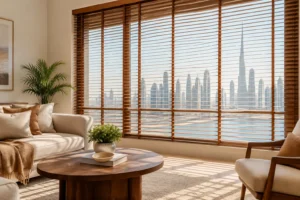

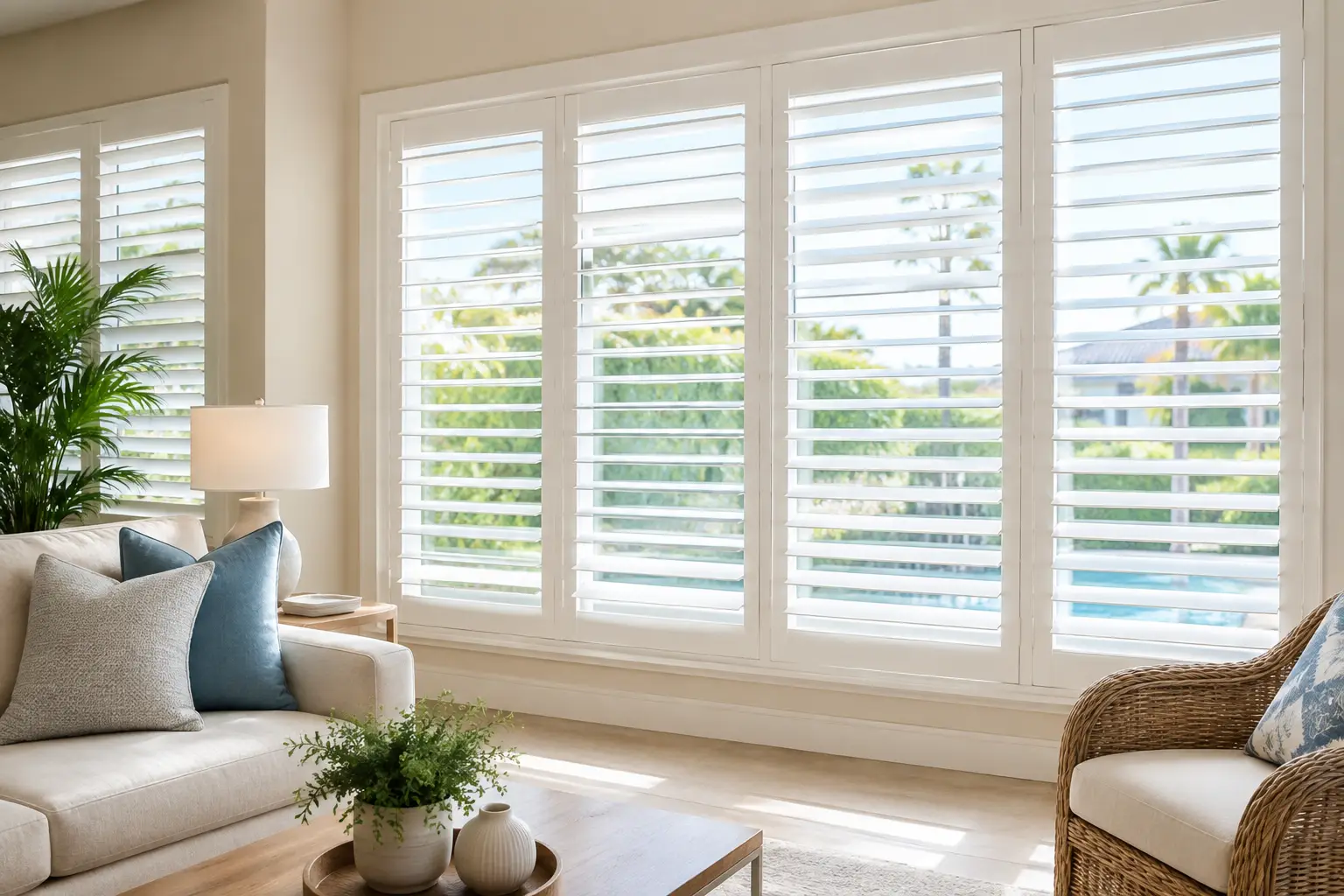
A villa’s large windows are often its best architectural feature – until afternoon glare, overlooked rooms, and uneven heat gain make them difficult to enjoy. Plantation shutters for villas provide a tailored answer: a permanent-looking window treatment that gives homeowners control over privacy, daylight, and interior character without hiding the view behind heavy fabric.
Unlike ready-made blinds, shutters are measured to the window opening, panel layout, and room use. That fitted approach matters in villas, where bay windows, arched openings, sliding doors, and expansive glass all need more than a one-size-fits-all solution.
Why plantation shutters for villas are a practical choice
The appeal starts with light control. Adjustable louvers allow soft daylight to enter while reducing direct sun and visual exposure from outside. Tilt the louvers upward in a living room to brighten the ceiling and preserve privacy, or close them more fully in a bedroom when rest is the priority. You can also open shutter panels wide when you want the window completely clear.
This flexibility is especially valuable in rooms with changing needs. A family room may need filtered daylight during the day, privacy in the evening, and a clean open view when entertaining. In a home office, shutters can reduce screen glare without making the room feel closed off. For a villa owner, one treatment can answer several daily requirements.
Shutters also create a more structured finish than roller blinds or standard curtains. Their framed design follows the architecture of the window, adding depth and visual order to both modern and classic interiors. White and warm neutral finishes work well in bright contemporary villas, while painted colors or wood-look tones can coordinate with more traditional furniture, wall finishes, and flooring.
There is a trade-off. Shutters are a more considered investment than many basic blinds, and their built-in appearance is less soft or decorative than drapery. Where a room needs acoustic softness, complete darkness, or a layered luxury look, combining shutters with custom curtains can be the better choice.
Choose the material for the room, not only the look
Material selection should reflect heat, humidity, sunlight, and how the room is used. Natural wood shutters offer warmth, detail, and a refined furniture-like finish. They are a strong option for formal living rooms, studies, and bedrooms where design character is the main priority.
For bathrooms, kitchens, laundry spaces, and other humid areas, moisture-resistant composite or PVC shutters are usually more practical. These materials are easier to maintain and less likely to react to damp conditions than untreated wood. They can also suit busy family homes because the surface is straightforward to wipe clean.
The best choice depends on the window size as well. Larger openings place more demand on panels and hinges, so the shutter construction, frame depth, and panel configuration should be planned carefully. A site visit helps identify whether a wide window should use multiple panels, a tracked system, or a different treatment altogether.
Color matters beyond decoration. White shutters give rooms a crisp, airy feel and blend naturally with many ceiling and wall colors. Off-white, taupe, gray, or custom-painted finishes can create a more integrated design when the villa has a defined palette. Samples should always be viewed in the actual room, because daylight can make a finish appear cooler or warmer than it does in a showroom.
Louver size changes the view and the feel of the room
Louver size is one of the decisions homeowners often overlook. Smaller louvers create a more detailed, traditional appearance and can suit smaller windows or classic interiors. Larger louvers look cleaner and more contemporary, and they allow a broader view when open.
For villas with floor-to-ceiling or wide picture windows, larger louvers are often the more natural match. They reduce visual interruption and make the most of the glass area. However, they are not automatically right for every room. A compact guest room, narrow bathroom window, or highly decorative interior may look better with a more proportionate louver size.
During a design consultation, it is worth considering the view from both sides. From inside, you want the louvers to frame the garden, pool, skyline, or neighborhood view attractively. From outside, consistent panel alignment and a clean finish can improve the villa’s overall facade.
Plan around window operation and access
A well-designed shutter system should not make a window harder to use. Casement windows, tilt-and-turn windows, French doors, and sliding doors each need a different solution. Hinged panels may be ideal for a standard window, while bypass or bi-fold tracked panels can be more suitable for a wide opening that needs regular access.
For doors leading to a terrace, garden, or balcony, think about traffic flow before choosing the configuration. The shutters should open in a direction that does not block furniture or interrupt the route outside. If the opening is used frequently, a treatment that moves smoothly and parks neatly is more valuable than one that simply looks good when closed.
Handles, locks, window cranks, and recessed frames also need to be measured. This is why accurate surveying is not a formality. Even a small projection can affect panel clearance and fitting quality. Made-to-measure shutters should be designed around these details rather than adjusted on installation day.
Privacy and heat control need realistic expectations
Plantation shutters provide excellent privacy control when the louvers are angled correctly, particularly at street level or where neighboring villas face each other. They can also help soften harsh sunlight and reduce direct solar exposure. This can make rooms more comfortable and help protect furnishings from intense rays.
They are not, however, a replacement for insulated glazing, blackout lining, or a full thermal solution. Small gaps around louvers and frames are normal, and some light will remain visible. For bedrooms requiring near-total darkness, shutters may need to be paired with blackout curtains or blackout blinds. The same approach can add softness and improve sound absorption in large, echo-prone spaces.
For homeowners considering smart-home integration, automation may be possible depending on the shutter design and desired function. Motorized tilting can be useful for high windows or hard-to-reach spaces, while manually opening panels often remains the simplest option for accessible windows. The right recommendation depends on window height, daily use, and the existing home-automation setup.
Installation quality determines the final result
Shutters may look simple once installed, but precision behind the scenes is what makes them operate properly. The installer must account for uneven walls, window recess depth, tile lines, moldings, and the condition of the mounting surface. A frame that is even slightly out of square can affect how the panels close and how the louvers align.
A professional process should begin with a home visit, measurements, and discussion of the room’s use. Samples make it easier to compare finishes against wall paint, furniture, and flooring. Once the design is approved, the shutters are produced to the agreed dimensions and fitted with the correct frames, hinges, and hardware.
Dubai Drapes Studio supports this process with free appointments, material guidance, precise measuring, custom production, and professional installation. That means villa owners can make decisions with real samples and practical advice rather than relying on online images or generic dimensions.
Maintain the finish with simple care
Most shutters need very little daily maintenance. Dust the louvers with a soft microfiber cloth or a vacuum brush attachment, then wipe marks with a lightly damp cloth where the material allows it. Avoid harsh chemicals, excessive water, and abrasive sponges, especially on painted or wood finishes.
Open and close panels gently, and do not force a louver if it catches. If a panel begins to rub, shift, or close unevenly, arranging an adjustment early can prevent unnecessary wear on hinges and hardware. With sensible care, well-fitted shutters retain their clean appearance for years.
The best villa window treatment is the one that respects the architecture while making daily living easier. Book a free appointment to see shutter samples in your own rooms, compare practical options, and choose a finish that feels right from morning light through the evening.