
A low curtain price can look attractive until morning sunlight leaks around the edges, the fabric fades after a season, or the track struggles under the weight. When shoppers ask for the cheapest blackout curtains in Dubai, the better question is: what is the lowest-cost option that will actually darken the room, fit correctly, and last?
For bedrooms, nurseries, media rooms, staff accommodation, hotels, and shift-worker spaces, blackout curtains are a practical investment. They help control daylight, add privacy, and can reduce glare and some heat gain at the window. The most affordable choice is rarely the thinnest ready-made panel. It is the solution that matches the window, the room’s purpose, and the level of darkness you genuinely need.
What “Cheapest” Should Mean for Blackout Curtains
A budget blackout curtain should still perform its core job. That means dense fabric or effective blackout lining, enough width for proper fullness, a suitable track or rod, and an installation that limits light gaps. If one of these elements is missing, a low purchase price can become poor value quickly.
Ready-made curtains are usually the least expensive starting point, especially for standard-sized windows. They can work well in a temporary apartment, a guest room, or a space where appearance is not a major concern. However, standard panels often leave uncovered edges, sit too high or too short, and come in limited colors and heading styles. A ready-made 140 cm panel is not automatically enough for a 140 cm window. Curtains need extra width to close with attractive fullness and block light effectively.
Made-to-measure blackout curtains cost more upfront, but they can be the economical choice for wide windows, unusual ceiling heights, bay windows, or rooms where sleep quality matters. You pay for exact measurement, fabric planning, tailoring, track selection, and professional fitting instead of taking a chance on multiple off-the-shelf purchases that still do not cover the opening properly.
The Main Factors Behind Blackout Curtain Pricing
There is no single price for blackout curtains because each room has different requirements. Fabric, lining, dimensions, heading, hardware, and installation all influence the quotation. Understanding these variables makes it much easier to compare offers fairly.
Fabric Type and Blackout Performance
Some blackout fabrics have a coated backing built into the material. Others use a decorative face fabric paired with separate blackout lining. A coated blackout fabric is often a cost-effective route for simple, functional rooms because it combines the face fabric and light-blocking layer in one product.
A lined curtain can offer a more premium finish and a wider choice of decorative fabrics, textures, and colors. It is particularly useful when the front of the curtain is an important part of the interior design. The trade-off is that lining adds material and tailoring cost. For a rental property or a straightforward bedroom, a good quality blackout fabric may be the more sensible budget decision. For a villa master bedroom or hotel-style setting, lined curtains may justify the additional spend.
Do not assume every dark-colored curtain is blackout. Dark fabric can reduce visible light, but it may still allow daylight to pass through. Ask whether the selected material is blackout, dim-out, or decorative only. Dim-out curtains soften daylight but do not create the darker environment many sleepers expect.
Window Size, Curtain Fullness, and Drop
Curtain pricing is based on fabric consumption, not simply window width. A wider window needs more fabric, while a floor-to-ceiling drop increases the required meterage. Fullness also matters. A curtain with insufficient fullness can look flat when closed and may pull apart at the center.
For the best balance of price and appearance, your consultant may recommend a practical fullness ratio rather than an overly gathered look. A simple wave heading can create a clean, modern result, while eyelet and pencil-pleat styles can be suitable for selected budget projects. The right heading depends on the track, fabric weight, and look you want, not just the initial price.
Tracks, Rods, and Light Gaps
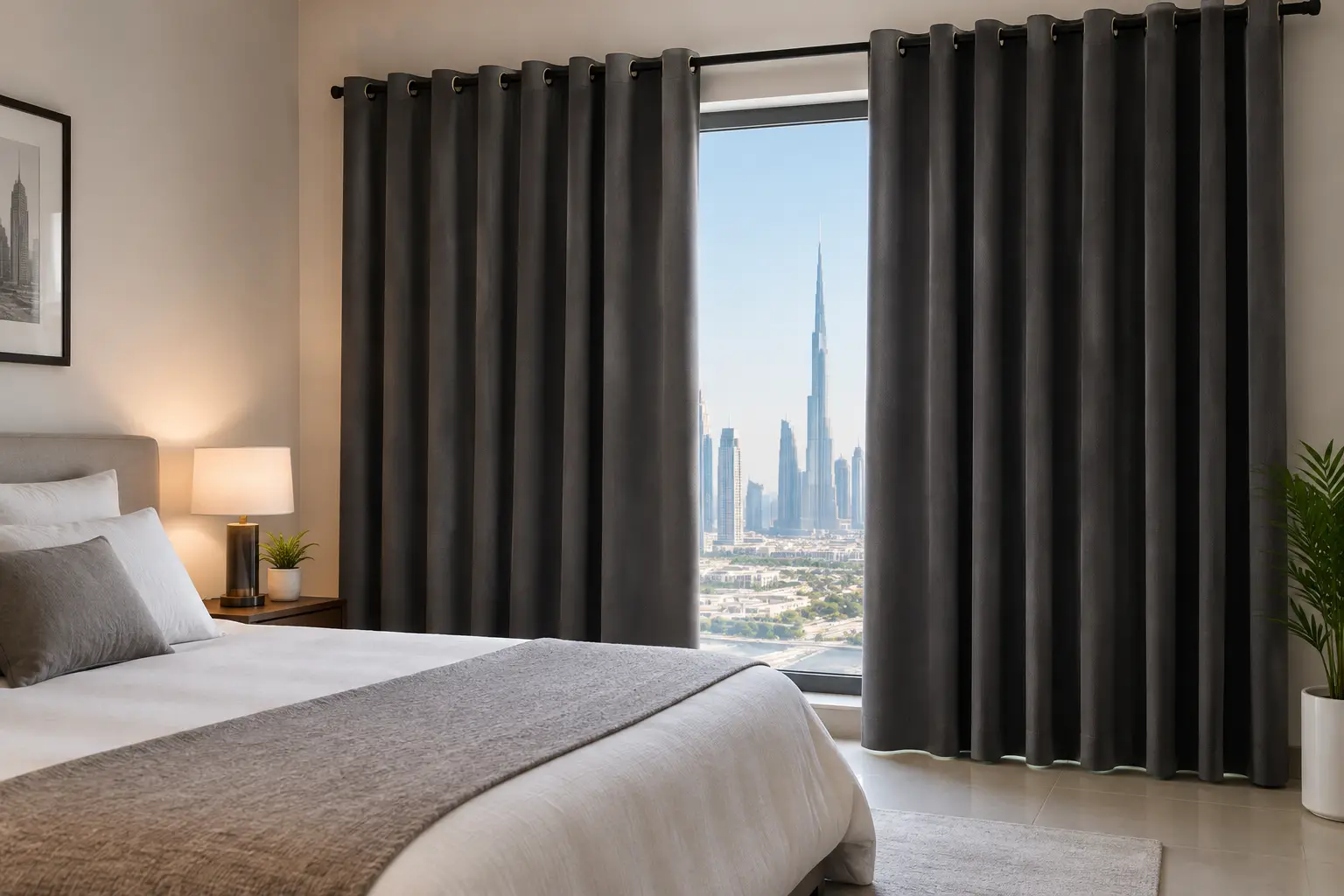
The curtain system is often overlooked in low-cost quotes. A light-blocking fabric cannot compensate for an unsuitable rod, a weak track, or inadequate wall fixing. Heavy blackout curtains need hardware that glides smoothly and supports their weight without bending or sticking.
Ceiling-mounted tracks are often effective for reducing light from above, especially where windows extend close to the ceiling. Extending the track beyond both sides of the window can also reduce side gaps. This does not make a room completely light-proof, but it can make a noticeable difference for bedrooms and media rooms.
If you already have a usable rod or track, reusing it may reduce your project cost. It only makes sense if the hardware is straight, secure, correctly positioned, and rated for the new curtain weight. Replacing a failing track later can cost more than selecting the correct system from the start.
Measuring and Installation
Measurement errors are among the most expensive ways to buy cheap curtains. Panels that are too short, too narrow, or incorrectly positioned can require alteration or replacement. Measuring also becomes more complex around AC units, window handles, cornices, furniture, false ceilings, and motorized systems.
A free site visit gives you an opportunity to see fabric samples in the actual room, check the available fixing area, and receive a clear recommendation before production begins. At Dubai Drapes Studio, the consultation can cover measurements, blackout level, heading style, track options, fabric selection, and installation in one process. This avoids the common gap between a low online product price and the final cost of making it work in the room.
How to Get the Best Value on Blackout Curtains
Start by defining the room’s job. A child’s bedroom may need strong light control and washable, durable fabric. A home theater may prioritize maximum darkness. A guest room may only need privacy and softer morning light. Once the requirement is clear, it is easier to avoid paying for features you will not use.
Keep the design straightforward where you can. A single blackout layer is usually less expensive than a double curtain arrangement with sheers, decorative side panels, tiebacks, pelmets, and premium hardware. Those additions can create a beautiful hotel-style finish, but they should be intentional design choices rather than accidental extras.
Choose durable neutral colors if you are furnishing a rental unit or planning for long-term use. Beige, gray, taupe, off-white, and soft charcoal work with more wall colors and furniture changes than highly trend-driven shades. A neutral does not have to be plain. Textured blackout fabrics can add warmth without the cost of custom pattern matching or elaborate detailing.
It also helps to request a complete quotation, not a fabric-only figure. A useful quote should make clear whether it includes fabric, lining if required, stitching, heading, tracks or rods, brackets, delivery, and installation. Comparing complete project totals prevents a seemingly low offer from becoming expensive once essential components are added.
When Ready-Made Curtains Are Enough
Ready-made blackout curtains can be a reasonable choice when the window is a standard size, the room is temporary, and small light gaps are acceptable. They are also useful when you need an immediate, simple solution while waiting for a larger renovation or furnishing project.
Before buying, measure the full area you want covered rather than the glass alone. Consider the desired height, the clearance above the window, and the width needed beyond each side. Check whether the package includes two panels or one, and confirm the stated dimensions are per panel. These details prevent the common frustration of receiving curtains that cover only half the window when closed.
For rooms where darkness, fit, and appearance are priorities, custom curtains offer more control. They are especially worthwhile for sliding doors, oversized glazing, corner windows, and bedrooms exposed to strong early-morning sun.
Questions to Ask Before You Order
Ask whether the fabric is true blackout or dim-out, how much fabric fullness is included, and whether the selected track can support the finished curtain weight. Confirm the finished drop and width, not just the fabric meterage. If room-darkening performance is important, ask how the design will address top and side light gaps.
You should also ask about cleaning recommendations. Some blackout-coated fabrics need gentle care, while certain lined curtains may require professional cleaning. A lower-priced fabric that cannot suit the room’s cleaning needs may not be the right value for a family home, clinic, or hospitality project.
Finally, check the expected production and installation schedule. A custom solution should be made accurately, but it should also fit your handover date, move-in plan, or renovation timeline. Clear communication on measurements, fabric approval, and fitting dates keeps the project simple.
The right blackout curtains do not need to be the most expensive in the showroom. They need to suit your window, block the light you want blocked, and stay reliable through daily use. Book a free appointment to compare practical fabric and fitting options in your space, then choose a solution that protects both your sleep and your budget.