

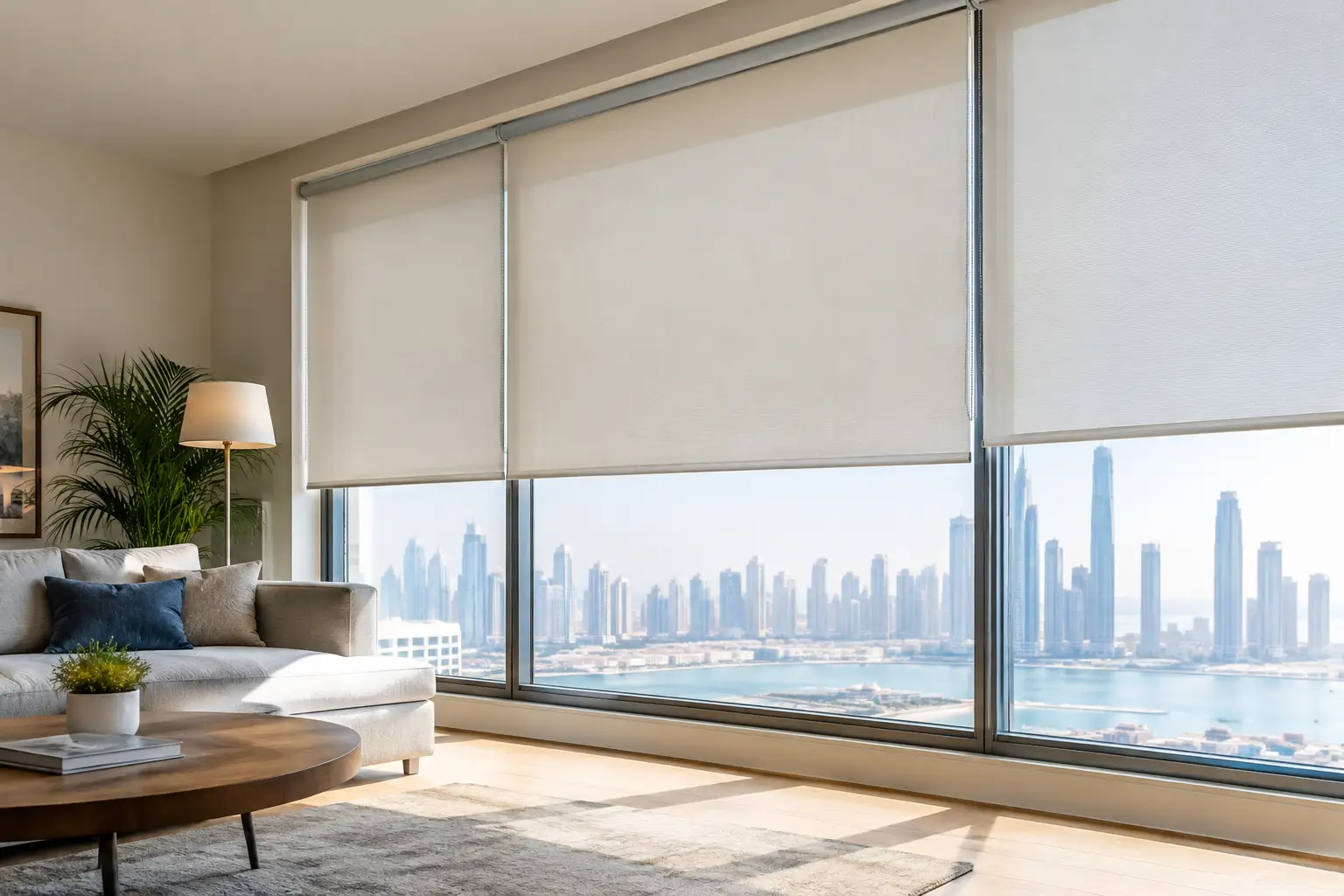
Floor-to-ceiling glass can make a Dubai home feel spectacular at 10 a.m. and uncomfortably exposed by noon. If you are searching for rolle blinds in dubai, the right choice is not simply about covering a window. It is about controlling glare, preserving privacy, managing heat, and giving the room a clean, finished look without adding visual weight.
Roller blinds are one of the most adaptable window-treatment options for apartments, villas, offices, and hospitality spaces. Their simple profile works with modern interiors, while the fabric and operating system can be tailored to how each room is used. A bedroom needs darkness. A home office needs screen-friendly light. A living room may need daytime privacy without losing its view.
Why Rolle Blinds in Dubai Need a Custom Approach
Off-the-shelf blinds can look acceptable in a showroom, but windows in real properties rarely follow standard dimensions. Recess depths vary, window frames are not always perfectly square, and large glazing panels often need multiple blinds to operate correctly. A made-to-measure system accounts for these details before production begins.
Fabric selection matters just as much. Dubai sunlight is intense, and the wrong fabric can leave a room too bright, too warm, or difficult to use during the day. The goal is not always complete darkness. In many spaces, it is to soften harsh sun while maintaining an open, comfortable atmosphere.
At Dubai Drapes Studio, a site visit allows the team to assess window direction, room use, mounting options, and the surrounding interior before recommending a suitable blind system. Samples can be compared against wall colors, flooring, furniture, and natural light rather than chosen from a small screen image.
The three fabric choices that shape daily comfort
Sunscreen roller blinds are popular for living rooms, offices, and spaces with wide windows. Their woven structure filters glare and UV exposure while retaining a degree of outward visibility during daylight. Openness levels differ, so a denser fabric provides more privacy and sun protection, while a more open weave preserves a clearer view.
Blackout roller blinds are better suited to bedrooms, nurseries, media rooms, meeting rooms, and any space where light reduction is the priority. The fabric blocks light through its face, but the installation detail still matters. Light can enter around side gaps, above the roller, or below the hem bar. For stronger room darkening, cassette systems, side channels, or carefully specified overlap may be worthwhile.
Dim-out fabrics sit between sunscreen and blackout options. They reduce strong daylight noticeably without creating a fully dark room. This makes them a practical choice for lounges, guest rooms, and spaces that receive direct afternoon sun but still benefit from a soft glow.
Choosing the Right Roller Blind System
A roller blind should fit the room, but it must also suit the window construction. Recess-mounted blinds create a neat, built-in appearance when there is enough depth inside the opening. Face-fixed blinds are installed above or beyond the window frame and can be a better solution where a recess is shallow, uneven, or interrupted by handles.
For wide windows, one oversized blind is not always the best answer. Large fabric widths can be heavier to operate and may have practical manufacturing limits. Dividing the opening into coordinated blinds can improve operation, reduce fabric stress, and allow selective light control across the room. The small gap between blinds is a trade-off, but good planning can make it visually discreet.
The bottom bar also deserves attention. A slim exposed bar creates a contemporary look, while wrapped or coordinated finishes can help the blind feel more integrated with the fabric. Bracket colors, chain finish, and mounting position may appear minor, yet these details are noticeable in a carefully designed interior.
Manual, motorized, or smart control?
Manual chain-operated roller blinds remain a dependable and cost-effective choice for accessible windows. They are easy to use and well suited to standard bedroom, kitchen, and office openings. For homes with young children, child-safety tension devices and chain retainers should be included as part of the installation plan.
Motorized blinds are especially useful for high windows, large glass walls, and rooms with several blinds operating together. A remote, wall switch, or app can raise and lower blinds without crossing the room or handling multiple chains. In a villa with a double-height living area, this is often a practical upgrade rather than a luxury extra.
Smart-home compatibility adds scheduling and scene control. For example, blinds can lower during the hottest part of the afternoon, open gradually in the morning, or close with a single evening command. Automation has a higher initial cost, and it requires planning for power supply, controls, and integration. It is most valuable when it makes daily use genuinely easier.
Matching Blinds to Each Room
There is no single fabric or control method that works perfectly throughout a property. A thoughtful window-treatment plan assigns the right level of privacy and light management to each area.
In bedrooms, blackout roller blinds can be paired with curtains for a layered, hotel-style finish. The blind handles light control, while curtains add softness, insulation, and decorative color. In apartments facing neighboring buildings, this combination also improves privacy without making the room feel heavy during the day.
Living rooms often benefit from sunscreen blinds, particularly where a view is part of the room’s appeal. They reduce glare on television screens and protect furnishings from prolonged sunlight while keeping the glazing visually light. For west-facing rooms, a denser sunscreen fabric or an additional curtain layer may be more comfortable late in the day.
Home offices need a careful balance. Blackout fabric may be too dark for regular work, while a very open sunscreen weave can create reflections on monitors. A medium-openness sunscreen blind usually offers a useful compromise, though screen placement and window orientation should be reviewed during the consultation.
For commercial interiors, roller blinds help create a consistent finish across meeting rooms, reception areas, classrooms, clinics, and open-plan offices. Commercial projects may require fire-rated fabrics, moisture-resistant materials, easy-clean surfaces, or motorization for high-level glazing. These requirements should be identified before fabric approval, not after installation is scheduled.
Why Measuring and Installation Make the Difference
The appearance of a roller blind depends on millimeters. A blind that is slightly too narrow can leave distracting light gaps. One mounted too low can interfere with a window handle. A poorly aligned bracket may cause uneven rolling, and an unsuitable fixing can compromise performance over time.
Professional measurement covers more than width and drop. It includes recess depth, handle clearance, frame condition, ceiling level, obstacle positions, blind stacking direction, and whether nearby curtains or shutters will share the same window. This is why a site visit is often the fastest way to avoid expensive revisions later.
Installation should leave the blind operating smoothly, level across the opening, and securely fixed for regular use. For motorized systems, installers should test limits, controls, and grouped operation before handover. A good installation is quiet, precise, and unobtrusive. You notice the result every day, even if you do not notice the mechanism itself.
Getting a Clear Quote for Custom Roller Blinds
A useful quotation should state the fabric type, blind dimensions, operating method, hardware finish, motorization requirements, and installation scope. If your priority is budget, say so early. A consultant can recommend the most effective fabric and fitting approach without adding features that do not suit the room.
Equally, do not compare quotes on dimensions alone. A low price may exclude professional measuring, quality brackets, safe chain components, installation, or suitable fabric performance. The better comparison is total value: how the blind will look, operate, and hold up in the specific space where it will be installed.
Bring photos of the windows, an idea of the look you want, and a note of the issues you want solved. Then schedule a free appointment for accurate measuring, fabric samples, and a tailored recommendation. The best roller blind is the one that makes your room easier to live or work in from the first bright morning onward.