

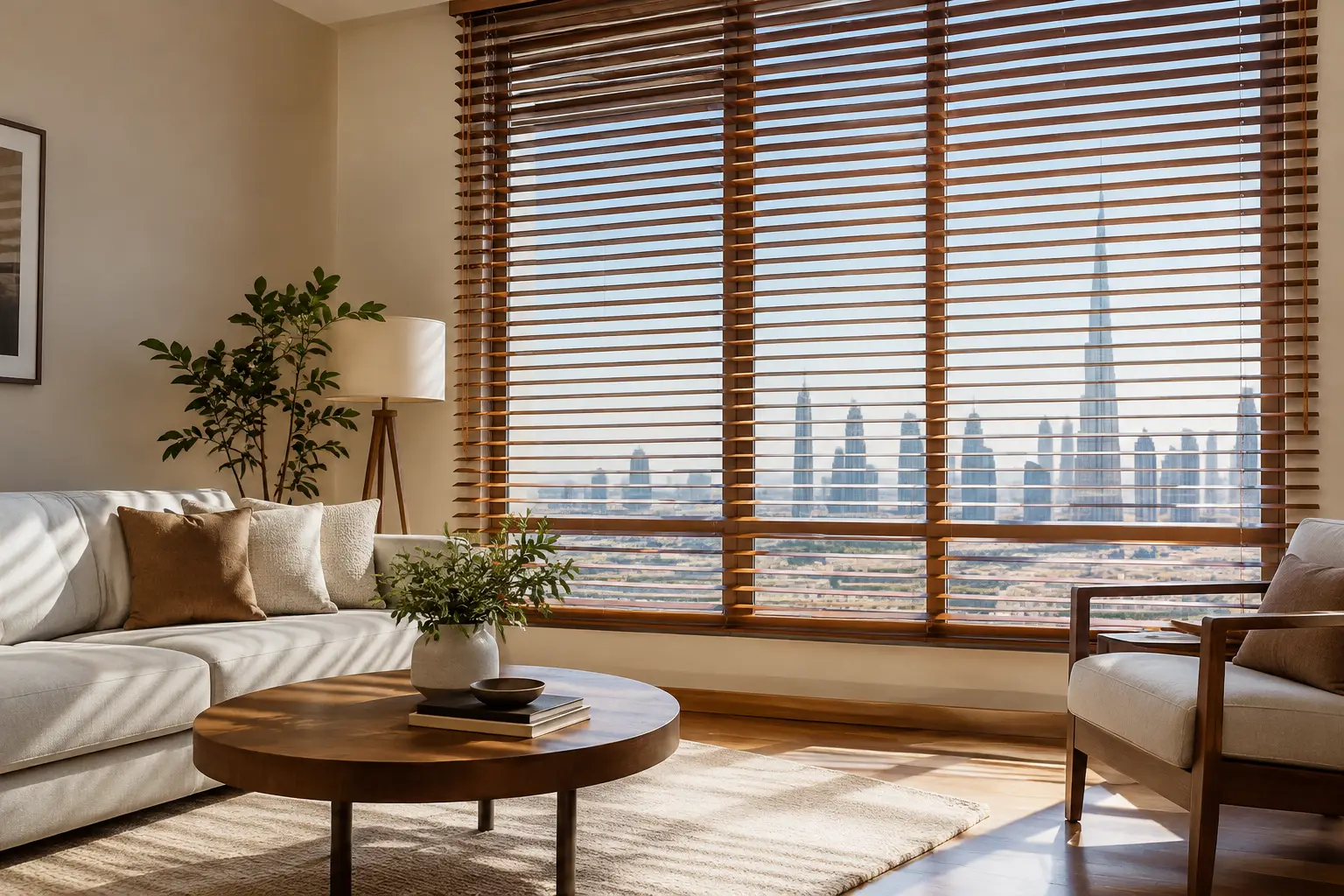
A west-facing Dubai living room can turn from bright and welcoming to uncomfortably harsh within an hour. Curtains soften the view, but they do not always give you the precise control you need. Wood venetian blinds in Dubai offer a practical middle ground: a warm, furniture-like finish with adjustable slats that can direct daylight, protect privacy, and change the mood of a room in seconds.
For villas, apartments, renovated rental homes, and design-led commercial spaces, their appeal is clear. Wood blinds bring visual structure to wide windows without making an interior feel cold or overly technical. The key is choosing the right material, slat size, color, and fitting method for the room rather than treating every window the same.
Why Wood Venetian Blinds Work So Well
Venetian blinds are built from horizontal slats that tilt open or closed and raise neatly when a clear view is wanted. With wood, that familiar mechanism gains natural grain, depth, and a more substantial finish than many standard aluminum or plastic alternatives. They suit interiors that use timber flooring, neutral walls, stone surfaces, rattan details, or contemporary upholstered furniture.
Their most useful feature is controlled light. Fully open slats allow daylight and outside views into the room. A slight tilt cuts glare while still keeping the space naturally lit. Closing the slats offers privacy, especially for street-facing bedrooms, ground-floor apartments, and bathrooms with suitable window layouts. This level of adjustment is difficult to achieve with fixed shutters or curtains alone.
They can also help reduce direct solar glare on televisions, artwork, flooring, and home-office screens. That does not mean blinds replace insulation or air conditioning. However, correctly positioned blinds create an effective first layer between intense sunlight and the room, which can make occupied spaces feel more comfortable during the brightest hours.
Choosing Wood Venetian Blinds in Dubai by Room
The best blind is not always the darkest or most decorative option. It should match how the room is used, the direction of the window, and the moisture and heat exposure it receives.
Living rooms and majlis spaces
Living areas usually benefit from wider slats, often 2 inches or more, because they give large windows a balanced, tailored appearance. Light oak, walnut, teak-inspired, and painted white finishes can all work well, depending on the furniture palette. Wider slats also provide a cleaner view when raised and make a confident design statement on broad windows.
If the room receives strong afternoon sun, consider layering wood blinds with sheer curtains or lined drapes. The blind handles daily glare and privacy, while the curtain treatment adds softness and can improve blackout performance for movie nights or formal entertaining. This combination works particularly well in villas with large glazed openings.
Bedrooms
Bedrooms require privacy first, but complete darkness may also matter for shift workers, children, or anyone sensitive to early morning light. Wood blinds give useful control, although small light gaps are natural around slats and at the sides of most blind installations. For a true blackout result, pair them with blackout curtains or choose a dedicated blackout blind system.
Painted finishes can create a calm, built-in look in bedrooms, while natural wood tones add warmth to minimalist rooms. A made-to-measure fitting matters here because uneven reveals, handles, and narrow wall returns can affect both privacy and the way the blind operates.
Kitchens, bathrooms, and humid areas
Real wood is beautiful, but it is not the right answer for every wet or high-humidity space. Steam, splashing water, and frequent cleaning can cause natural timber to expand, contract, or lose its finish over time. In kitchens close to a sink or in bathrooms, a high-quality faux wood Venetian blind is often the better long-term choice.
Faux wood delivers a similar slatted appearance while offering greater moisture resistance and easy wipe-clean care. This is one of the most worthwhile trade-offs to discuss during a site visit. The desired look can still be achieved without choosing a material that will struggle in its environment.
Home offices and study areas
For a home office, the ability to tilt slats is especially valuable. Direct light on a laptop or monitor causes glare, yet closing a room off completely can make it feel tiring. A gentle slat angle redirects the light while preserving daylight. Choose a finish that works with the desk, shelving, and wall color rather than making the window treatment an isolated feature.
Real Wood or Faux Wood: What Should You Choose?
Real wood Venetian blinds are lighter in weight, naturally distinctive, and often the preferred choice for dry living spaces, bedrooms, dining rooms, and executive offices. The grain variation gives every installation character. They are a strong option where design detail is the priority and the windows are not exposed to moisture or extreme conditions.
Faux wood blinds are more uniform in appearance and generally more resistant to humidity, everyday wear, and frequent cleaning. They can be heavier than real wood, so the width and drop of the blind should be planned carefully. On very wide windows, splitting the treatment into two or more independently operated blinds may improve handling and reduce stress on the mounting points.
Color also changes the result. White and off-white blinds make compact rooms feel crisp and bright. Gray, taupe, and greige finishes suit modern interiors with stone or concrete accents. Medium oak and walnut shades complement warm flooring and traditional furniture. Before confirming a choice, view the sample beside the wall paint, flooring, and window frame in the actual room. Showroom lighting rarely tells the complete story.
Details That Determine the Final Look
A wood blind can look excellent in a sample book and still disappoint if it is not measured and installed correctly. Window recess depth, frame projections, opening direction, sill clearance, handles, and nearby furniture all influence the correct specification.
Inside-recess fitting gives a clean, architectural look when the recess is deep and square enough. Outside-recess fitting can cover irregular openings, reduce visible side gaps, and create the impression of a larger window. Neither method is automatically better. The right option depends on the window construction and the amount of privacy and light coverage required.
Slat width deserves attention too. Narrow slats often suit smaller windows and more compact rooms. Wider slats feel more contemporary and show more of the outdoor view when open, but they carry a bolder visual weight. Ladder tapes, where available, can soften the appearance and add a decorative accent, while cords provide a more minimal look.
For larger or hard-to-reach windows, motorized operation may be worth considering. Motorization is convenient for tall glazing, multi-window living rooms, and homes using smart-home controls. It also avoids long operating cords, which many families prefer in children’s rooms. The practical question is not whether automation sounds impressive, but whether it will make daily use easier for that specific window.
Measuring, Installation, and Everyday Care
Off-the-shelf blinds are tempting because they appear quick and inexpensive. But an inaccurate width, a poorly placed bracket, or a blind that catches on a window handle can turn a simple purchase into a frustrating replacement. Made-to-measure service removes much of that risk by assessing the opening before production begins.
A professional consultation should cover window measurements, sun direction, room function, material suitability, color samples, operating preference, and installation requirements. It is also the right time to coordinate blinds with curtains, tracks, wallpaper, rugs, or existing furnishings. The goal is not simply to cover glass. It is to create a finished window treatment that belongs in the room.
Maintenance is straightforward. Dust the slats regularly with a soft microfiber cloth, feather duster, or vacuum brush attachment. Wipe faux wood with a lightly damp cloth as needed, then dry it promptly. For real wood, avoid soaking the surface or using harsh cleaners. Operate the blind gently, particularly when raising it, and keep the slats open before lifting to reduce strain on the mechanism.
A Better Way to Specify Your Blinds
The most successful wood Venetian blind projects start with the window, not a catalog photo. A free appointment allows you to compare real samples in your own lighting, confirm whether natural or faux wood is suitable, and select a finish that works with the rest of the interior. Dubai Drapes Studio can measure, recommend, tailor the specification, and arrange professional installation so the finished blinds look considered from every angle.
If you are updating one room or planning window treatments across an entire property, schedule a visit before finalizing colors or furniture placement. The right slat finish and fitting can make a daily difference in light, privacy, and how comfortably the room feels.