
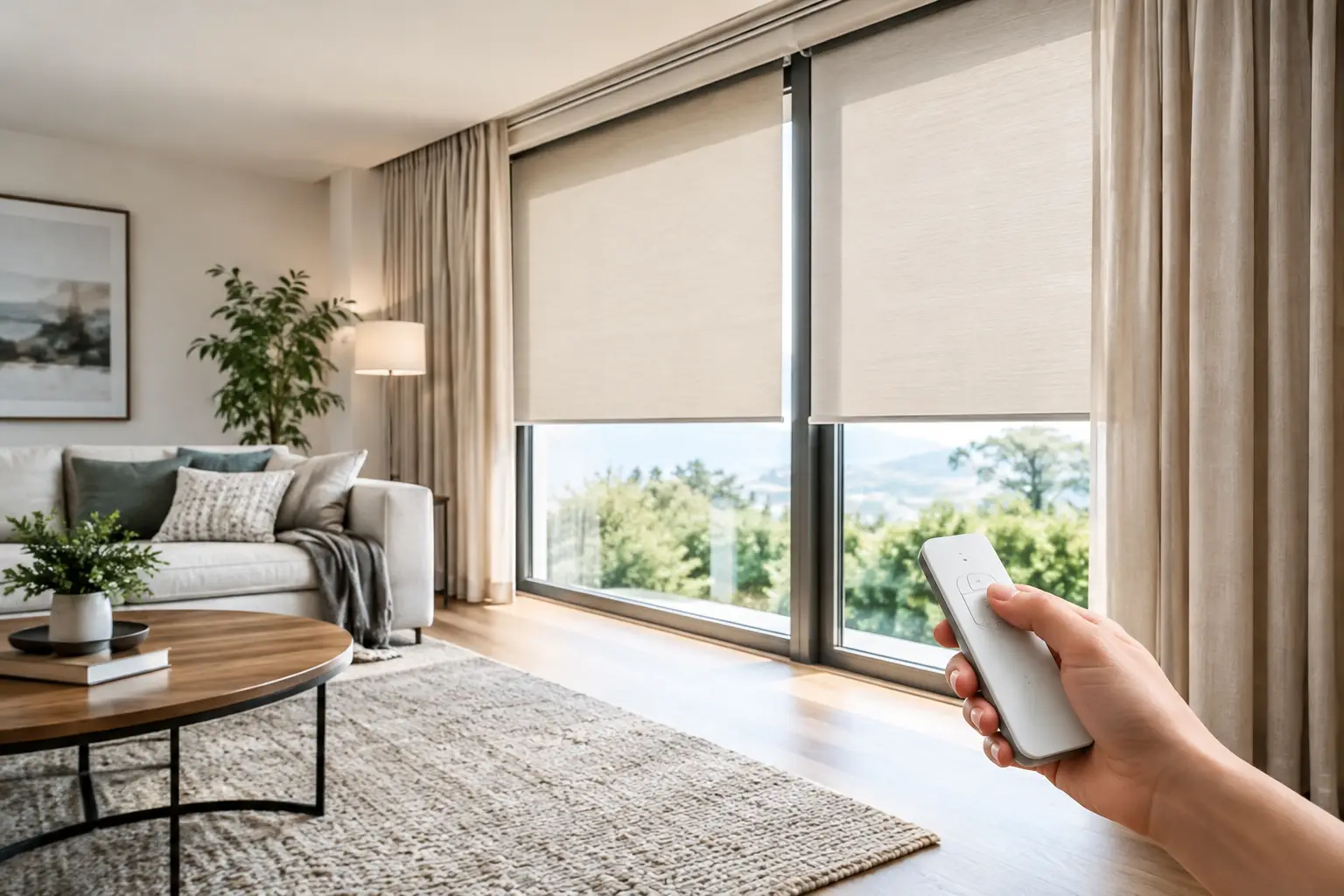
A curtain that closes at sunset, a blind that reduces glare before a video call, and a bedroom that darkens on schedule are practical upgrades, not just smart-home features. Somfy motorized blinds and curtains bring that level of control to made-to-measure window treatments, combining tailored fabric and fitting with quiet, reliable automation.
For homes, apartments, villas, hotels, and offices, the right system must do more than move a curtain. It needs to suit the window size, the weight of the fabric, the room’s privacy requirements, available power, and the way the space is used every day. That is why a site visit and accurate measurement should come before selecting a motor or control method.
Why Choose Somfy Motorized Blinds and Curtains?
Somfy is widely used for motorized window coverings because it offers a flexible system for curtains, blinds, shades, and smart-home controls. Instead of pulling heavy drapes across a wide track or adjusting several blinds one by one, users can operate coverings with a wall switch, handheld remote, app, timer, or compatible home-automation setup.
The immediate benefit is convenience, particularly for high windows, double-height living rooms, wide sliding doors, and hard-to-reach areas behind furniture. But automation also improves how a room performs. Closing blackout curtains before sunrise can support better sleep. Lowering sunscreen blinds during strong afternoon light can reduce screen glare and help protect furnishings from harsh sunlight. Opening sheers in the morning maintains daylight while preserving a degree of privacy.
A motorized system can also make a finished interior look more considered. Curtains travel evenly on a properly installed motorized track, rather than gathering unevenly from daily pulling. For formal living spaces and hospitality interiors, that consistent appearance matters.
Start With the Window Treatment, Not the Motor
The best automation begins with the right curtain or blind. A motor cannot correct a fabric that is too heavy for the track, a blind style unsuited to the window, or an installation planned without adequate clearance.
For curtains, many homeowners choose a layered arrangement: sheer curtains for filtered daylight and daytime privacy, paired with blackout or dim-out drapes for sleeping, media viewing, and complete evening privacy. Each layer can be installed on its own motorized track. This lets you open the sheers while keeping the drapes closed, or close both layers when stronger light control is needed.
For blinds, the selection depends on the room and purpose. Roller blinds are clean and practical for apartments, offices, kitchens, and contemporary interiors. Sunscreen fabrics allow outward visibility while cutting glare and heat. Blackout roller blinds suit bedrooms, nurseries, meeting rooms, and projector spaces. Roman blinds add softness and a decorative textile finish, while Venetian-style options provide adjustable light direction.
In many projects, combining systems produces the strongest result. A sunscreen roller blind can handle daytime glare at the glass, while decorative curtains soften the room and provide a fuller blackout effect at night. The choice depends on the desired look, budget, and how much light control the room genuinely requires.
Fabric Weight and Track Design Matter
A wide curtain in lined blackout fabric weighs considerably more than a lightweight sheer. The motor, track, brackets, and fixing surface must all be selected accordingly. Window width, ceiling height, curtain fullness, and any curves or returns in the track also affect the specification.
This is one reason off-the-shelf motorized kits can disappoint. They are often chosen by width alone, without considering fabric weight, track layout, or the structure supporting the installation. Made-to-measure planning gives the system the best chance of operating smoothly for years.
Choosing the Right Power Option
Motorized blinds and curtains can be powered in several ways. The right option is usually decided by the stage of the project and the window location.
Hardwired motors are an excellent choice during construction, renovation, or major fit-out work. Power can be planned discreetly, leaving a clean finished appearance and avoiding the need to recharge batteries. For multiple windows, hardwired systems can be especially practical because all wiring and controls are coordinated before final decoration.
Battery-powered motors suit completed homes where opening walls or ceilings is not desirable. They offer a less disruptive installation and can work well for lighter blinds and certain curtain applications. The trade-off is that batteries require periodic charging or replacement, depending on usage, window size, and motor type.
Solar charging may be suitable for selected blind systems where adequate sunlight reaches the panel. This can reduce charging needs, although it should be assessed carefully. Shaded windows, deep balconies, tinted glazing, and heavy external obstructions may limit its effectiveness.
During a free appointment, an installer should inspect the access to power, ceiling construction, and the position of each window before recommending a solution. The most convenient motor is not always the best option if it creates unnecessary maintenance or compromises the finish.
Control Options for Everyday Life
The simplest way to control Somfy motorized blinds and curtains is with a remote. This is ideal for one room, a small number of windows, or anyone who wants immediate operation without relying on a phone or smart-home hub.
Wall-mounted controls provide a familiar, permanent option near the entrance, bedside, or seating area. They are useful for bedrooms and living rooms where guests or family members should be able to use the curtains without opening an app.
For larger homes and connected interiors, app-based control and automation can add real value. You may create schedules that open bedroom curtains in the morning, lower blinds during the brightest part of the day, or close all selected coverings at night. Depending on the system selected, controls can also be integrated with compatible smart-home platforms, scenes, and voice commands.
Automation should be built around habits, not added simply because it is available. A household that leaves home early may value one-touch “away” control. A villa with extensive glazing may prioritize timed sunscreen shades. In a hotel suite, intuitive bedside control may be more useful than a complex app. The right setup should feel easy from the first day.
What Professional Measurement and Installation Prevent
Motorization is precise work. Curtain tracks must be level, securely fixed, and positioned so the fabric clears window handles, air-conditioning grilles, false ceilings, and nearby furniture. Blinds need correct recess measurements, clear side gaps where required, and reliable mounting points.
Professional installation also addresses the details that affect daily use: where curtains stack when open, whether they should meet in the center or draw to one side, how far the track sits from the wall, and whether a blackout curtain needs overlap to reduce light leakage. These decisions are easy to miss when buying online but highly visible once the treatment is fitted.
Dubai Drapes Studio manages this process from consultation and fabric selection through in-house tailoring, motorization planning, and professional installation. Bringing samples to the property makes it easier to compare fabric colors against actual flooring, wall finishes, lighting, and furniture rather than making a decision from a small screen image.
Plan Automation Early When You Can
If you are renovating, tell your designer, electrician, or fit-out team that motorized window treatments are planned. Early coordination allows power points to be placed in the right locations and permits tracks to be recessed into ceilings when that look is desired. It can also prevent conflicts with ceiling details, AC vents, decorative lighting, and curtain pockets.
That said, you do not need to be in a renovation to add motorization. Battery-powered and carefully routed solutions can bring automated control to finished apartments and villas with minimal disruption. The key is an honest assessment of what is possible at each window.
A Better Way to Specify Your Project
Before requesting a quotation, think about how you want each room to function. Note where glare is strongest, which windows face neighboring buildings, where total darkness is required, and which curtains are difficult to reach. Photos, rough window dimensions, and details of any existing smart-home system are useful starting points, but final measurements should always be taken on site.
Book a free appointment to discuss Somfy motorized blinds and curtains with a specialist, review fabric and blind options, and receive recommendations matched to your windows and daily routine. A well-planned system should not feel complicated or overly technical. It should simply make every room more comfortable at the touch of a button.