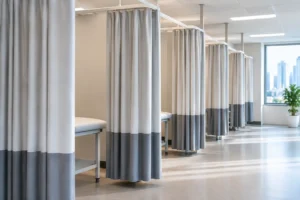


A curtain bay can affect far more than the appearance of a patient room. It influences how confidently patients speak with clinicians, how easily staff move during care, and how practical daily cleaning becomes. Privacy antibacterial curtains for clinics and hospitals are designed to answer all three needs with a single fitted system: dignified visual separation, materials selected for demanding environments, and tracks that operate smoothly when every second counts.
For healthcare fit-out teams, clinic managers, architects, and facility operators, the right curtain is rarely an off-the-shelf purchase. Bay widths, ceiling conditions, room layouts, access requirements, and cleaning routines all vary. A made-to-measure approach helps ensure the curtain actually protects the space it was specified for without creating gaps, bunching on the floor, or difficult access around beds and equipment.
Why healthcare privacy curtains need a different specification
A standard decorative curtain may look suitable at first glance, but healthcare environments place different demands on fabric and hardware. Curtains are opened and closed repeatedly throughout the day. They may be exposed to cleaning agents, frequent handling, mobility equipment, and fast-paced room turnovers. At the same time, they must preserve patient privacy without making a compact treatment area feel closed in.
Antibacterial curtain fabrics are commonly chosen as one element of a wider hygiene strategy. They can be treated or manufactured to inhibit bacterial growth on the fabric surface, depending on the product specification. This is not a replacement for established infection-control procedures, scheduled laundering, surface disinfection, or the facility’s own clinical protocols. It is, however, a practical material choice where hygiene, durability, and privacy must work together.
The fabric alone does not determine performance. A curtain that drags on the floor can collect dirt and become difficult to clean. One that is too narrow leaves exposed sightlines. A poorly matched track can snag, create noise, or fail under frequent use. These details are why professional measurement and installation matter in clinical settings.
Selecting privacy antibacterial curtains for clinics and hospitals
The best specification begins with the function of the room. A day-surgery recovery bay has different requirements from a dialysis area, consultation room, emergency department, maternity ward, or long-term care facility. Start by defining the level of visual privacy needed, the cleaning method, the desired light transmission, and any local fire-safety or healthcare procurement requirements.
Choose the right fabric performance
Washability is central. Ask how the selected fabric should be cleaned, at what temperature, and whether repeated laundering can affect its finish, shrinkage, color, or antibacterial treatment. In high-turnover areas, facilities may prefer systems that allow curtains to be removed and refitted efficiently so cleaning does not disrupt operations for long.
Opacity also needs a balanced decision. Fully opaque fabrics give stronger privacy, especially in examination and recovery areas. Semi-opaque fabrics can make a treatment space feel brighter while still limiting direct views. In some layouts, a carefully chosen light-filtering fabric is appropriate, but it should never compromise the patient’s need for discretion.
Color has an operational role as well as a design role. Soft neutrals and calm healthcare tones can support a reassuring atmosphere, while deeper colors may better conceal minor marks between scheduled cleans. Some facilities use color coding to distinguish departments, bays, or curtain-change cycles. The most suitable option depends on the cleaning regime and interior concept, not just a sample viewed under showroom lighting.
Specify the track around the care space
Curtain tracks should follow the actual care zone, not simply the shape that is easiest to install. Straight tracks can work well between beds or along a wall. L-shaped, U-shaped, and curved tracks are often more effective where a patient needs privacy on multiple sides or where beds sit away from the wall.
Ceiling-mounted systems are common because they keep the floor clear for staff, wheelchairs, trolleys, and cleaning equipment. The ceiling structure must be assessed before fitting, particularly in spaces with suspended ceilings, services, sprinklers, air-conditioning grilles, or access panels. A site visit helps identify these restrictions before production begins.
Consider how the curtain will stack when open. A generous stack-back area keeps the bay clear and reduces the chance of fabric interfering with medical equipment or circulation routes. In smaller rooms, this can make a noticeable difference to daily usability.
Get dimensions and fullness right
Privacy curtains require sufficient fullness to close properly and maintain an even appearance. A curtain made to the exact width of the track may look flat and can leave small openings when drawn. Extra fabric provides better coverage, smoother movement, and a more professional finish.
Drop length is equally important. The curtain should provide privacy while maintaining sensible clearance from the floor. Exact requirements can vary by facility policy and cleaning practice, so measurements should be confirmed on site. The aim is a clean, controlled fit that does not drag, twist, or obstruct access beneath beds and equipment.
Practical decisions that affect maintenance
A healthcare curtain system should be planned for the people who will use and maintain it every day. This means looking beyond the initial installation. Can staff identify where each curtain belongs after laundering? Are hooks, carriers, and headings easy to remove? Will replacement panels match the existing track? Can a damaged panel be changed without replacing an entire run?
The heading style influences these answers. Ripplefold-style systems create a neat, consistent appearance and can move smoothly on compatible tracks. Eyelet headings are generally less suitable for many clinical privacy applications because they do not offer the same controlled track integration. Hook-and-carrier systems may be selected where straightforward removal and replacement are a priority.
It is also wise to keep a documented specification for each area. Record the fabric reference, finished width and drop, track layout, carrier type, and cleaning guidance. This makes future replacements faster and helps maintain a consistent standard as the facility expands or refreshes rooms.
Design can still support patient comfort
Healthcare interiors do not need to feel impersonal to perform well. A well-selected privacy curtain can soften hard finishes, reduce visual clutter, and create a more welcoming experience for patients and visitors. In pediatric clinics, gentle patterns or carefully controlled color can make a room feel less intimidating. In premium medical centers, coordinated curtains can reinforce a calm, polished interior identity.
The trade-off is that visual appeal must never override suitability. Highly textured fabrics may be harder to maintain. Pale shades may require more frequent attention. Decorative details that look appealing in hospitality interiors may be impractical around clinical beds. A good selection process brings fabric samples into the actual space, reviews them under the room’s lighting, and tests them against operational needs.
A tailored route from survey to installation
For a new clinic, ward refurbishment, or replacement program, a site consultation avoids many preventable problems. The process should review each bay, room use, track route, ceiling condition, curtain dimensions, fabric performance, and required installation timing. Samples allow decision-makers to compare opacity, texture, color, and finish before approving production.
Dubai Drapes Studio provides made-to-measure cubicle and privacy curtain solutions with fabric guidance, precise site measurement, custom tailoring, track planning, and professional installation. This approach is especially valuable where a project includes several room types or requires a coordinated fit-out across treatment areas.
Before placing an order, confirm the facility’s specific hygiene, fire, and procurement requirements with the relevant clinical and compliance teams. Product claims, cleaning instructions, and certifications should be reviewed against the project specification rather than assumed from a fabric category alone.
A privacy curtain is a small component of a healthcare interior, but patients experience it at a personal moment. When the fabric, track, fit, and maintenance plan are chosen carefully, it supports a cleaner-looking, calmer, and more respectful care environment. Book a free site appointment to assess your clinic or hospital bays and receive a tailored recommendation with clear measurements and installation planning.