
A bedroom window can look beautifully finished and still fail at the one job that matters after dark: making the room feel private. Street-facing apartments, neighboring villas, and rooms with large glazing all need a treatment that blocks unwanted views without making the space feel closed in. The best bedroom privacy blinds balance privacy, light control, insulation, and design – and the right choice depends on how you use the room.
A blind that works perfectly in a shaded guest bedroom may not suit a primary bedroom facing an active road. Before choosing a fabric or mechanism, consider where the sun falls, how close nearby windows are, whether you need daytime privacy, and how dark you want the room at night. Made-to-measure blinds give you control over these details, especially where window sizes, recesses, and ceiling heights are not standard.
What Makes Bedroom Blinds Truly Private?
Privacy is not simply about choosing the darkest fabric. It comes from the combination of material opacity, blind construction, fitting accuracy, and the gaps around the window. A blackout roller blind installed inside a deep recess can offer strong nighttime privacy, but light may still enter at the sides. A carefully specified cassette, side channels, or an outside-recess installation can reduce those gaps substantially.
Daytime privacy needs a different approach. When lights are on indoors at night, sheer or sunscreen fabrics allow silhouettes to be seen from outside. They are useful for filtering bright daylight and reducing glare, but they should not be the only covering in a bedroom where privacy is essential. Pairing a sunscreen blind with curtains, or using a dual blind system, gives more flexibility from morning through evening.
For bedrooms in Dubai and across the UAE, heat is also part of the decision. Direct sun can make a room uncomfortable and increase the load on air conditioning. Dense fabrics, cellular structures, and well-fitted blackout systems can help limit solar gain while creating a calmer sleeping environment.
Best Bedroom Privacy Blinds by Room Need
Blackout roller blinds for maximum darkness
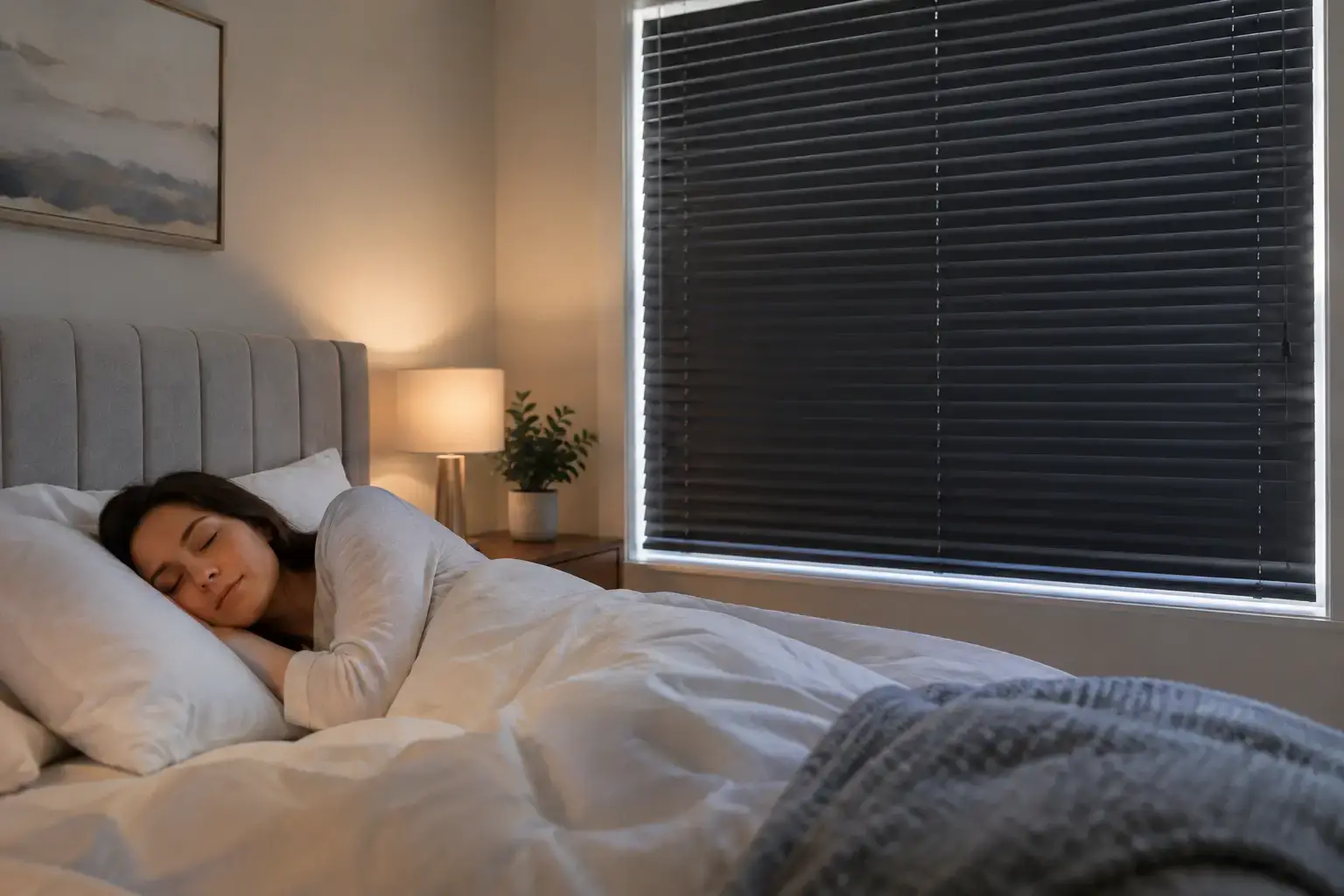
Blackout roller blinds are often the first choice for bedrooms because they are clean, practical, and effective. Their opaque fabric prevents light from passing through the blind itself, making them ideal for shift workers, young children, light-sensitive sleepers, and rooms exposed to strong early-morning sun.
The important distinction is between a blackout fabric and a blackout installation. Standard roller blinds can leave slim lines of light at the edges, particularly when fitted inside a window recess. If near-total darkness is the goal, choose a cassette roller blind with side channels or install the blind outside the recess with enough overlap on every side. This detail is where site measurement makes a visible difference.
Roller blinds also suit modern apartments and minimalist bedrooms because they take up little visual space. Available in neutral colors, textured finishes, and many fabric weights, they can disappear into the design or become a subtle feature against the wall.
Dual roller blinds for day-to-night flexibility
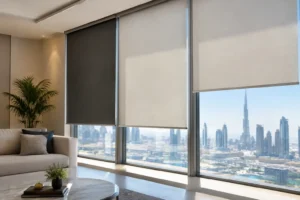
Dual roller blinds use two fabrics on one bracket system, typically a sunscreen or light-filtering fabric for the day and a blackout fabric for the evening. This is one of the most practical options for a bedroom that needs natural light without sacrificing privacy after sunset.
During the day, the sunscreen layer softens harsh sunlight and maintains an outward view while reducing glare. At night, the blackout layer closes for privacy and sleep. The trade-off is that a dual system has a slightly larger profile than a single roller blind, so it needs adequate space above the window. It is particularly effective for master bedrooms with wide windows or balcony doors.
Zebra blinds for adjustable privacy
Zebra blinds, also called day-and-night blinds, use alternating sheer and opaque horizontal bands. By moving the layers, you can align opaque bands for privacy or sheer bands for softened daylight. Their tailored appearance works well in contemporary bedrooms, especially where you want more adjustment than a standard roller blind offers.
They are excellent for controlling visibility during the day, but they are not always the strongest choice for complete nighttime blackout. The sheer sections and side gaps may allow light through, depending on the alignment and installation. For a room that needs maximum darkness, zebra blinds work best when combined with lined curtains or selected in a blackout-compatible design.
Roman blinds for a softer, furnished look
Roman blinds bring the texture and warmth of curtain fabric into a more compact window treatment. When raised, they form neat horizontal folds; when lowered, they create a smooth fabric panel. A lined or blackout-lined Roman blind can provide excellent nighttime privacy while adding a more decorative finish than a roller blind.
This choice suits bedrooms with classic, transitional, or boutique-hotel interiors. It is also useful when you want the blind fabric to coordinate with bedding, cushions, or an upholstered headboard. Keep in mind that Roman blinds stack at the top of the window, which can reduce the clear glass area slightly when open. They also need professional fitting to ensure the folds hang evenly and the operating system remains smooth.
Cellular blinds for privacy and insulation
Cellular blinds, sometimes called honeycomb blinds, have air pockets that help reduce heat transfer through the glass. For bedrooms that receive intense sun, this can improve comfort while providing a soft, refined appearance. Blackout cellular fabrics are particularly useful where sleep quality and temperature control are equally important.
Their insulation advantage makes them a thoughtful option for villas, top-floor rooms, and bedrooms with large windows. However, fabric selection matters. Light-filtering cellular blinds provide privacy but will not fully darken the room, while blackout versions are designed for stronger light control.
Vertical blinds for wide windows and doors
For floor-to-ceiling windows, sliding doors, and wide balcony openings, vertical blinds can be a practical privacy solution. Their louvers rotate to control the view and stack neatly to one side when you want full access to the glass. Modern fabric vertical blinds are far more refined than the office-style versions many people remember.
They are especially useful where a roller blind would be too wide or awkward to operate. Still, vertical blinds are generally better for privacy and sun control than for full blackout. If the room faces a bright exterior, adding blackout curtains can create a more complete sleep solution.
Fitting Details That Affect Privacy
Even premium fabric cannot compensate for the wrong fitting method. Inside-recess blinds create a tidy, built-in appearance, but they leave small side gaps because the blind must clear the frame. Outside-recess blinds overlap the opening and can offer better coverage, especially on shallow or uneven recesses.
For the strongest result, ask for a site visit and measurement before ordering. An experienced consultant can check for handles, window-opening direction, curtain tracks, wall clearance, and uneven ceilings. They can also advise whether a single blind is enough or whether layering a blind with curtains will give the privacy, darkness, and style you want.
Motorized operation is worth considering for hard-to-reach windows, wide glazing, or bedrooms with several blinds. With a remote, wall control, or smart-home connection, you can close every blind at bedtime without moving around the room. Automation can also schedule blinds to lower during the hottest part of the day and open gradually in the morning.
Choosing Colors and Fabrics Without Losing the Room
Dark blind fabrics create visual depth and often make a bedroom feel more cocooning, but they can appear heavy in a small room. Warm gray, taupe, sand, soft beige, and muted blue are versatile choices that support privacy without dominating the interior. In bright rooms, a light-colored blackout fabric can still perform well because the blackout backing, not the face color alone, controls light transmission.
Texture deserves as much attention as color. A woven-look roller blind can soften a sleek apartment bedroom, while a smooth matte finish suits a cleaner, architectural style. If you are adding curtains, choose blinds as the functional layer and let the curtains carry more of the decorative texture. This layered approach also helps cover edge gaps and makes the window feel more finished.
A Better Way to Choose Bedroom Blinds
The best choice starts with a clear priority. Choose cassette blackout roller blinds when darkness and privacy come first. Choose dual rollers when you want daytime light filtering and nighttime coverage. Choose Roman or cellular blinds when softness, insulation, and a more furnished look matter most. For large doors and expansive glazing, consider vertical blinds or a coordinated blind-and-curtain solution.
Dubai Drapes Studio can assess your windows at home, bring suitable fabric samples, take precise measurements, and recommend a blind system that fits how you sleep and live. A well-chosen bedroom blind should do more than cover glass – it should make the room feel comfortably yours, morning and night.