
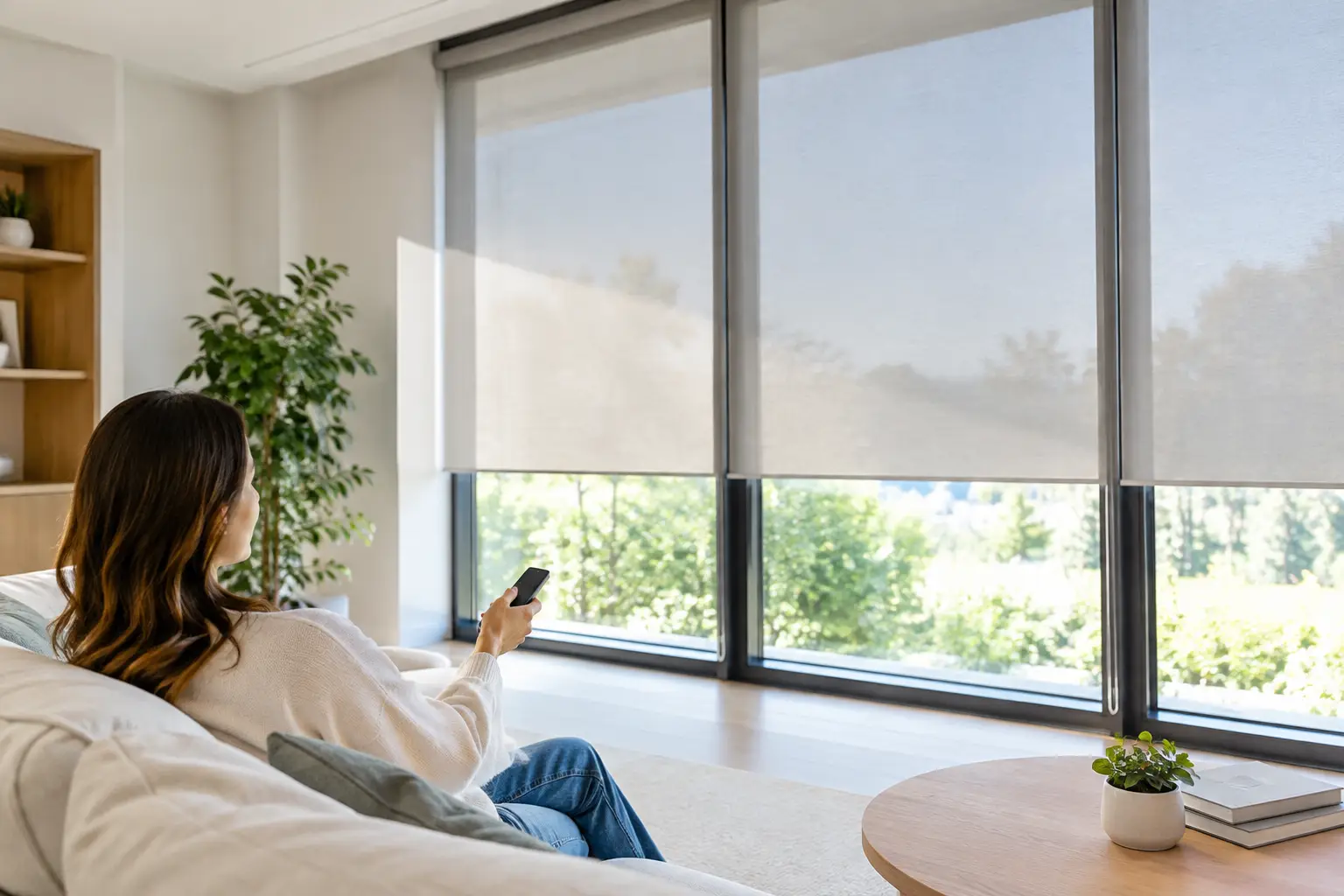
A west-facing living room in Dubai can be bright and beautiful at 4 p.m. and uncomfortable by 4:15. Screens reflect glare, upholstery absorbs harsh sun, and a room that looked perfectly styled in the morning suddenly needs privacy and cooling. Automated shading solves this everyday problem with motorized curtains, blinds, or shades that move precisely when you need them to – by remote, wall switch, app, voice control, timer, or sunlight sensor.
For villas, apartments, offices, hotels, and fit-out projects, the value is not simply pressing a button. A properly specified system makes large or difficult windows easier to manage, protects interiors from strong light, and gives the space a more finished, considered feel. The right choice depends on the window, fabric, use of the room, power availability, and the level of smart-home control you actually want.
What Automated Shading Does Better Than Manual Coverings
Manual curtains and blinds remain a practical option for many rooms. But automation becomes especially worthwhile when coverings are tall, wide, heavy, installed in hard-to-reach locations, or adjusted several times each day. Think double-height villa windows, sliding glass doors, meeting rooms, hotel suites, or bedrooms where blackout curtains and sheers work together.
With automated systems, a single command can close blackout curtains for sleep, lower sunscreen blinds to reduce afternoon glare, or open sheer curtains without exposing the room completely. This creates a level of control that is difficult to maintain manually across several windows.
Light management is often the first reason clients choose motorized shading. Sunscreen roller blinds can soften daylight while maintaining an outward view during the day. Blackout roller blinds or lined curtains can darken bedrooms, media rooms, classrooms, and presentation spaces. Layered systems combine the two, allowing occupants to move from filtered light to full privacy without changing the design scheme.
Automation can also support energy comfort. Window treatments do not replace efficient glass or air conditioning, but closing the right shading during high-sun periods can reduce direct solar gain and make a room feel more comfortable. The fabric openness, lining, color, and fit all affect the result, so a motor alone is not the complete answer.
Choosing the Right Automated Shading System
The best system starts with the window treatment itself. Motorization should support the product and the room’s function, rather than being added as an afterthought.
Motorized curtains for softness and wide openings
Motorized curtain tracks are well suited to living rooms, bedrooms, hotel rooms, reception areas, and wide glass doors. They work beautifully with wave curtains, pinch pleats, blackout drapes, and sheer layers. For a more flexible result, many homeowners choose separate tracks: one for sheers and one for blackout or decorative curtains.
This setup allows filtered daytime privacy and complete coverage at night. It is also ideal for large curtain spans that would be awkward to pull by hand. Track layout matters. A professional should assess stacking space, ceiling details, curtains around corners, and whether the treatment needs to meet neatly at the center or draw to one side.
Motorized blinds for clean lines and focused control
Roller blinds are among the most popular choices for automated shading because they are neat, versatile, and effective on individual windows. Available in sunscreen, dim-out, and blackout fabrics, they suit apartments, offices, schools, clinics, and contemporary homes.
Roman blinds, Venetian blinds, and vertical blinds can also be motorized depending on the system and application. These styles may offer different visual effects and levels of directional light control. For example, tilting slats can manage glare while preserving daylight, while roller blinds provide a cleaner, more minimal facade.
Shutters and specialty applications
Some shutter systems can be fitted with motorized components, particularly where louvers need regular adjustment. Specialty projects may also require automated skylight blinds, shaped-window systems, or commercial solutions designed for larger spans. These need careful measurement and product selection because the window shape, weight, operating angle, and access conditions can change the specification.
Power Options: Wired, Battery, or Solar
Power planning is one of the most important decisions, particularly in a new villa, renovation, or commercial fit-out. A wired motor is often the preferred option when electrical points can be planned before ceilings and finishes are complete. It provides a permanent connection and is a strong choice for larger systems, multiple windows, and integrated smart-home projects.
Battery-powered motors are useful where wiring would involve opening finished walls or ceilings. They can provide a clean installation and are practical for many residential blinds, although batteries will require periodic charging or replacement depending on use. They may not be the right choice for every oversized or frequently operated treatment.
Solar-powered options can suit selected windows with adequate light exposure. They reduce the need for hardwiring, but performance depends on the location and available daylight. During a site visit, an installer can explain which power method is realistic rather than simply recommending the newest option.
Controls Should Fit the Way You Live
A remote control is simple and reliable for one room or a small number of coverings. Wall switches give a familiar fixed control point, while app-based operation is useful when you want to manage rooms from elsewhere in the home.
For smart-home users, automated curtains and blinds can often be incorporated into broader control routines. You might set bedroom blackout curtains to close at bedtime, raise living-room sheers in the morning, or lower sunscreen blinds during the brightest hours. Voice control can be convenient, but schedules and scenes are usually more useful because they run without anyone having to remember a command.
There is a trade-off. Advanced integration may require compatible motors, a control hub, programming, and coordination with the smart-home provider. If you only want effortless daily operation, a quiet motor and quality remote may be the more sensible investment. Good consultation is about matching the system to your routine and budget, not selling unnecessary complexity.
Fabric Selection Still Determines the Result
Automation changes how a window treatment moves. Fabric determines how it performs and how the room feels. This is why samples, measurements, and daylight testing matter.
For a room with a strong view, a sunscreen fabric with the appropriate openness factor can reduce glare while retaining visibility. For bedrooms, blackout fabric or properly lined blackout curtains provide better darkness. In living spaces, sheers soften bright daylight and add privacy, while heavier drapes add visual warmth and improve nighttime coverage.
Color also makes a practical difference. Lighter fabrics often reflect more light and heat, while darker sunscreen fabrics can improve outward visibility in bright conditions but may absorb more heat. The best choice depends on glass orientation, interior palette, the level of privacy required, and whether the room is used primarily during the day or evening.
Why Measurement and Installation Matter
Automated shading is a made-to-measure product, not a standard appliance. A few millimeters can affect how a blind aligns inside a recess, how curtains stack, and whether a motorized track clears ceiling features, air-conditioning grilles, or wall returns.
Professional measurement should check finished dimensions, mounting surfaces, electrical access, fabric direction, track placement, and control locations. For commercial projects, it should also account for repeated window types, safety requirements, operating zones, and project timelines.
Installation quality matters just as much. Motors should be securely mounted, tracks should run quietly, treatments should stop at the correct positions, and controls should be demonstrated before handover. Dubai Drapes Studio manages this process from site visit and fabric selection through custom tailoring, quotation, delivery, and professional fitting, helping clients avoid the mismatch between a beautiful sample and an impractical installation.
A Practical Way to Plan Your Project
Start by identifying which windows cause the most daily frustration. It may be the bedroom where you want instant blackout, the living room that gets harsh afternoon sun, or an office where screen glare affects work. Then decide what each room needs: privacy, filtered daylight, darkness, convenience, design impact, or a combination of these.
Bring that information to a consultation along with any smart-home requirements and renovation plans. If construction is still underway, plan wiring early. If the property is finished, ask about battery options and discreet installation methods. A free site visit is the right time to see fabrics against the actual light, compare operation styles, and receive a precise quotation based on your windows rather than an estimate based on photos.
The most satisfying automated shading feels almost invisible: the right fabric moves at the right time, the room stays comfortable, and every window looks intentionally finished. Book a Free Appointment to discuss your space, see suitable samples, and create a system that works as well as it looks.