
A west-facing living room can become uncomfortable long before sunset, while tall bedroom windows can make everyday privacy feel like a chore. Somfy motorized roller blinds address both problems with made-to-measure shading that moves at the touch of a button, on a schedule, or through a compatible smart-home system. For homes and projects in Dubai, where intense sun and large glazed areas are common, the right roller blind system can improve comfort without compromising the look of the room.
The motor is only one part of the decision. Fabric openness, blind size, mounting position, power supply, control method, and professional installation all affect how well the finished system performs. A consultation-led approach helps ensure the result suits your windows, lifestyle, and interior scheme rather than simply adding automation to an unsuitable blind.
Why choose Somfy motorized roller blinds?
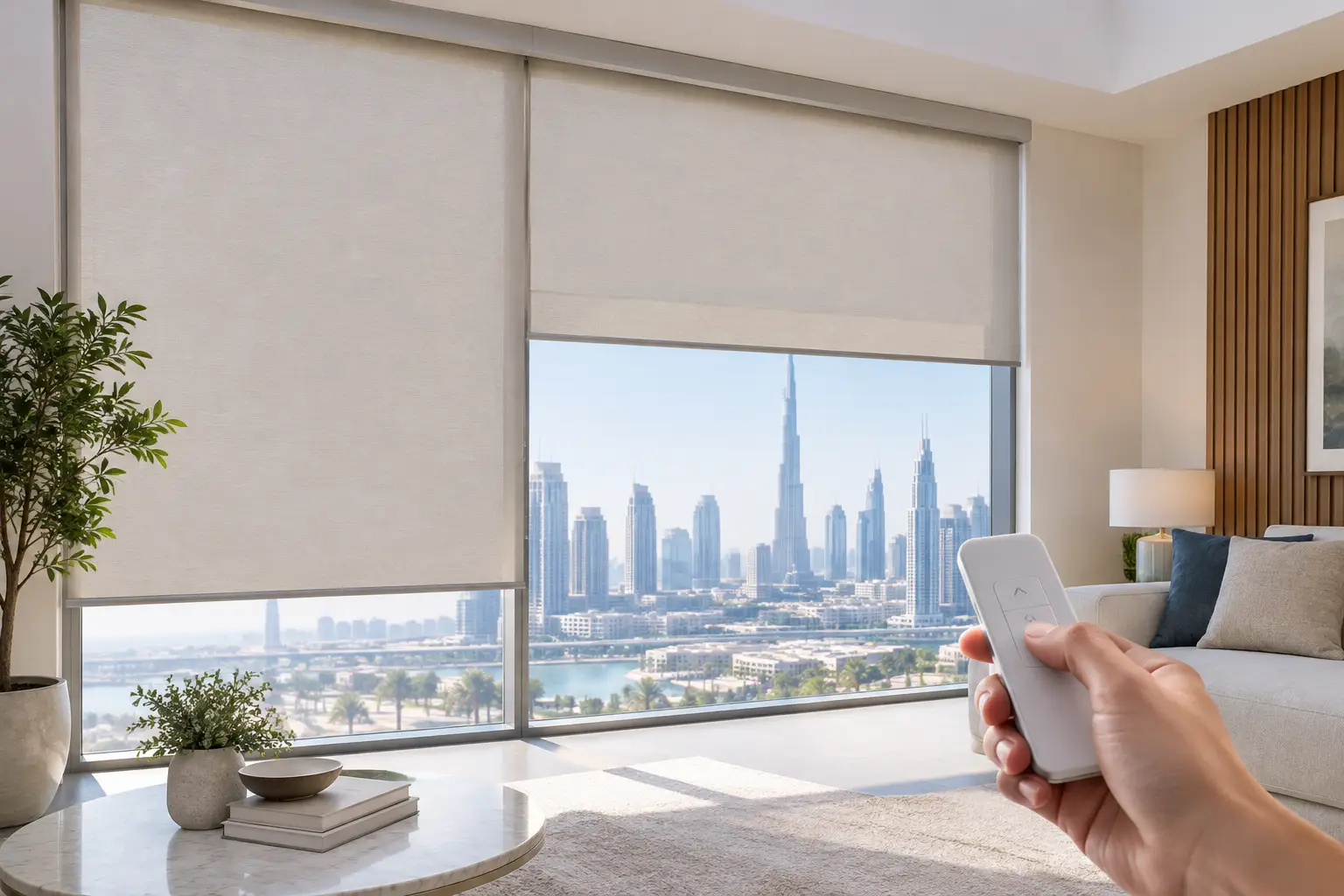
Somfy is widely used in motorized window treatments because its systems are designed for convenient, dependable operation across residential and commercial settings. Instead of manually raising and lowering every blind, you can control individual blinds, grouped windows, or an entire room from a wall switch, remote, smartphone app, or selected home-automation platform.
That convenience matters most where blinds are difficult to reach. Think of double-height windows, glazing above staircases, wide sliding doors, or a row of windows behind furniture. Motorization also helps homeowners use their shading more consistently. When operation is effortless, it is far more likely that blinds will be lowered during the hottest part of the day and raised again when natural light is welcome.
There is also a design benefit. Roller blinds offer a clean, tailored profile that works with contemporary apartments, villas, offices, hospitality spaces, and minimalist interiors. With the mechanism discreetly fitted and fabrics selected to match the room, motorization can feel like an integrated feature rather than an added device.
Start with the light you want to live with
The best roller blind is not always the darkest one. The right fabric depends on what happens in the room, the direction of the windows, surrounding buildings, and whether daytime views matter.
Sunscreen fabrics for daylight and outward views
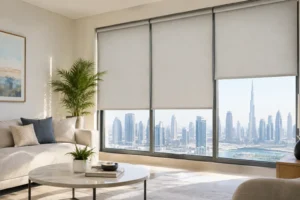
Sunscreen roller blinds filter glare and soften harsh sunlight while preserving a degree of visibility to the outside during the day. They are a practical choice for living rooms, dining areas, home offices, and commercial spaces where screen glare is a concern. Openness factor affects performance: a more open weave generally gives a clearer outward view, while a tighter weave provides greater shading and privacy.
Keep expectations realistic. Sunscreen fabric provides good daytime privacy when it is brighter outside than inside. At night, with interior lights on, silhouettes may be visible from outdoors. Bedrooms and street-facing rooms often need a second layer, such as curtains, for more reliable nighttime privacy.
Blackout fabrics for bedrooms and media rooms
Blackout roller blinds are a strong option where darkness, privacy, and sleep quality are priorities. They are popular for bedrooms, nurseries, media rooms, schools, and meeting rooms. However, a blackout fabric alone does not guarantee a fully dark room. Light can still pass around the sides, above the headrail, or below the bottom bar if the blind is installed inside a recess.
For the darkest possible result, consider an outside-recess installation with adequate overlap, or a cassette and side-channel system where appropriate. During a site visit, measurements and window details help determine what level of light control is realistically achievable.
Sheer, dim-out, and decorative options
Between sunscreen and blackout sits a broad range of dim-out and decorative fabrics. These soften daylight, reduce glare, and add color or texture without making a room feel closed in. Neutral tones create a calm architectural finish, while woven textures can introduce warmth to a modern space. The fabric should complement wall color, flooring, furnishings, and any existing curtains rather than compete with them.
Choosing the right power and control method
A motorized blind should fit the way you use the room. Somfy systems can be specified with different power options and controls, but the practical choice depends on window quantity, access to electrical points, project stage, and desired automation.
Battery-powered motors are often useful for completed homes where running new electrical wiring would be disruptive. They keep installation tidy and can suit individual or moderately sized groups of blinds. The trade-off is that batteries will need recharging or replacement at intervals based on use, blind size, and motor type.
Hardwired motors are often preferred during a renovation, new build, or full fit-out, particularly for larger window treatments or multiple blinds operating together. They require early coordination with the electrician, but they remove the need for battery maintenance and can create a very clean finished installation.
For controls, a handheld remote offers straightforward operation, while a wall-mounted switch provides a familiar fixed control point. App-based control is useful when you want to manage blinds remotely, create schedules, or include them within a broader smart-home routine. A morning schedule can raise bedroom blinds gradually, while an afternoon setting can lower solar-facing blinds before the room heats up.
Automation should be selected for real routines, not just novelty. If you rarely use apps, a simple remote and scheduled timer may be the most practical setup. If your home already has a control system, confirm compatibility before choosing motors and controls.
Made-to-measure details that affect the final result
Roller blinds look simple, but precise fabrication is what makes them sit correctly and operate smoothly. Window recess depth, handle projections, mullions, ceiling details, and nearby doors can all influence the recommended fitting method.
An inside-recess blind creates a neat, built-in appearance, provided the recess is deep enough and reasonably square. An outside-recess blind covers more of the window opening and can improve light reduction, especially with blackout fabric. Ceiling-mounted blinds can visually lengthen a room and are useful where the window frame does not allow a suitable fixing position.
Wide windows may require multiple blinds rather than one oversized unit. This can make the system easier to operate and service, although small light gaps between separate blinds need to be considered. For a large sliding door, individual blinds may also allow you to shade one section while keeping another open for access or views.
Bottom-bar style, bracket finish, cassette options, and fabric direction are smaller details that deserve attention. In a polished interior, these elements help the blind feel intentional. In commercial environments, durability, easy operation, and consistent alignment across multiple windows may take priority.
Professional measurement and installation matter
Motorized shading is not a product to estimate from a photo or a rough window size. Accurate measurement is necessary for fabric deductions, bracket positions, motor clearance, side gaps, and safe cable routing where required. It also helps prevent common issues such as blinds catching on handles, stopping short of the sill, or covering an opening incorrectly.
At Dubai Drapes Studio, a free appointment can include an on-site review of your windows, fabric samples, control preferences, and the level of privacy or heat reduction you need. This is particularly valuable for villas with mixed window sizes, apartments with floor-to-ceiling glazing, and commercial projects that require uniform finishes across several rooms.
Professional installers can set motor limits accurately, pair controls, test grouped operation, and explain everyday use before the project is handed over. If automation is being coordinated with other trades, scheduling the site visit early can save time and avoid changes after decorating or electrical work is complete.
A practical plan for a better shading system
Before selecting fabric, spend a few days noticing how each room behaves. Identify when glare appears, where privacy is most important, which windows are hard to reach, and whether you need views during daylight. Bring those observations to your consultation along with photos of the room and any plans for furniture, curtains, or smart-home controls.
The strongest result is usually a balanced one: sunscreen blinds where you want daylight and a view, blackout blinds where sleep matters, and control options that your household will actually use. Book a free appointment to measure the space, compare fabrics in your own light, and specify a Somfy motorized roller blind system that feels right from the first day of use.