
Floor-to-ceiling glass can make a Dubai villa feel spectacular at noon and uncomfortably exposed by late afternoon. That is where villa automation installation Dubai becomes more than a technology upgrade. When motorized curtains, blinds, lighting, climate settings, and security controls are planned around the way your family uses each room, the villa becomes easier to manage, more private, and more comfortable every day.
The best results do not come from adding an app to every device. They come from deciding what should happen automatically, what should stay manual, and which finishes need to look right within the interior. For most villa owners, automated window treatments are one of the most useful places to begin because they affect light, heat, privacy, and the appearance of every major room.
Planning Villa Automation Installation in Dubai
Start with the daily moments that create friction. Perhaps the living room becomes too bright before guests arrive, bedrooms need blackout conditions at different times, or a double-height space has curtains that are impractical to operate by hand. These are clear use cases for automation, and they give the installation team a purpose beyond adding gadgets.
A well-planned system divides the villa into zones rather than treating it as one large space. Public rooms, private bedrooms, outdoor areas, staff spaces, and formal entertaining rooms often need different controls and schedules. The family room may benefit from one-touch scenes for daytime, movie time, and evening privacy, while a master suite may need quiet motors and separate control of sheers and blackout curtains.
This early discussion also prevents a common mistake: choosing controls before choosing the products they will operate. A beautiful curtain fabric can still perform poorly if the track cannot carry its weight or the stack-back has not been calculated. Likewise, a blind that suits a small window may not be the right solution for a wide glazed wall exposed to strong afternoon sun.
Begin with shading, then build the scenes
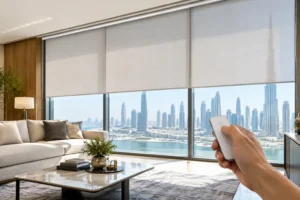
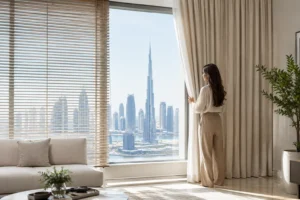
Motorized curtains and blinds have an immediate, visible effect on villa living. They can open on a morning schedule, close during peak sunlight, and respond to a single command when the villa is unoccupied. In rooms with large windows, layered treatments often provide the most flexible result: a sheer curtain for softened daylight and privacy, paired with a blackout or lined curtain for darkness and heat control.
The right choice depends on the window, the room, and the desired look. Roller shades suit clean, contemporary glazing and can be specified in sunscreen, dimout, or blackout fabrics. Roman blinds bring a softer decorative finish. Ripple-fold or pinch-pleat curtains can create a more luxurious look in formal spaces, especially when installed on recessed tracks.
Automation should support the treatment rather than dictate it. Motors, tracks, and brackets need to be selected for the fabric weight, curtain fullness, window dimensions, and access for future servicing. This is why measuring after a site visit matters. Small details such as ceiling pockets, gypsum work, pelmets, and furniture placement can determine whether the final installation looks intentional or improvised.
Choose Controls That the Whole Household Will Use
A villa automation system is only successful if it is simple enough for everyone in the home. Wall keypads are useful for daily control because they work without a phone, while handheld remotes can be practical for bedrooms and media rooms. Voice control can be convenient, but it should not be the only way to operate essential curtains, lights, or climate settings.
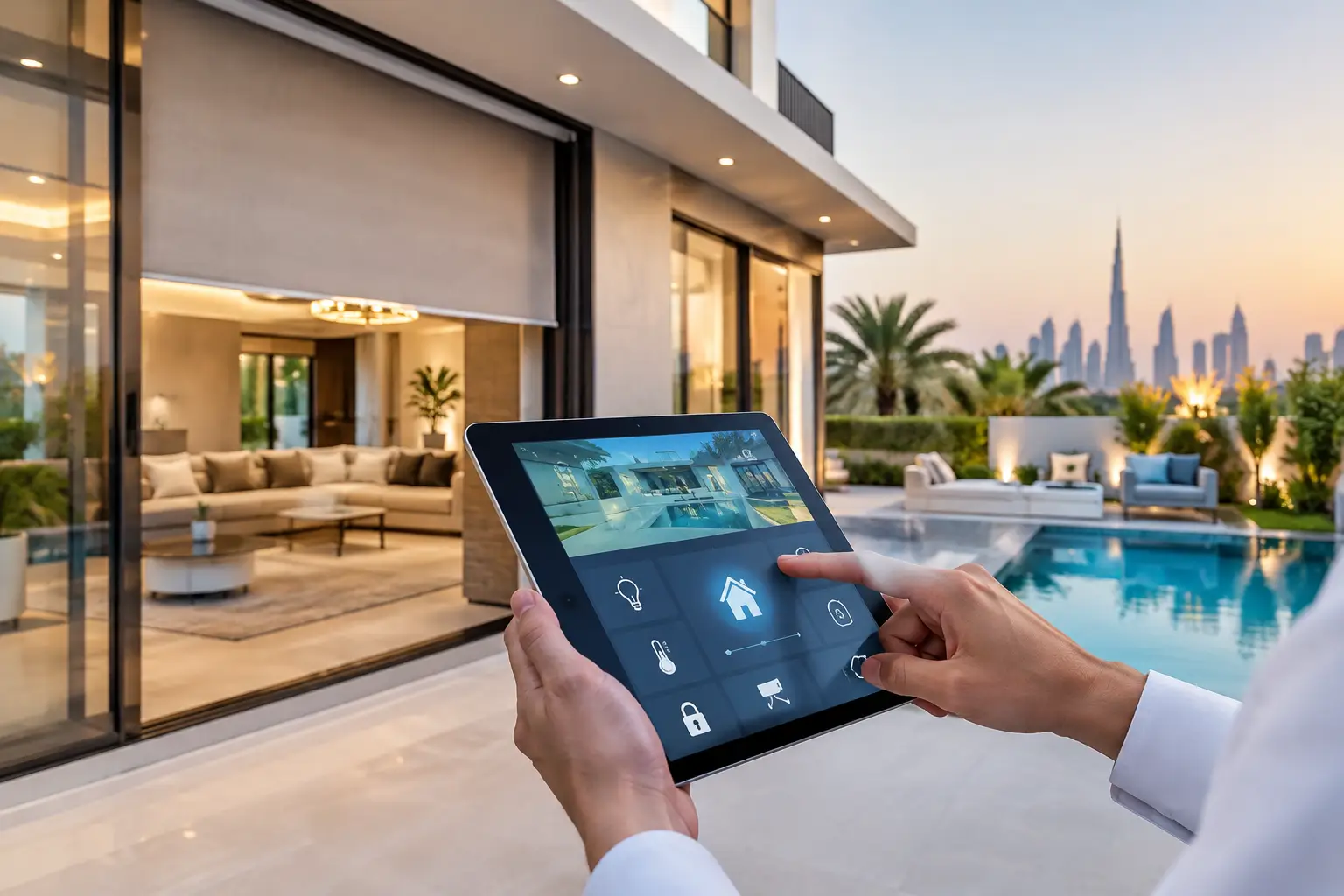
Scenes are generally more valuable than dozens of separate commands. A good-arrival scene might open selected curtains, switch on pathway lighting, and set common areas to a comfortable temperature. An evening scene can lower blinds in exposed rooms, close curtains, and adjust lighting to a warmer setting. The exact programming should reflect your routines rather than a standard template.
It also helps to decide who needs access. A homeowner may want full control from an app, while children, guests, or household staff may only need straightforward wall controls in certain areas. Keep private rooms and security-related settings protected. Clear permissions reduce accidental changes and make the system easier to manage when the household is busy.
Wired, wireless, or a combination?
For a new build or major renovation, wired automation is often the strongest long-term choice. It can support extensive integration and avoids relying on batteries for key devices. It also requires coordination early in the project, before ceilings are closed and finishes are complete.
Wireless systems are often a practical answer for completed villas. They can reduce disruption, particularly when automating existing curtains or adding motorized blinds to selected rooms. The trade-off is that wireless products still need reliable signal planning, access to power or battery maintenance, and careful compatibility checks with the wider control system.
Many homes use a combination. A wired infrastructure can serve core areas and fixed controls, while wireless devices add flexibility in rooms where opening walls would be unnecessary. The right approach depends on the villa’s construction, the scope of the renovation, and how much control you genuinely want.
What to Coordinate Before Installation
Automation projects run more smoothly when the interior team, electrician, automation provider, and window-treatment installer work from the same plan. Motorized tracks may need power points at specific ends of the window. Concealed systems may require exact ceiling-pocket sizes. Lighting scenes can be affected by curtain positions, and furniture layouts influence where controls should be placed.
Before approving the work, confirm these practical points:
- Which windows will receive motorized curtains, blinds, or both.
- Where power, wiring, control panels, and motor access will be located.
- Whether tracks will be surface-mounted, hidden in a pocket, or covered by a pelmet.
- How the system will operate during an internet outage, power interruption, or app issue.
- Who will program the scenes, explain the controls, and provide support after handover.
Do not assume every product can be integrated in the same way. Some motorized shades work best with a dedicated remote and bridge, while others can become part of a larger home-control platform. Compatibility should be confirmed before fabrication, not after the curtains or blinds have been made.
Consider comfort, not just convenience
In a hot climate, automated shading can help manage direct sun before rooms become uncomfortable. This does not replace proper glazing, insulation, or air-conditioning design, but it can reduce glare and make living areas more pleasant through the day. For a villa with west-facing windows, timed closing or sun-based control can be particularly useful.
Privacy is another strong reason to automate. Bedrooms, family areas, and villas facing neighboring properties can close at scheduled times without someone walking through the house at sunset. When owners travel, varied curtain and lighting schedules can also make an occupied home appear more active than a property left dark and unchanged.
Noise level deserves attention, especially in bedrooms. Motor quality, track alignment, and fabric weight all influence operation. Ask to see and hear a working sample where possible. A slow, quiet movement usually feels more refined than a fast system that interrupts a calm room.
A Better Process for Motorized Curtains and Blinds
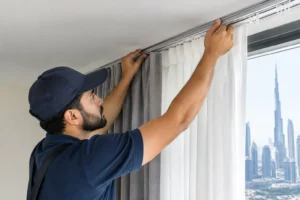
A professional project should begin with a site visit, not a generic price list. The installer needs to assess window sizes, ceiling details, available power, wall conditions, fabric requirements, and the style of the interior. This is also the time to identify difficult areas, such as curved windows, extra-wide openings, double-height spaces, and doors that need clear access.
After measurements, select fabrics and control options together. The fabric affects the curtain’s finished weight and drape, while the motor and track determine how it will travel. For blackout bedrooms, check the side gaps and top treatment as carefully as the fabric itself. For sheers, consider how the material will look both in daylight and under interior lighting at night.
At Dubai Drapes Studio, this consultation-led approach brings fabric selection, made-to-measure production, compatible motorized systems, and professional fitting into one coordinated service. It reduces the risk of a beautiful fabric being paired with the wrong track, or a well-designed automation plan being compromised during installation.
Once fitted, every room should be tested in real conditions. Open and close the treatments fully, run the programmed scenes, check clearances around doors and furniture, and make sure every user understands the controls. Keep a record of motor locations, control settings, and warranty details for future maintenance.
A well-considered automated villa should still feel like a home first, not a showroom full of technology. Book a free appointment to discuss your windows, routines, fabrics, and renovation plans, then build the level of control that will genuinely make each room easier to enjoy.