
A guest may never ask what fabric hangs at the window, but they will notice the consequences of a poor choice at 6 a.m. when sunlight enters the room, when a track catches, or when a sheer offers too little privacy. Dubai hotel drapery projects must therefore do more than complement the interior scheme. They need to support sleep, comfort, guest privacy, maintenance routines, and the visual standard expected from the property.
For hotel owners, interior designers, fit-out teams, and project managers, the best result comes from treating drapery as a performance item from the earliest design stage. Fabric, lining, fullness, tracks, controls, and installation all need to work together. A beautiful sample alone is not a specification.
What Hotel Drapery Must Achieve
Hotel windows serve different needs from one room to another. Guest rooms generally require daytime softness and night-time darkness. Suites may need larger, more decorative treatments that frame panoramic views without blocking them. Public areas often benefit from sheers that reduce glare while keeping the space open and welcoming. Meeting rooms, ballrooms, and screening areas may need blackout capability that can be operated quickly and reliably.
The central question is not simply, “What curtain color suits this room?” It is, “What should this window treatment do throughout the day, and who will operate and maintain it?” That question guides every practical decision that follows.
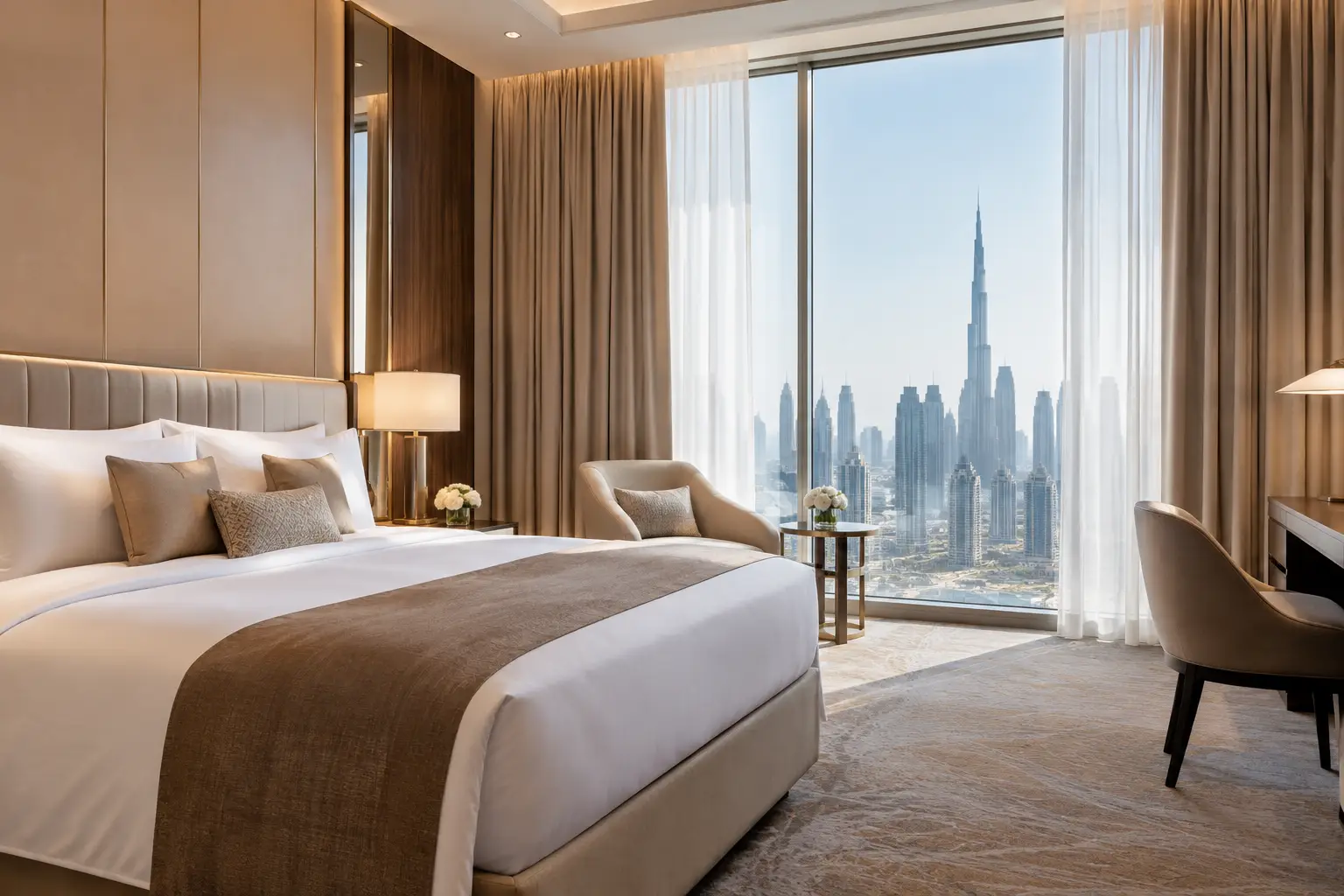
A typical guest-room combination includes a sheer curtain for filtered daylight and a separate blackout curtain for rest and privacy. The sheer creates a softer daytime atmosphere, while the blackout layer should minimize light leakage at the sides, top, and center overlap. If the hotel is close to bright roads, neighboring towers, or early morning sun exposure, a standard decorative curtain without proper blackout construction will disappoint guests.
Start With the Window, Not the Fabric Book
Drapery selection should begin with an on-site assessment. Window width, ceiling height, wall returns, air-conditioning grilles, furniture placement, door swing, and access for housekeeping all affect the final design. In a tower hotel, even rooms with matching floor plans can have different light direction, view conditions, or window recess details.
Precise measurement is especially important for blackout treatments. A curtain may be made from excellent blackout fabric and still leak light if the track is too short, the fabric stack is not considered, or the panels do not return properly to the wall. For guestrooms, the installation should allow enough coverage beyond the glass and enough overlap where panels meet.
Track placement matters just as much. Ceiling-mounted tracks can make rooms feel taller and provide better coverage, but they require coordination with ceiling details, access panels, sprinklers, and lighting. Wall-mounted tracks may suit some renovation projects, particularly where ceilings cannot be altered. Neither option is automatically better. The right approach depends on the room construction, desired appearance, and the level of light control required.
Fullness Changes the Finished Look
Fullness is the amount of fabric used relative to the width of the track. Too little fullness can make even premium fabric look flat and underfinished. Too much can create a heavy stack that crowds the window when opened and adds unnecessary fabric cost.
For sheers, a fuller treatment often gives the soft, layered look associated with quality hospitality interiors. Blackout drapes typically need enough fullness to close properly and retain a tailored fall, but the specification must also account for the available stacking space. A site visit and sample review help balance visual richness with practical clearance.
Fabric Selection: Appearance Meets Daily Use
Hotel drapery fabric is exposed to repeated opening, closing, sunlight, dust, and cleaning. A fabric that works well in a private residence may not be the best choice for a busy guestroom floor or hotel lobby. The selection should reflect traffic level, light exposure, cleaning requirements, fire-safety expectations, and the character of the interior.
For sheers, designers often prioritize texture, drape, and daylight diffusion. A subtle woven texture can add depth to neutral interiors, while a denser sheer improves daytime privacy in closely built areas. In rooms with a view, the weave should soften the sun without making the glass feel visually blocked.
For decorative drapes, weight and stability are significant. Heavier fabrics can create a luxurious fall, but they require suitable tracks and brackets. Lighter fabrics can work beautifully in contemporary rooms, provided the lining and fabrication give them sufficient body. Patterned materials can bring identity to boutique properties, though large repeats need careful planning so patterns align across panels and room types.
Blackout performance deserves separate attention. Some fabrics are inherently blackout, while others achieve darkness through a lining system. The latter may offer more face-fabric choices, but it adds layers and can affect the drape and weight. A sample should be checked against a light source rather than judged only under showroom lighting.
Fire Ratings and Project Documentation
Hospitality projects may have specific fire-retardant requirements set by the operator, consultant, insurer, or local authority. These requirements should be confirmed before fabric is approved and ordered. Do not assume that a fabric is suitable because it is labeled for commercial use.
Ask for the relevant fabric documentation, confirm whether treatment is inherent or applied, and make sure the final supplied material matches the approved sample and specification. This step protects the design intent and avoids costly replacement work later in the project.
Hardware Is Part of the Guest Experience
Tracks and accessories are often hidden, yet they influence how the room feels every day. A curtain that glides quietly and closes fully supports a sense of quality. A noisy, stiff, or poorly aligned system has the opposite effect, no matter how attractive the fabric looks.
Manual tracks are a practical option for many rooms, especially where staff and guests need straightforward control. For large windows, tall drapes, premium suites, and public spaces, motorized tracks can add real value. They allow curtains to open and close consistently, can be programmed around daylight or room scenes, and reduce handling of fabric by guests.
Motorization is not necessary for every hotel window. It depends on budget, control requirements, curtain weight, and the property’s wider automation plan. If motorized systems are selected, power provision, control location, access for servicing, and compatibility with the chosen smart-room platform should be addressed before installation. Retrofitting these details after finishes are complete is slower and more expensive.
Plan Installation Around Operations
A hotel project rarely has the luxury of a completely empty building. Renovations may need to work around occupied rooms, phased handovers, guest schedules, and other trades. Drapery installation should be programmed with those realities in mind.
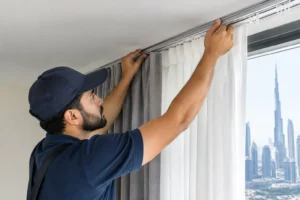
The process should include final site measurement after relevant finishes are complete, confirmation of track locations, controlled fabrication, and installation by experienced fitters. Rooms should be checked individually rather than assuming every opening is identical. The final inspection should confirm fabric length, hem clearance, panel overlap, smooth movement, brackets, and overall appearance from the guest’s viewpoint.
For operational teams, maintenance should be considered before handover. Housekeeping needs to know the correct way to handle the treatment, particularly with motorized tracks or delicate fabrics. A practical fabric choice and properly installed hardware can reduce avoidable repairs over the life of the room.
A Better Process for Dubai Hotel Drapery Projects
The strongest Dubai hotel drapery projects are built around a clear approval process. First, define the use of each space and the expected performance. Then review fabrics, headings, tracks, linings, and control options against the actual windows. Approve samples under realistic light conditions, verify technical requirements, and only then move into production.
This approach also helps control budgets. Cost is influenced by more than fabric price: track type, lining, fullness, motorization, window size, installation access, and the number of unique room types all matter. Standardizing selected elements across guestrooms can simplify purchasing and future replacements, while suites and public areas can receive the more customized detailing they deserve.
Dubai Drapes Studio supports hospitality teams with site visits, accurate measurement, fabric and track consultation, made-to-measure tailoring, quick quotations, and professional installation. The goal is not to sell the same curtain to every room, but to specify a treatment that fits the room, the guest experience, and the practical demands of the property.
Before signing off on a fabric, stand at the window at the time of day the room will be most tested. Close the drapes, check the edges, operate the track, and look at the treatment from the bed, the entry, and the seating area. That small exercise often reveals the details that turn a good-looking room into one guests genuinely want to return to.