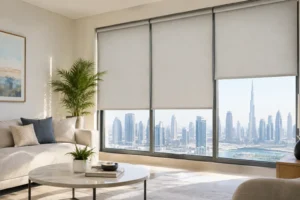

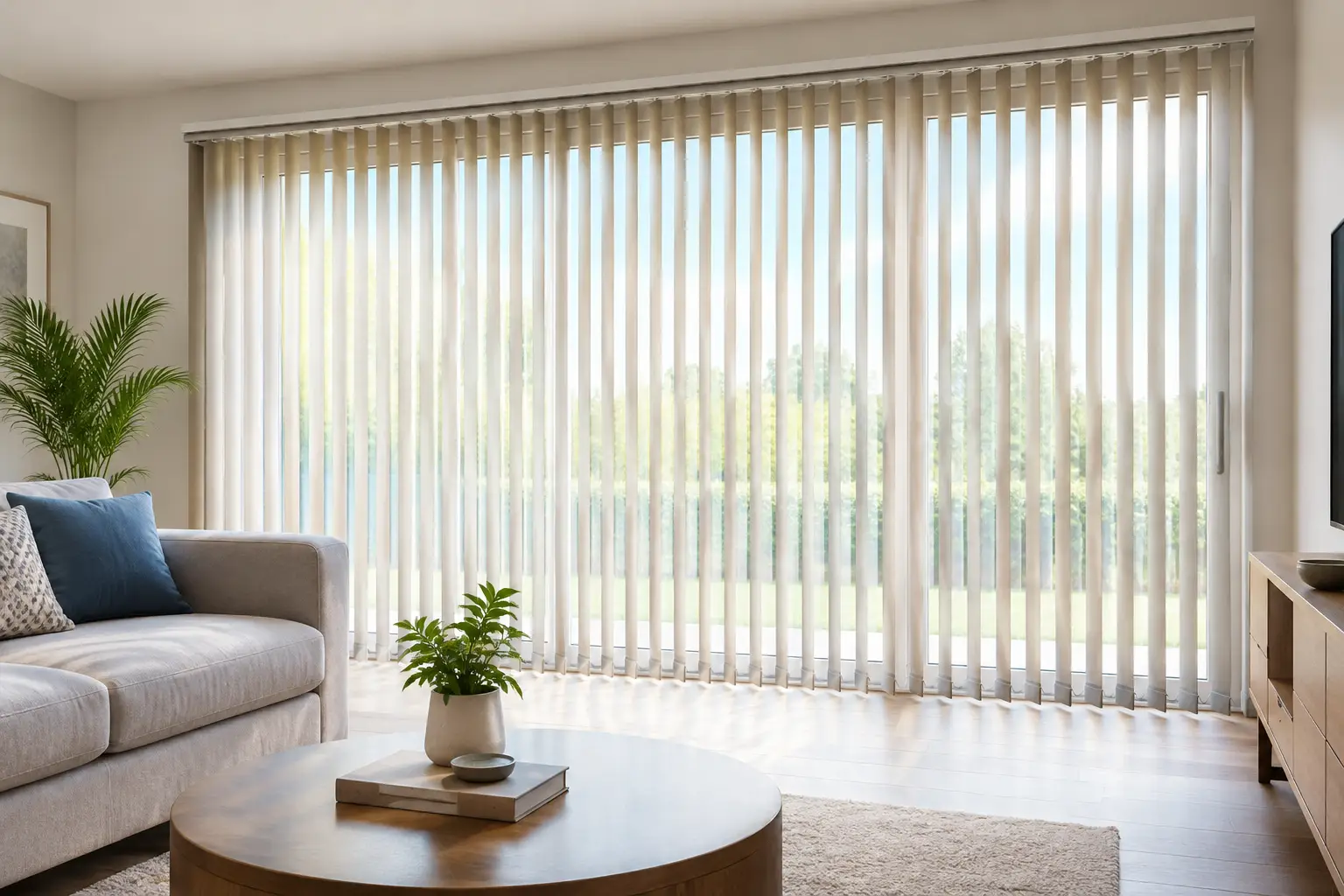
Wide glazing can make a room feel generous, bright, and connected to the outdoors. It can also create a difficult privacy and glare problem, particularly when the window runs beside a balcony door or spans an entire living-room wall. Vertical blinds are designed for precisely these openings, giving you adjustable light control, practical access, and a clean tailored look without crowding the window.
For apartments, villas, offices, and hospitality spaces, the right system is not simply a matter of choosing a color. The track, louver material, stacking direction, and installation position all affect how the blinds perform every day. A made-to-measure solution prevents the gaps, awkward movement, and uneven finish commonly associated with ready-made blinds.
Why vertical blinds work for large openings
Vertical blinds use individual panels, often called louvers, that hang from a headrail and rotate to manage light and privacy. Because the panels move sideways rather than lifting upward, they are especially suited to floor-to-ceiling windows, patio doors, sliding doors, and broad commercial glazing.
When the louvers are tilted open, daylight can enter while direct views into the room are reduced. Tilt them closed for greater privacy and more effective glare control. Draw the blinds fully to one side when you want an unobstructed view or easy door access. This flexibility is valuable in Dubai interiors, where strong sun can change the comfort of a room quickly throughout the day.
They also create a more orderly alternative to multiple small blinds across one large span. Instead of dividing the view into separate sections, one properly specified vertical-blind track can follow the proportions of the opening and make the window feel intentional.
Choosing the right vertical blinds material
The material determines more than appearance. It affects cleaning, durability, light filtration, and how well the blinds suit the room’s purpose.
Fabric vertical blinds bring softness to formal living rooms, bedrooms, hotel spaces, and meeting rooms. Available in sheer, translucent, sunscreen, dimout, and blackout options, fabric louvers can coordinate with curtains, upholstery, rugs, and wall finishes. A sunscreen fabric is often a sensible choice for rooms that need daylight but suffer from glare on screens or reflective floors. Blackout fabrics are better for bedrooms, media rooms, training spaces, or any area where stronger light reduction is the priority.
PVC vertical blinds are practical in kitchens, utility rooms, clinics, and high-use workspaces. They resist moisture, wipe clean easily, and offer a crisp, functional finish. Aluminum louvers can suit contemporary offices and commercial interiors where a streamlined appearance and straightforward maintenance matter most.
There is a trade-off to consider. Fabric delivers a warmer, more decorative effect, but may need gentler cleaning. PVC is easier to maintain, though it can look less soft in a residential setting. The best choice depends on the room, the amount of sun it receives, and the level of daily use.
Light control depends on more than fabric
Customers often ask whether vertical blinds will block sunlight completely. The honest answer is that it depends on the fabric, the installation, and the expectation. Even blackout louvers can allow slim lines of light between panels because the system is made of individually rotating vanes. If near-total darkness is essential, vertical blinds may be paired with blackout curtains or selected as part of a layered window-treatment design.
For most living rooms and offices, the real advantage is control rather than complete darkness. Slightly angled louvers soften intense sunlight without turning the room into a dark box. Closed louvers improve daytime privacy, while an open stack gives the room back its full view.
The direction of the window matters, too. West-facing windows usually need stronger glare management later in the day, while rooms with softer exposure may benefit from translucent fabric that preserves natural light. During a site visit, checking the window orientation and how the room is actually used leads to a more useful recommendation than selecting fabric from a small sample alone.
Stack direction and access should be planned early
A vertical blind can stack left, right, center, or split from the center, depending on the track configuration. This detail has a major effect on convenience. For a sliding door, the blinds should stack away from the active access side whenever possible. For a window with a balcony door at one end, a one-way draw is usually more practical than a center split.
For exceptionally wide openings, a split draw can reduce the amount of stacked fabric on either side and create visual balance. However, it may place a meeting point in the middle of the view. There is no universal best option. The right configuration follows the door position, furniture layout, traffic flow, and the view you want to preserve.
Mounting also deserves attention. Ceiling-mounted tracks can emphasize ceiling height and give a neat, built-in look, particularly in apartments with large glass walls. Face-fixed tracks may be the better choice when ceiling conditions, bulkheads, or existing finishes limit where the system can be installed. Accurate measurements ensure the louvers clear handles, door frames, air-conditioning grilles, and flooring without dragging.
Manual or motorized operation?
Manual vertical blinds remain a reliable choice for many homes and workplaces. A wand-operated system offers easy tilt and draw control without loose cords, making it a practical option around children and in busy areas. Good-quality tracks and carriers are essential here, because smooth operation depends on the internal components as much as the visible fabric.
Motorized vertical blinds are worth considering for tall windows, difficult-to-reach glazing, or rooms with several large openings. With the right system, you can operate the blinds by remote, wall switch, app, or compatible smart-home controls. Scheduled opening and closing can also support privacy and heat management when a property is unoccupied.
Automation has a higher initial cost and needs careful planning for power access, controls, and future maintenance. It is most valuable when it removes a genuine daily inconvenience. For a single, easy-to-reach balcony door, manual operation may be all you need. For a double-height living room or a boardroom with broad sun exposure, motorization can be a worthwhile long-term upgrade.
Why professional measurement makes the difference
Large window coverings are unforgiving of small errors. A track that is even slightly too narrow can leave unwanted gaps. Louvers cut too long may brush the floor, while those cut too short can look unfinished. Uneven ceilings, recessed tracks, door handles, and nonstandard window frames all need to be accounted for before production begins.
A professional consultation allows the installer to assess these details on site, show suitable fabric and material samples in the room’s actual light, and confirm the best mounting method. It also helps coordinate the blinds with other treatments. For example, sheer curtains can soften the room when the blinds are open, while blackout side curtains can improve nighttime privacy and light control.
Dubai Drapes Studio manages this process from free site measurement and material selection through custom fabrication and professional installation. That single point of responsibility is particularly useful for renovations, new villas, offices, and projects where several rooms need coordinated finishes.
Keeping vertical blinds looking their best
Routine care is simple when the material fits the environment. Fabric louvers benefit from regular light vacuuming with a soft brush attachment or a careful dusting from top to bottom. PVC and aluminum louvers can generally be wiped with a soft, lightly damp cloth. Avoid harsh chemicals, abrasive pads, and excessive water, especially around the headrail components.
Operate the louvers gently and keep them aligned before drawing the blind across the window. Pulling a fully closed or misaligned set of vanes sideways can place unnecessary stress on the carriers. If a louver becomes marked or damaged, many vertical-blind systems allow an individual replacement rather than requiring a completely new installation.
A well-planned window treatment should make daily life easier, not add another item to manage. Book a free appointment to compare materials in your own space, confirm the right stack direction, and receive a precise quotation for vertical blinds that fit the way your windows and doors are used.