
Floor-to-ceiling glass can make a reception, classroom, clinic, or office look impressive. It can also create screen glare, overheated workstations, inconsistent privacy, and rooms that feel uncomfortable by mid-afternoon. This commercial window shading guide for Dubai helps business owners, designers, and project managers choose treatments around how a space actually operates, not simply how a fabric sample looks.
The right solution is rarely one product across every window. A south-facing meeting room, a patient bay, a hotel suite, and an open-plan office have different light, privacy, hygiene, and operating requirements. Start with those needs, then specify the shade, fabric, track, and controls around them.
Start With the Window’s Job
Before selecting roller blinds or curtains, define what each glazed area needs to do. Heat reduction may be the priority on sun-exposed elevations, while a boardroom may need glare control without losing its city view. A clinic needs dependable visual separation, and a hotel may need a softer decorative finish paired with true blackout at night.
Ask practical questions during the site review. Which way does the glass face? At what time does direct sun disturb staff or guests? Are screens used close to the windows? Does the room need privacy all day, or only at certain times? Is the treatment reached easily by hand, or should it be motorized?
Measurements matter just as much as product selection. A poorly sized blind allows light gaps, looks unfinished, and may interfere with window handles, sprinklers, air-conditioning grilles, or furniture. A professional measurement also identifies whether the system should be face-fixed, recess-fixed, ceiling-mounted, or installed on a purpose-built track.
Match the Shading Type to the Space
Commercial shading is not a one-size-fits-all purchase. The most suitable system depends on the room use, glazing size, interior scheme, and maintenance expectations.
Roller and sunscreen blinds for offices
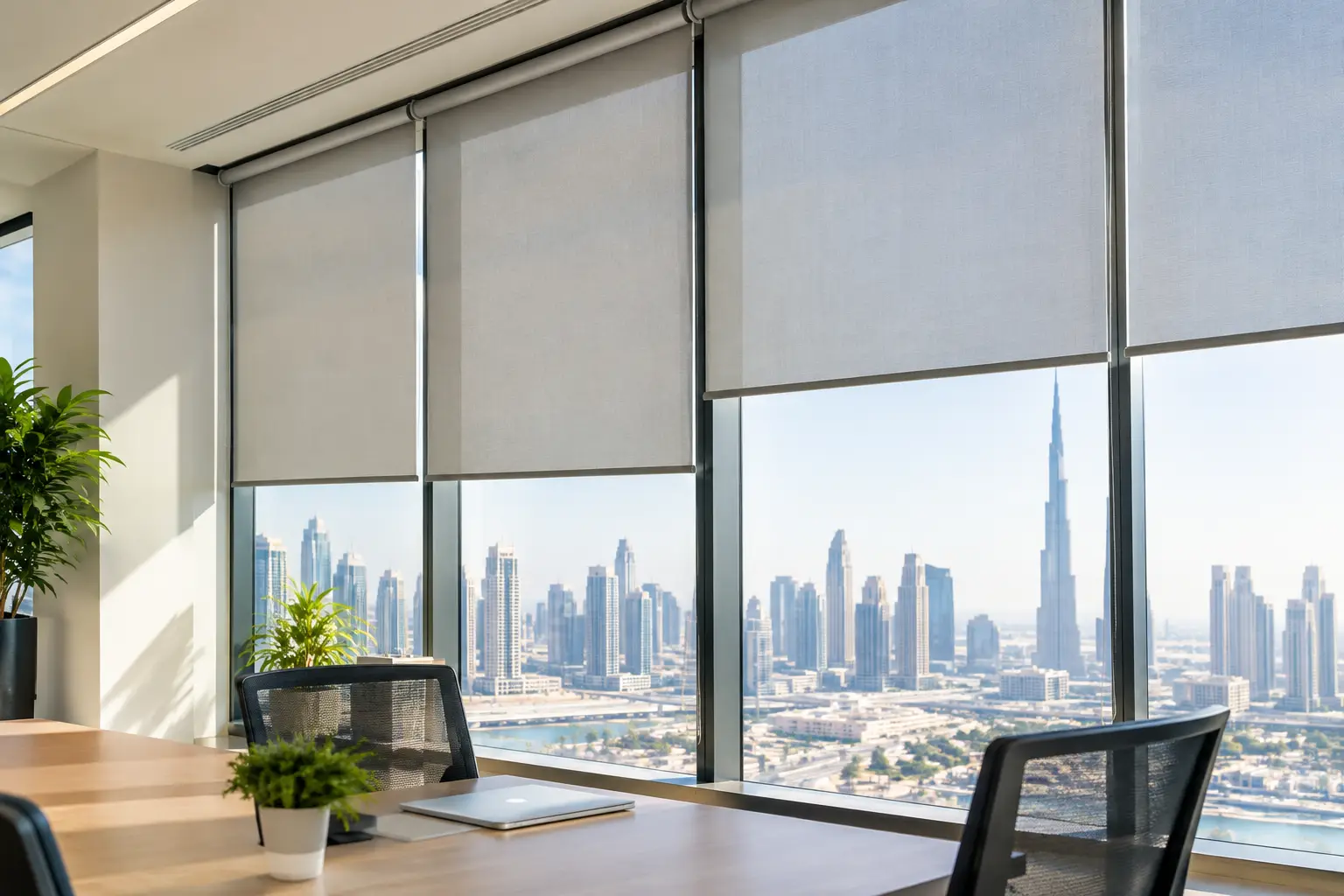
Sunscreen roller blinds are a strong choice for offices, coworking spaces, and reception areas with daylight and external views. Their open weave filters harsh brightness while maintaining a connection to the outside. This can make computer work more comfortable without turning the room into a dark box.
The trade-off is privacy. A more open fabric offers a better view out but provides less visual screening, especially after dark when interior lights are on. For areas that require stronger daytime and nighttime privacy, choose a tighter openness factor, a dim-out fabric, or a dual-blind arrangement.
Blackout blinds and curtains for light-sensitive rooms
Blackout treatments are practical in training rooms, schools, presentation spaces, cinemas, hotel bedrooms, and any room where projection or sleep quality matters. A blackout fabric alone reduces light significantly, but the installation detail determines how dark the room becomes.
For better light control, consider side channels, overlapping blinds, or ceiling-mounted curtain tracks that extend beyond the window frame. This is particularly useful where a projector screen faces glazed windows. Small gaps can be enough to wash out a presentation.
Vertical blinds for broad, practical coverage
Vertical blinds suit wide windows and sliding glass doors, especially where users need to direct light rather than simply block it. The vanes can be tilted to manage low-angle sun and opened for access. They remain a practical option for offices, education settings, and utility-focused commercial spaces.
Their appearance depends heavily on fabric quality, track construction, and precise installation. On a design-led fit-out, roller blinds or curtains may create a cleaner visual line. In high-use spaces, vertical blinds should be specified with durable components and easy-to-replace vanes.
Curtains for hospitality and client-facing interiors
Curtains add acoustic softness, visual warmth, and a finished architectural look that blinds alone cannot always provide. Hotels, restaurants, executive offices, lounges, and premium retail spaces often benefit from layered sheer and blackout curtains. The sheer diffuses daylight during the day, while the blackout lining offers privacy and light control when required.
Curtains need sufficient stacking space beside the glass, and fabric choice should reflect the environment. A busy hospitality setting may need inherently flame-retardant fabric and easy-care construction. In a restaurant, consider how the material will perform around dust, food odors, and frequent cleaning.
Control Heat and Glare Without Sacrificing Daylight
Dubai’s sun exposure makes solar performance a business decision, not a decorative extra. Excess heat can make perimeter desks uncomfortable, increase reliance on cooling, and cause staff to keep blinds permanently closed. That defeats the purpose of natural light and attractive glazing.
Sunscreen fabrics, reflective backing, and carefully selected openness factors help manage solar gain and glare. A lower openness factor generally provides more shading and privacy, while a higher openness factor preserves clearer outward visibility. Neither is automatically better. A design studio that values daylight may choose a more open sunscreen fabric, while a screen-heavy finance office may need a denser material.
Color also changes performance and appearance. Darker fabrics often improve outward visibility and reduce reflected glare on the glass, but they can make a room feel visually heavier. Lighter shades support a brighter interior and may blend easily with ceilings and walls, though their ability to control glare depends on the fabric construction. Reviewing full-size samples at the actual window is more reliable than choosing under showroom lighting.
Plan Privacy as a Layered Requirement
Privacy means different things across commercial projects. A ground-floor office may need passersby screened from view. A healthcare facility may need dignified patient separation. A glass-partitioned meeting room may need occasional confidentiality without losing its open feel.
For healthcare, educational, and institutional settings, purpose-made cubicle privacy curtains are often the right answer. These systems can be fitted to ceiling tracks and specified with suitable fabric, mesh headings, or disposable options depending on the operational requirement. The focus should be on coverage, track layout, access for staff, cleaning procedures, and compliance needs, not just color.
For offices, dual roller blinds can be useful: a sunscreen blind for daytime glare and view management, plus a blackout or privacy blind for presentations and after-hours screening. Frosted films may help with fixed visual privacy, but they do not give the flexibility of a shading system when light levels change.
Decide When Motorization Is Worth It
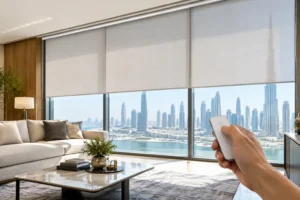
Motorized blinds and curtains are particularly valuable on tall glazing, wide curtain runs, inaccessible windows, and spaces with frequent daily adjustments. In conference rooms, hospitality suites, showrooms, and executive offices, they also create a more polished user experience.
Automation can allow shades to move by schedule, remote control, wall switch, or smart-home and building-control integration. For example, sunscreen blinds can lower before peak afternoon sun and open later to recover daylight. This helps maintain a consistent setting without relying on staff to adjust every window manually.
Motorization does add budget, electrical planning, and maintenance considerations. It is most worthwhile where access is difficult, the shading is used often, or a coordinated response across multiple windows is needed. For a small back-office window that rarely changes position, a quality manual chain-operated system may be the more sensible investment.
Specify for Daily Use, Not Just Handover Day
A treatment that looks excellent on installation day must still operate reliably months later. Choose commercial-grade mechanisms for high-traffic environments, especially where blinds will be raised and lowered throughout the day. Consider child-safety and chain-tension devices where appropriate, and confirm whether components can be serviced or replaced without removing the entire system.
Fabric maintenance should be part of the discussion. Pale fabrics can look elegant but may show dust more quickly near entrances or construction zones. Textured weaves may conceal minor marks better than flat finishes. In clinics, hotels, schools, and food-service environments, cleaning protocols should influence the fabric and track selection from the beginning.
Coordination is equally important. Window shading should be reviewed alongside lighting, furniture, air-conditioning, ceiling details, and electrical points. This prevents a curtain track from conflicting with an access panel or a motorized blind from being planned without a suitable power source.
Use a Site Visit to Avoid Expensive Assumptions
Commercial window shading performs best when it is tailored to the building rather than ordered from standard dimensions. At Dubai Drapes Studio, a free site visit can clarify the glazing measurements, sunlight exposure, required privacy level, fabric options, track layout, and automation possibilities before quotation and production begin.
Bring the decision back to the people using the space. If a team cannot read screens comfortably, guests feel exposed at night, or a room cannot darken for a presentation, the window treatment is not doing its job. Schedule a visit, review samples at your windows, and choose a made-to-measure solution that supports comfort, appearance, and reliable daily operation.