
A roller blind can look like a simple finishing item on a drawing, then become the detail that decides whether a room feels comfortable at 2 p.m. or overheated, exposed, and difficult to use. Selecting roller blinds for projects means looking beyond color and price. The fabric, bracket position, control method, window geometry, and installation standard all affect the finished result.
For villas, apartments, offices, schools, hospitality spaces, and fit-out projects, the right system should answer a clear need: reduce glare, create privacy, support blackout, soften daylight, improve thermal comfort, or complement a defined interior scheme. A made-to-measure approach keeps those decisions connected from first measurement through final installation.
Start With the Room, Not the Blind
The strongest roller blind specifications begin with how the space is used. A west-facing living room has different demands from a boardroom with floor-to-ceiling glazing. A bedroom may need near-total darkness, while a reception area usually benefits from filtered daylight and an open view outside.
In residential interiors, homeowners often want a clean window treatment that does not compete with furniture, wall finishes, or curtains. Roller blinds work particularly well in kitchens, bathrooms, apartments, and contemporary villas because they sit neatly within the window area and are easy to operate. They can also be paired with decorative curtains when the room needs both practical shading and a softer layered look.
For commercial settings, the question is often about performance. Offices need screen fabrics that limit monitor glare without making staff feel closed in. Schools may require blackout blinds for presentation rooms and multipurpose halls. Hotels can use sunscreen rollers in public areas and blackout systems in guest rooms. Each application needs a fabric and operating system suited to its daily use.
Choose the Fabric by Performance
Fabric is where most roller blind decisions are made. It determines the light level, privacy, outward visibility, appearance, and maintenance needs of the finished blind. A sample viewed against the actual window is far more reliable than choosing from a small image, especially when sunlight changes throughout the day.
Sunscreen Fabric for Daylight and Views
Sunscreen roller blinds use an open weave to filter strong sunlight while maintaining some visibility outward. They are a practical choice for offices, living areas, and spaces with large glazed elevations. Openness factors vary, so two fabrics that appear similar can perform very differently. A more open weave provides a clearer view and more daylight, while a tighter weave offers stronger glare and privacy control.
Sunscreen fabric is not a blackout solution. At night, when interior lighting is on, privacy may be limited depending on the fabric and surrounding conditions. It is best specified where daytime comfort and exterior views matter most.
Blackout Fabric for Privacy and Sleep
Blackout roller blinds are designed to block light through the fabric itself. They are popular for bedrooms, media rooms, nurseries, meeting rooms, and education spaces. However, blackout fabric alone does not always create a fully dark room. Light can enter around the sides, above the roller, and below the hem bar.
Where room-darkening performance is essential, consider the overall installation. A recess fit, suitable overlap, cassette system, or side channels can reduce light gaps substantially. This is one of the most common areas where an on-site measurement and consultation prevents disappointing results.
Dim-Out and Decorative Fabrics
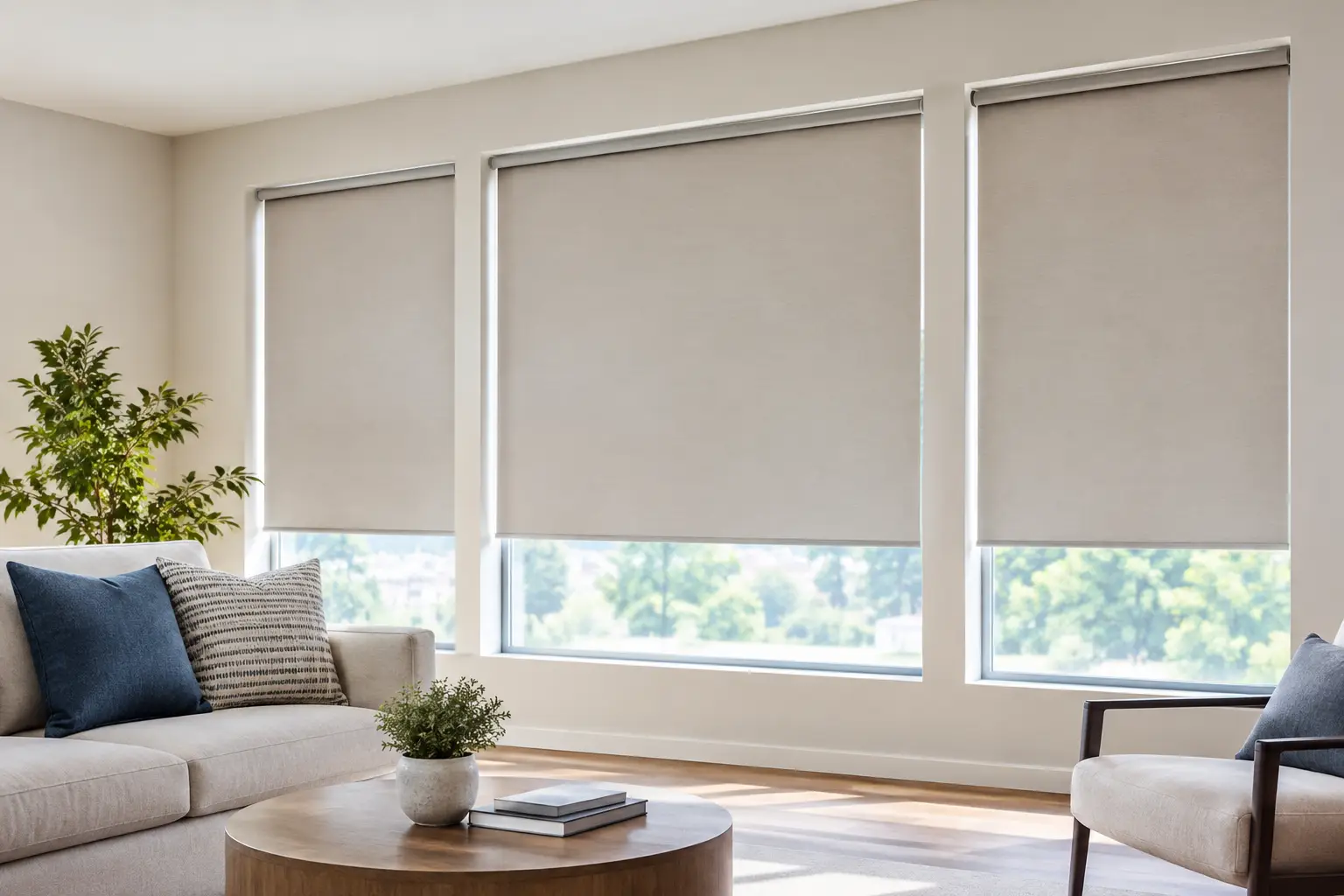
Dim-out fabrics soften bright daylight and create privacy without the full darkness of blackout material. They suit living rooms, dining spaces, and hospitality settings where a gentler atmosphere is preferred. Textured, linen-look, and neutral woven finishes can add warmth while keeping the simple shape that makes roller blinds so versatile.
The trade-off is that decorative fabrics may not provide the same heat, glare, or blackout performance as technical screen or blackout ranges. A good specification balances the visual concept with what the room must actually do.
Get Measurements and Mounting Details Right
A blind that is only a few millimeters out can look uneven, scrape a handle, leave an unwanted gap, or fail to cover the glass properly. This is why roller blinds should be measured after window frames, handles, ceiling details, and nearby furniture are considered.
A recess fit places the blind within the window opening. It creates a tidy, integrated appearance and is often preferred when the recess is deep enough for the chosen system. Face fixing places the brackets above or outside the opening, allowing the blind to overlap the window. This is useful where recess depth is limited, where maximum coverage is needed, or where window handles project into the opening.
For wide windows, designers and project managers should also consider blind divisions. One very wide roller can be heavy, harder to operate, and subject to fabric movement. Splitting the coverage into two or more blinds can improve control and support, though it introduces small gaps between units. The best option depends on the width, fabric weight, preferred sightlines, and budget.
Ceiling recesses, pelmets, curtain tracks, and air-conditioning grilles should be reviewed before fabrication. In coordinated interiors, a roller blind may need to sit behind curtains, align with a ceiling shadow gap, or clear a nearby track. These details are easier to solve on a site visit than after the hardware arrives.
Manual or Motorized Controls?
Manual chain-operated roller blinds remain a dependable, cost-effective choice for many windows. They are straightforward to use and work well where blinds are within easy reach. Chain color, side of operation, and child-safety tension devices should be selected as part of the specification rather than left as an afterthought.
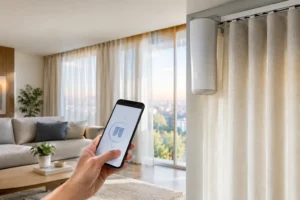
Motorization is especially valuable for tall windows, multiple blinds in the same room, hard-to-reach glazing, and high-use commercial spaces. A motorized system can operate from a wall switch, remote, timer, app, or compatible smart-home platform. It also gives a clean appearance by removing hanging chains.
The right motorized solution depends on access to power, wiring routes, control preferences, and the number of blinds involved. Battery-operated options can suit some retrofit projects, while wired systems are often a better fit when electrical work is already planned. For a home automation project, blinds should be discussed early with the electrician and automation provider so control points and power supplies are properly coordinated.
Plan for Dubai Light and Daily Use
Strong sun is a practical design issue in Dubai and across the UAE, not simply an aesthetic consideration. Fabrics facing direct sun need to be selected for their ability to manage glare and maintain their finish. In rooms with extensive glazing, roller blinds can help make the space more comfortable during the brightest hours while protecting furnishings from excessive direct light.
Maintenance also matters. Roller blinds are generally easy to care for when the fabric suits the environment. Regular light dusting or vacuuming with a soft brush attachment is often enough for standard indoor use. Kitchens, clinics, schools, and other high-traffic settings may need materials chosen for easier cleaning and more frequent handling.
Do not specify on fabric alone. The tube, brackets, bottom bar, chain mechanism, and installation surface all need to match the blind size and expected use. A budget system may be acceptable for a small guest-room window, but a large office façade or busy classroom requires hardware built for repeated operation.
A Clear Process Reduces Project Risk
When several windows, rooms, or site conditions are involved, a consultation-led process saves time. The project should move from room requirements to fabric samples, measurements, quotation, fabrication, and professional fitting. This gives homeowners and project teams a chance to confirm fabric direction, privacy needs, mounting method, and control side before production begins.
Dubai Drapes Studio can assess the window conditions during a free site visit, bring suitable samples, and recommend roller blind options that fit the room, budget, and design intent. This is particularly useful when blinds must work alongside curtains, tracks, wallpaper, or smart-home controls.
Before approving any quotation, ask for the final blind widths and drops, fabric name, opacity level, control type, bracket location, and expected installation approach. Those small confirmations create a much more predictable result than relying on a general product description.
A well-chosen roller blind should feel effortless once it is installed: the room is cooler or darker when needed, the window treatment sits straight, and the controls work without fuss. Book a Free Appointment to turn window measurements and design ideas into a specification that performs properly every day.