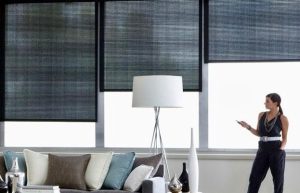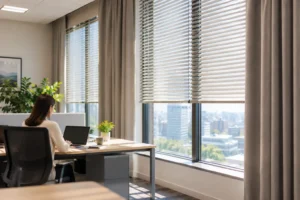


A sun-facing office window can turn a productive desk into a screen-glare problem by midmorning. The right office sunscreen blinds Dubai businesses choose can soften harsh daylight, reduce heat and visual discomfort, and keep the workspace connected to its outside view. They are not simply decorative window coverings. In Dubai offices, they are a practical part of employee comfort, energy management, and professional interior design.
Sunscreen blinds use a woven technical fabric that filters sunlight before it reaches the room. Rather than blocking the window completely, they manage bright conditions while allowing usable natural light to remain. That balance makes them a strong option for open-plan offices, meeting rooms, reception areas, executive cabins, and workspaces with large glass facades.
Why Office Sunscreen Blinds Matter in Dubai
Dubai’s bright climate is an asset for commercial interiors, but unfiltered sunlight creates familiar workplace issues. Staff may close curtains completely to see their monitors, guests may feel uncomfortable in a sunny reception area, and furniture or flooring near glazing may fade over time. Air-conditioning systems also work harder when solar heat enters through exposed windows.
Sunscreen roller blinds address these concerns without making an office feel enclosed. The fabric diffuses direct light and reduces glare on computer screens, yet maintains a lighter, more open atmosphere than blackout blinds. For client-facing businesses, this can be especially valuable. A clear, tidy window treatment supports a polished workplace without hiding the view that makes a high-rise office or commercial property appealing.
The result depends on the fabric selected. Openness factor, color, window orientation, and the room’s purpose all affect performance. A west-facing meeting room, for example, may need a denser sunscreen fabric than a shaded interior office. This is why a site assessment is more useful than choosing a blind from an online image alone.
Choosing the Right Office Sunscreen Blinds Dubai Businesses Need
The best blind is not always the darkest one. A good specification starts with how people use the room, when the sun enters it, and how much outside visibility the office wants to keep.
Select the right openness factor
Sunscreen fabrics are commonly available in different openness levels. A lower openness factor has a tighter weave, offering stronger glare reduction and more daytime privacy. A higher openness factor lets in more light and preserves more of the view, but it may not be sufficient for rooms with direct afternoon sun.
For screen-based workstations near large windows, a tighter fabric can improve comfort considerably. In reception areas or executive offices where daylight and views are priorities, a more open weave may be the better design decision. There is no one setting that suits every room in the same workplace.
Consider fabric color and reflectance
Color has both visual and practical effects. Light-colored sunscreen blinds can help brighten an interior and reflect more solar energy, making them popular in compact offices or rooms with darker finishes. Darker fabrics generally offer a clearer outward view during the day and can complement contemporary commercial interiors.
A fabric sample should always be viewed against the actual glass, wall colors, flooring, and lighting. A shade that looks warm in a sample book can appear cooler or more transparent when sunlight passes through it. During a free consultation, this comparison helps prevent an expensive mismatch after installation.
Match the system to the window layout
Roller blinds are often the preferred choice for office sunscreen applications because they are neat, space-efficient, and simple to operate. They can be fitted as individual blinds for separate windows or planned in wider sections for large glazing runs. Brackets, bottom bars, chain controls, and cassette options can be coordinated with the interior for a cleaner finish.
For unusual window dimensions, angled glazing, or façade systems, made-to-measure production is essential. Ready-made blinds can leave gaps, hang unevenly, or fail to cover the glass correctly. Accurate measurements also ensure that blinds do not interfere with window handles, partitions, ceiling details, or office furniture.
Daylight, Privacy, and the Limits of Sunscreen Fabric
Sunscreen blinds provide useful daytime privacy because the bright exterior light makes it harder for people outside to see into the office. However, they are not a complete privacy solution after dark. When interior lights are on and the outside is darker, silhouettes and activity can become more visible from outdoors.
For meeting rooms, ground-floor offices, medical consultation spaces, or work areas handling sensitive information, consider a dual treatment. Sunscreen blinds can manage daytime glare, while blackout roller blinds, dim-out blinds, or curtains provide evening privacy when needed. In some projects, each system is installed independently so the office can switch between filtered light and full coverage.
Sunscreen fabric is also not the best option for presentation rooms where total darkness is required. A boardroom using projectors, training spaces, or media rooms may need blackout shading instead. The correct approach can vary within the same office: sunscreen blinds for perimeter work areas and blackout solutions for enclosed presentation spaces.
Manual or Motorized Sunscreen Blinds?
Manual chain-operated blinds remain a practical and cost-effective choice for small offices and individual windows. They are easy to use and work well where blinds are adjusted only occasionally. Quality components matter here, particularly in busy workplaces where chains and brackets receive frequent daily use.
Motorized sunscreen blinds are a stronger option for large windows, high-level glazing, and offices with multiple blinds that need to move together. With a remote, wall switch, timer, or smart-home and building-control integration, teams can lower blinds before strong sunlight reaches desks. This helps protect comfort without requiring staff to adjust several blinds manually.
Automation is particularly useful in boardrooms and executive spaces. One command can set the room for a video call, presentation, or client meeting. It can also create a more consistent exterior appearance across a glass-fronted office. The added investment makes the most sense when access is difficult, daily adjustments are frequent, or the project requires a more refined operational finish.
What a Professional Office Blind Installation Should Include
Commercial blind projects need more than fabric selection. The quality of measuring and fitting determines how well the finished system performs. A blind that is a few millimeters out of alignment can leave unwanted light gaps, roll unevenly, or look unfinished beside neighboring windows.
A professional process begins with a site visit to inspect the glazing, identify sun exposure, take precise measurements, and discuss whether the blinds need manual or motorized controls. It should also account for access requirements, electrical points for motorization, ceiling heights, existing window film, and furniture placement.
Dubai Drapes Studio manages this process from consultation and sample selection through custom tailoring, quotation, delivery, and installation. This gives office managers, designers, and fit-out teams one accountable provider instead of separate suppliers for measuring, production, and fitting.
For larger commercial projects, it is worth confirming the installation schedule early. Offices may need work completed outside business hours, floor by floor, or in coordination with other fit-out trades. Clear planning reduces disruption to staff and avoids damage to newly completed interiors.
Care and Long-Term Performance
Sunscreen roller blinds are designed to be low maintenance, but regular care keeps them looking professional. Light dusting with a soft brush attachment or dry microfiber cloth is usually sufficient. Avoid soaking the fabric or using strong cleaning products, as these can affect the coating, weave, or color.
If a blind becomes marked, use the manufacturer-approved cleaning method and test any solution on an inconspicuous area first. Chains, motor controls, brackets, and bottom bars should also be checked periodically, particularly in high-traffic offices. Addressing a small alignment or control issue early is easier than waiting for a component to fail.
A well-chosen sunscreen blind should feel like a natural part of the office rather than a compromise between comfort and design. Start with the windows people struggle with most, assess how the light changes across the day, and arrange a free site visit to see fabrics in the actual space. The right solution can make every desk, screen, meeting, and client visit more comfortable.