
A bright office can feel energizing until sun glare turns every monitor into a mirror, meeting rooms become uncomfortably warm, and street-facing glass leaves staff feeling exposed. The right office window treatments solve these daily frustrations without making the workplace feel dark, closed off, or overly corporate. The best choice balances daylight, privacy, thermal comfort, maintenance, and the visual character of your workspace.
For a small private office, that may mean simple sunscreen roller blinds. For a larger headquarters with boardrooms, glass partitions, and presentation areas, it can mean a coordinated system of motorized shades, blackout curtains, and privacy solutions. The detail that makes the difference is not simply the product. It is selecting, measuring, and installing it for the way each room is actually used.
Start With How Each Office Uses Light
Window direction matters more than many office fit-outs allow for. East-facing windows receive strong morning sun, while west-facing glass often causes intense afternoon heat and glare. South-facing elevations can receive sustained brightness, and rooms with large glazed facades may need consistent solar control throughout the day.
Before choosing fabrics or blind styles, consider where desks, screens, meeting tables, and presentation walls sit. A treatment that looks perfect on an empty window may be frustrating when an employee cannot see a laptop display at 3 p.m. Similarly, a fully blackout solution may be excessive for an open-plan office that benefits from natural daylight.
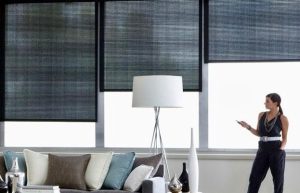
Sunscreen blinds are often a strong starting point for work areas. Their technical mesh fabrics filter harsh sunlight and reduce glare while preserving a degree of outward visibility. Openness level is important here. A more open weave provides a clearer view and more daylight, but offers less daytime privacy and light filtering. A tighter weave increases control, which may be preferable for windows facing nearby buildings or busy streets.
Choosing Office Window Treatments by Space
One office rarely needs one solution everywhere. Matching the treatment to each room creates a more comfortable and professional result.
Open-plan workspaces
Roller blinds, vertical blinds, and panel track systems suit broad runs of glazing. Roller blinds offer a clean, compact appearance and are available in sunscreen, dim-out, and blackout materials. Vertical blinds give flexible control over changing sun angles and can work well on tall windows or sliding glass doors. Panel tracks are particularly effective for wide glass walls, where a neat linear finish supports contemporary commercial interiors.
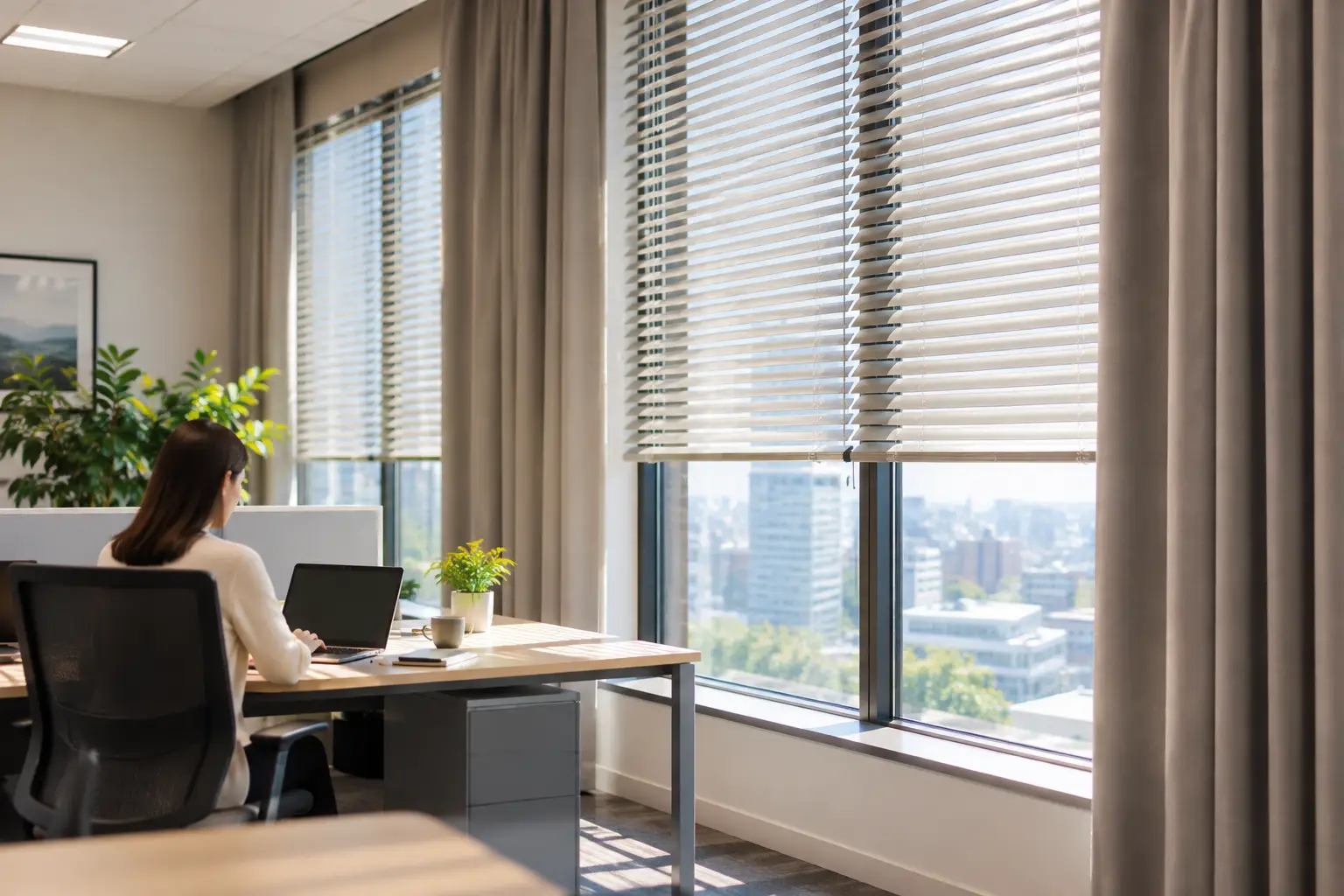
For desks close to windows, sunscreen roller blinds are usually more practical than decorative curtains. They manage screen glare while taking up minimal space and are straightforward to operate across a busy workday.
Meeting rooms and boardrooms
Meeting spaces have changing demands. One moment they need daylight for an informal discussion; the next they need reduced light for a video call or projector presentation. Dual blind systems can be especially useful here, combining a sunscreen layer for daytime comfort with a blackout or dim-out layer when privacy and presentation clarity are required.
Motorized blinds make this arrangement easier to use. With one control, staff can lower shades before a meeting begins rather than interrupting the room to adjust several manual blinds. For premium boardrooms, wave curtains on professional tracks can add warmth and acoustic softness, especially when paired with a discreet blackout lining.
Executive offices and reception areas
These spaces often carry more of the company’s visual identity. Custom curtains, Roman blinds, wooden-look blinds, or textured roller fabrics can introduce color and material depth without compromising function. Reception areas can benefit from sheer curtains that soften daylight and create a more welcoming first impression, particularly in offices with expansive glass or hard finishes.
The trade-off is maintenance. Fabric treatments add warmth and can improve acoustics, but they require appropriate fabric selection and periodic cleaning. In high-traffic areas, durable performance fabrics and well-fitted tracks are usually a wiser choice than delicate decorative materials.
Training rooms and presentation spaces
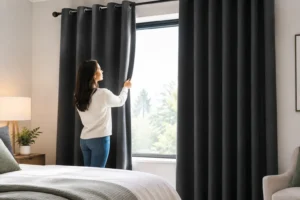
Blackout blinds or blackout curtains are the practical choice when projection quality matters. Look for edge coverage and a fitted installation, because light can spill through side gaps even when a blackout fabric is used. If the room is used for both training and everyday work, pairing blackout coverage with a separate sunscreen layer gives more flexibility than relying on one heavy treatment.
Privacy Is More Than a Closed Blind
Privacy requirements differ significantly between workplaces. A ground-floor office, medical practice, legal firm, school administration area, or HR department may need stronger screening than an upper-floor workspace. Daytime privacy also differs from nighttime privacy. Sunscreen fabric can restrict outside views during the day when the exterior is brighter, but after dark, interior lighting can reverse that effect.
For offices overlooked by neighboring buildings, dim-out roller blinds, lined curtains, or layered systems provide more dependable privacy. Frosted films can be useful on internal glass partitions, but window coverings remain valuable when teams need adjustable control rather than a permanently obscured view.
In healthcare and institutional settings, privacy curtains need a different level of planning. Cubicle curtains must suit the track system, room layout, cleaning requirements, and relevant safety expectations. A consultation-led approach helps prevent common issues such as insufficient overlap, difficult access around beds or equipment, and fabrics that do not suit the environment.
Consider Heat Control and Energy Use
In Dubai and across the UAE, windows can contribute considerable solar heat to an office. Air conditioning works harder when direct sunlight reaches floors, furnishings, and workstations for hours at a time. A well-selected blind fabric can reduce solar heat gain while maintaining usable natural light.
Sunscreen and reflective-backed roller fabrics are popular for this reason. They can limit glare and heat without creating the closed-in feeling associated with permanent blackout. The exact performance depends on fabric color, weave, openness, window orientation, and the glass specification. Darker fabrics may improve outward visibility, while lighter colors can reflect more light and create a brighter interior feel. There is no universal best option, which is why viewing samples against the actual glass is valuable.
Manual or Motorized Controls?
Manual blinds are dependable, cost-effective, and ideal for accessible windows that are adjusted occasionally. They remain a sensible choice for many individual offices and smaller projects. Motorization becomes more compelling when windows are high, wide, difficult to reach, or spread across a large space.
Smart office window treatments can be controlled by remote, wall switch, app, timer, or integrated automation system. They can be programmed to respond to working hours, presentations, or changing sunlight. For example, shades can lower on west-facing windows during the hottest part of the afternoon and reopen later to restore views.
Automation should be chosen for a clear operational benefit, not just because it sounds advanced. A simple, reliable control setup is often better than a complicated system that staff avoid using. During planning, confirm power availability, control preferences, grouping requirements, and whether the office needs integration with an existing smart-building platform.
Why Precise Measurement Changes the Result
Off-the-shelf blinds can look acceptable in a small domestic window, but commercial glazing is rarely so forgiving. Uneven reveals, mullions, window handles, ceiling details, glass doors, and wide spans all affect how a treatment should be made and fitted. A few millimeters can influence light gaps, operation, and alignment across a row of windows.
Professional measurement also establishes the best fixing method. Some blinds may be face-fixed above the opening for improved coverage, while others work better recessed within a frame. Curtains need correctly specified track lengths, bracket positions, stack-back space, and fabric fullness. These decisions affect not only appearance but also whether the window can be opened and cleaned comfortably.
Dubai Drapes Studio provides site visits, sample selection, precise measurements, custom production, and professional installation, so office managers and project teams can work with one accountable supplier from planning through fitting.
Create a Consistent Finish Across the Workplace
A workplace does not need identical coverings in every room, but it should feel coordinated. This can be achieved by using the same fabric family in different opacities, repeating a neutral hardware finish, or choosing complementary curtain and blind colors. The goal is visual consistency without forcing one product to do every job.
For fit-out firms and designers, request samples early in the process. Compare them with wall finishes, flooring, furniture, lighting temperature, and glass. A fabric that appears warm gray under showroom lighting may look cooler against blue-tinted office glass. Testing it in the actual space prevents expensive surprises after installation.
Book a Free Appointment to assess glare, privacy, heat, and design requirements room by room. A tailored recommendation should make the office easier to work in every day, while giving clients and staff a setting that feels considered from the moment they enter.