
A bedroom can look perfectly finished and still fail at the most basic job: staying dark enough to sleep. Streetlights, early sun, neighboring buildings, and bright afternoon heat can all find their way around a poorly chosen curtain. Knowing how to choose blackout curtains means looking beyond a dark fabric and focusing on how the curtain is made, measured, mounted, and used in your room.
For a nursery, shift-worker bedroom, media room, or sun-facing villa living area, the right blackout treatment can make a noticeable difference in comfort. The wrong one may block some light but leave glowing gaps at the sides, bunch awkwardly on the floor, or feel too heavy for the interior. A made-to-measure approach helps you balance darkness, style, insulation, and daily convenience.
Start With the Room and Its Real Purpose
Blackout curtains are not only for bedrooms. They are useful wherever controlled light and privacy matter, but each space calls for a slightly different solution.
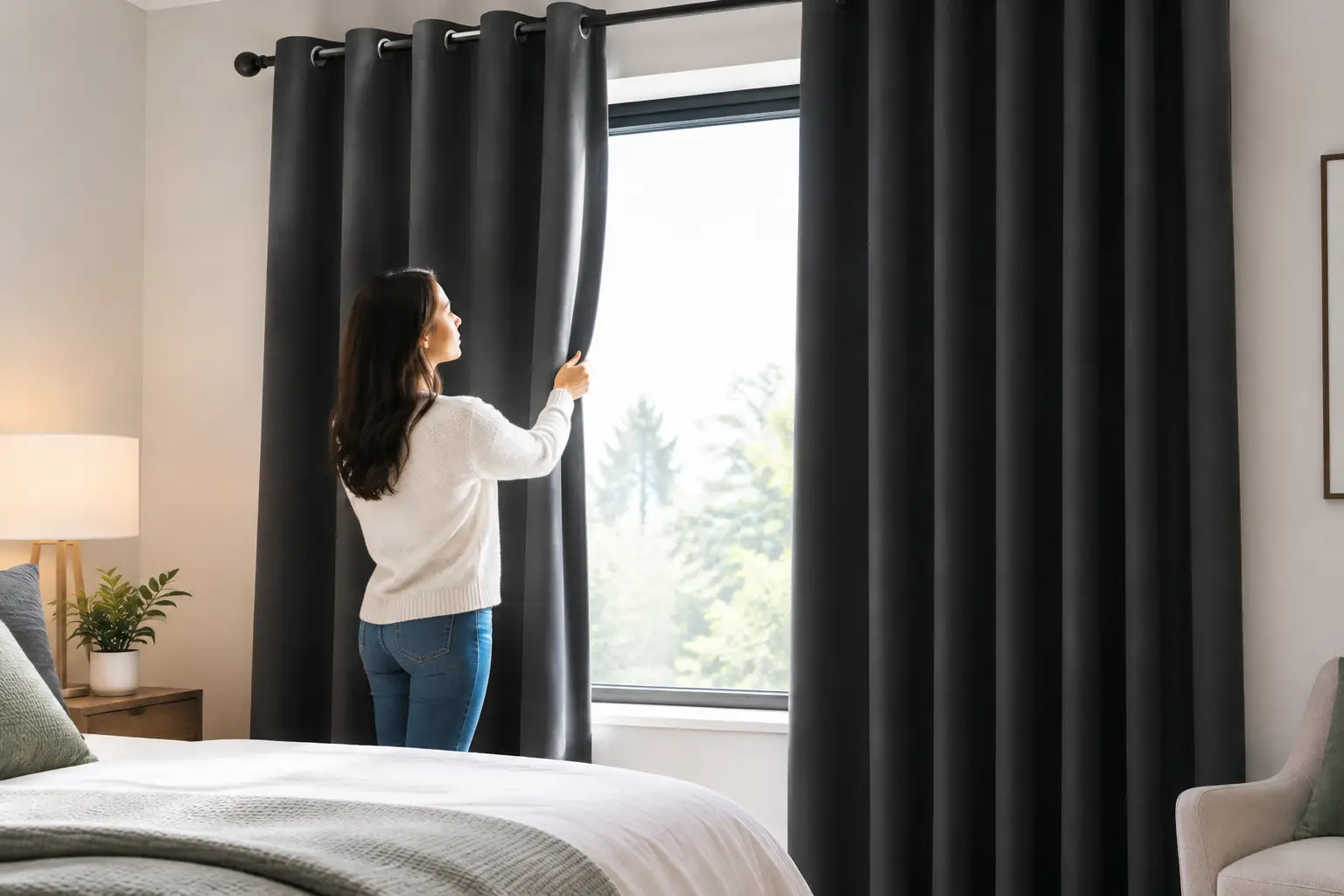
In a bedroom, the priority is usually restful sleep and privacy. Choose a treatment that covers the window generously, extends beyond the frame, and works with the room’s lighting conditions. In a child’s room, safe operation and easy cleaning may matter as much as light control. For a media room, a near-total blackout result helps reduce reflections on screens. In a living room, you may prefer blackout-lined decorative drapes that retain a softer, more elegant look during the day.
Consider the direction of the window as well. West-facing windows often receive intense late-day sun, while east-facing rooms can become bright very early. In hot climates such as Dubai and across the UAE, blackout curtains can also help reduce solar heat gain, particularly when paired with a close-fitting blind or a suitable lining. They will not replace efficient glazing or air conditioning, but they can reduce glare and make a room more comfortable.
Understand What “Blackout” Actually Means
The word blackout is used broadly, so check the construction rather than relying on the label alone. A curtain may be described as room-darkening, dimout, or blackout, and the results are different.
Room-darkening fabric reduces incoming light but generally allows a soft glow to remain. It is often suitable for lounges, dining rooms, and spaces where you want less glare without complete darkness. Dimout curtains sit in the middle, filtering substantial light while keeping a lighter drape and softer atmosphere.
True blackout curtains use a tightly woven opaque fabric, a blackout coating, or a separate blackout lining to block light through the body of the curtain. Even then, no fabric can stop light that enters around the curtain edges, above the track, or below the hem. If your goal is the darkest possible room, fabric performance and installation details must work together.
A blackout lining is often the most flexible choice for decorative interiors. It allows you to select the face fabric based on color, texture, and drape, then add the light-blocking layer behind it. This is especially valuable when you want linen-look, velvet, patterned, or textured curtains without giving up practical performance.
How to Choose Blackout Curtains for a Better Fit
Fit is the difference between a curtain that looks good in a showroom and one that performs well at home. Ready-made panels may be convenient for standard windows, but they often leave side gaps or do not provide enough fullness. Custom curtains are measured for the actual window, track position, ceiling height, and obstructions in the room.
For stronger light control, the curtain track or rod should extend beyond both sides of the window. This lets the fabric stack back clear of the glass when open and overlap the wall when closed. Mounting the track closer to the ceiling also reduces the light gap above the curtain and makes the room appear taller.
Length matters too. A floor-length curtain generally offers a more polished appearance and better coverage than a short panel. For bedrooms and formal spaces, a clean finish that just touches the floor is popular. A small break on the floor creates a more relaxed, luxurious look, but it can collect dust and is less practical near frequently used doors.
Fullness should not be overlooked. Flat, underfilled curtains can look thin and allow more light through their folds. The amount of fabric required depends on the heading style, but wider fabric coverage usually gives a richer result and improves privacy. A consultant can recommend the right fullness for pencil pleat, wave, pinch pleat, or eyelet-style curtains.
Select Fabric, Lining, and Color Together
Blackout performance comes from the lining or fabric construction, while the face fabric determines much of the visual character. Velvet offers depth, softness, and a premium finish, making it a strong choice for bedrooms and media rooms. Textured woven fabrics suit contemporary homes that need a tailored but relaxed feel. Smooth polyester blends can be durable, cost-effective, and easier to maintain.
Lighter face colors can still work effectively when a proper blackout lining is used. This surprises many homeowners who assume blackout curtains must be dark gray, navy, or black. A cream, sand, blush, or soft gray curtain can block light while keeping the room bright and spacious when the drapes are open.
For heat control, ask about thermal or insulated linings. These can support energy efficiency by creating an additional barrier at the window. The benefit depends on the window size, glass type, installation quality, and how often the curtains remain closed. A lining adds weight, so confirm that the selected track and brackets can support the finished curtains properly.
Choose the Right Track and Opening Style
A blackout curtain can only perform as well as its hardware. Ceiling-mounted tracks are a practical option when you want full-height coverage and a clean, built-in appearance. They are also well suited to wave curtains, which glide smoothly and create even folds.
For the best light control, consider a return at each side, where the curtain wraps back toward the wall. For very bright windows, a pelmet, valance, or recessed ceiling pocket can further limit light entering above the track. These details are particularly worthwhile in bedrooms and home theaters, where small gaps become obvious once the lights are off.
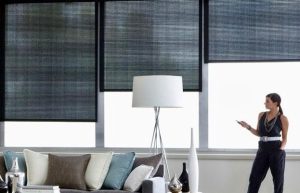
If the window is wide, tall, or difficult to reach, motorized curtains may be the better choice. A motorized track allows scheduled opening and closing, remote control, or integration with a smart-home system. This is useful for large glass doors, double-height spaces, and daily routines where convenience encourages you to use the curtains consistently.
Manual curtains remain an excellent option for many rooms. The deciding factor is not technology for its own sake, but how you live in the space. If you will open and close the curtains every day, choose a system that feels easy, quiet, and reliable.
Pair Curtains With Blinds When You Need More Control
Layering is often the most effective answer for rooms that need both daylight and blackout conditions. A sunscreen blind can soften glare during the day while preserving an outside view, and blackout curtains can close fully at night. Sheer curtains paired with blackout drapes create a more decorative version of the same idea: filtered daylight when you want it, privacy and darkness when you need it.
This combination works well in living rooms, hotel-style bedrooms, and large windows facing busy streets. It also gives you more visual flexibility than blackout curtains alone. The trade-off is added cost and more components to measure, coordinate, and install.
Check Practical Details Before Ordering
Before placing an order, think through the details that affect long-term satisfaction. Curtains near a balcony door need enough clearance to operate without dragging. In humid areas, select fabrics and linings suited to the conditions. If pets or young children are in the home, avoid long loose cords and choose safe, professionally fitted operating systems.
Ask how the curtains should be cleaned. Some face fabrics can be gently vacuumed and spot cleaned, while others need professional dry cleaning. Dust can gather in deep folds, so a fabric that suits your maintenance routine is usually a better investment than one chosen only for its appearance.
It is also wise to review samples inside the actual room. Daylight, wall paint, flooring, and artificial lighting can change how a fabric looks. A fabric that appears warm beige in a showroom may read cooler against your bedroom walls. Site measurement also identifies obstacles such as air-conditioning units, cornices, handles, furniture, and uneven ceilings before production begins.
Dubai Drapes Studio can bring fabric samples to your home or project site, measure precisely, and recommend a blackout curtain system matched to your window, interior style, and required level of darkness. A clear quotation and professional installation help avoid the common problems of undersized panels, weak tracks, and unfinished edges.
The best blackout curtains should disappear into your routine: open easily when you want daylight, close securely when you need rest, and look considered from every angle. Book a free appointment before choosing fabric, and let the final design be guided by the room you actually live in.